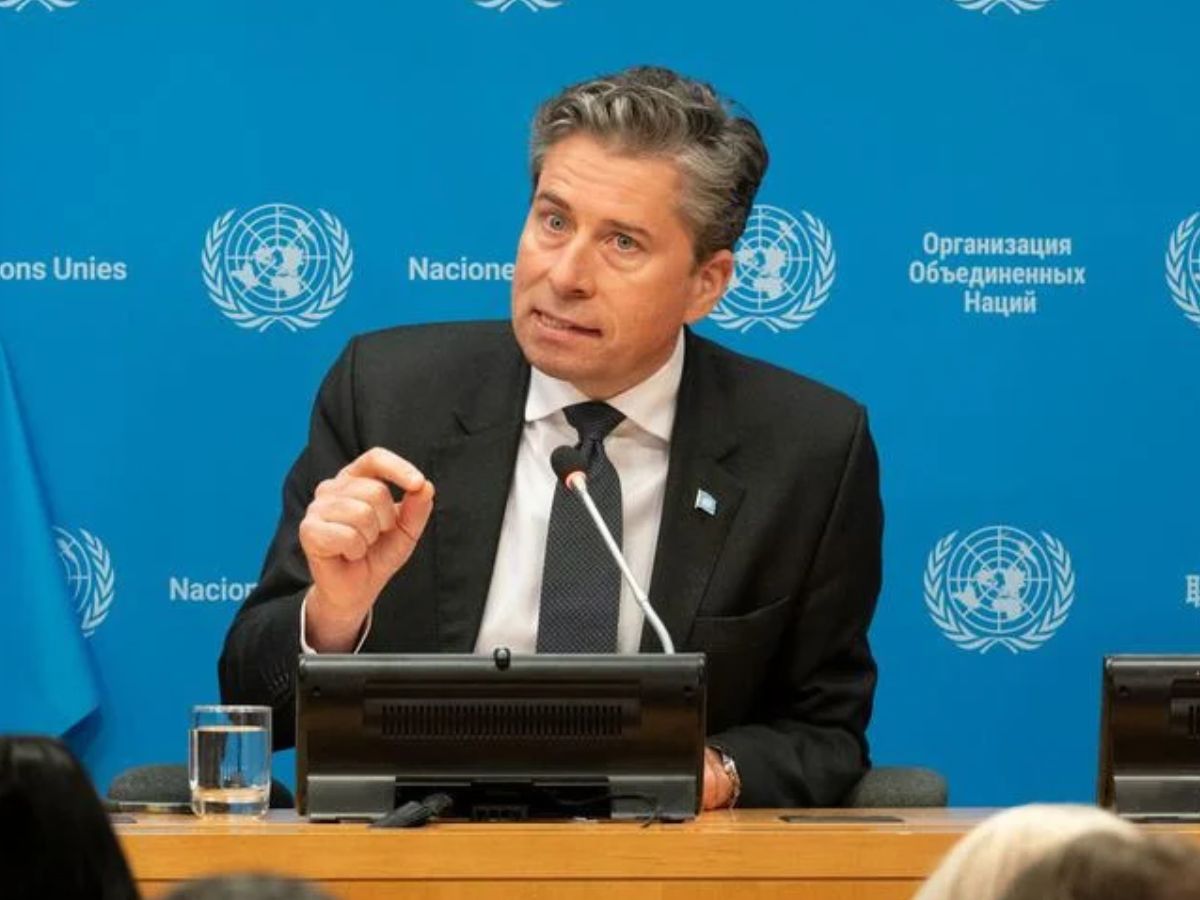
The United Nations has released $160 million to support 12 of the world's most underfunded humanitarian emergencies. The Office for the Coordination of Humanitarian Affairs (OCHA) announced the money on Friday. Its head, Tom Fletcher, said funding alone would not be enough to reach people in need.
Mr Fletcher, the UN Emergency Relief Coordinator, said 87 million people facing the most severe crises this year must be reached. He said leaders must show political will to open access and remove obstacles, and that "money alone won't get us there".
Access is the main obstacle. Five of the 12 crises, in Afghanistan, the Occupied Palestinian Territory, South Sudan, Sudan and Yemen, are among 10 contexts where Mr Fletcher has called for urgent diplomatic action to secure entry for aid. The UN says resolving those restrictions would open the way to assistance for 11 million people.
Of the total, $150 million comes from the Central Emergency Response Fund (CERF). Afghanistan, the Occupied Palestinian Territory and Yemen receive $18 million each. Somalia and Sudan receive $16 million each, and South Sudan receives $15 million. Burkina Faso, Mali and Niger are allocated $10 million each. Chad receives $9 million, Cameroon $6 million and Cuba $4 million. Eight of the 12 recipients are in Africa.
The remaining $10 million is set aside for people with disabilities in the same 12 crises. The UN says the aim is to ensure aid reaches them and is suited to their needs. The UN Global Disability Fund will add up to $4 million in funding and technical support through its Inclusion Catalyst Hub. Part of that sum will go towards strengthening local organisations of people with disabilities and their role in the response.
CERF is managed by OCHA, and the UN describes it as one of the fastest funding tools available. The General Assembly created it in 2005. Allocations for underfunded emergencies are based on analysis of more than 100 humanitarian indicators and consultation with partners. According to the UN, the fund has channelled about $10.2 billion since its creation to people in more than 117 countries and territories. That money came from 135 member states and observers, along with private donors and individuals.
Friday's release brings CERF allocations for 2026 to $483 million. The fund's annual target is $1 billion, so allocations so far are below half of that figure. The announcement did not say whether the gap reflects lower contributions from donors or other factors. Allocations and contributions are separate measures, and the UN statement gave no contribution figures for this year.
The figures and the description of the allocation process come from the UN itself and have not been independently verified. The announcement did not explain how the amounts were weighed against need in each country, or how many of the 87 million people live in the 12 places that received money. Nor did it say what share of each country's humanitarian appeal the CERF payment covers, which would show how far the sums go.
No government was quoted. Authorities in Sudan, Yemen and the other places where access is restricted have not responded in the material released, and the statement did not set out what limits aid delivery in each case. Independent assessments of humanitarian funding shortfalls would help readers judge whether $160 million matches the scale of need.
For now, Mr Fletcher's position is that money and access must come together. The UN has released the funds, and it is asking governments with the power to open routes to act on the second part.