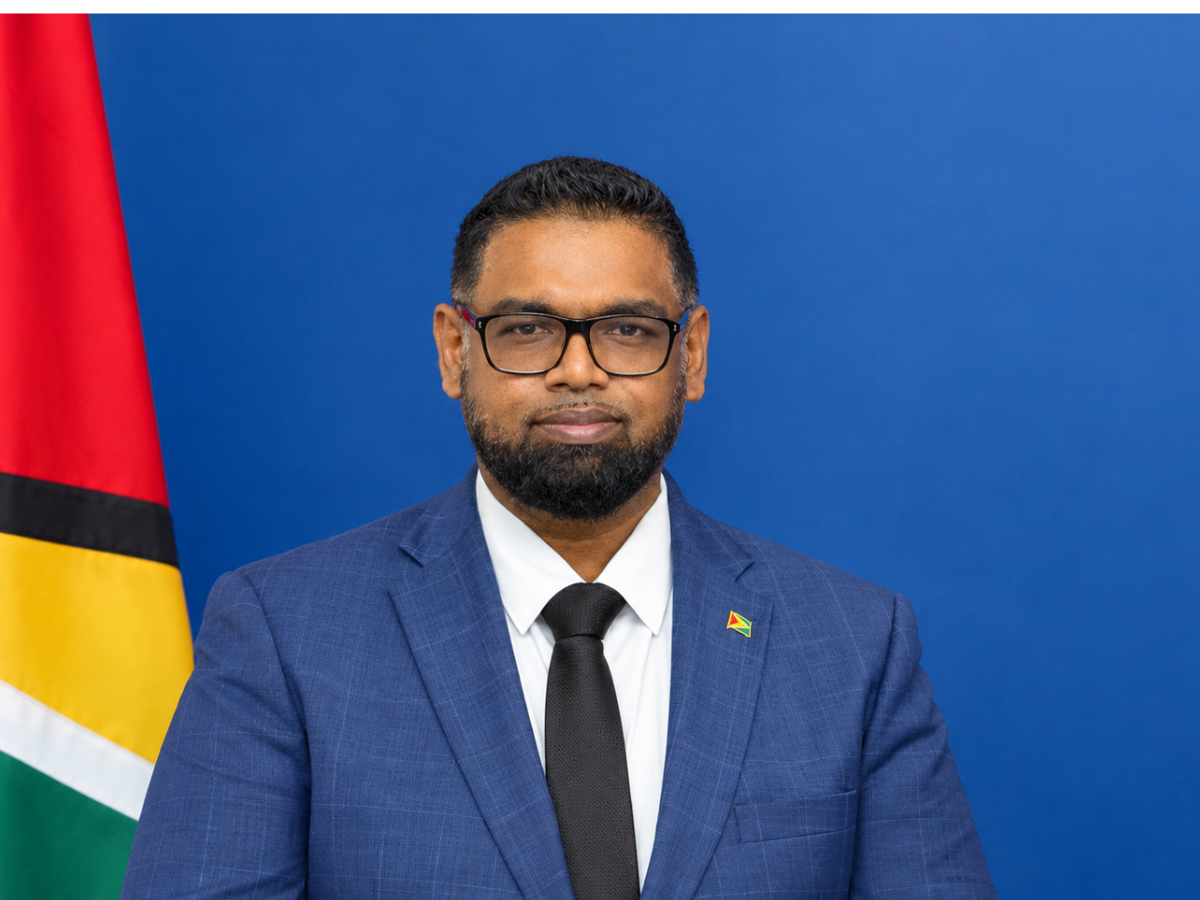
President Irfaan Ali has said his government intends to take greater value from Guyana's existing oil contract and to open energy investment to ordinary households. He spoke on Wednesday in an interview that also covered relations with the United States, the border controversy with Venezuela, biodiversity and reparations ahead of the anticipated visit of King Charles III.
On petroleum, Ali said the focus is on securing more value from the Production Sharing Agreement with ExxonMobil while respecting its contractual obligations. He described the aim as maximising the benefit out of that contract, and said that effective management of the agreement and the wider sector would let more of the benefit reach Guyanese businesses and citizens. He added that investment vehicles are being developed so that ordinary families can invest in major energy projects and earn fair returns. The account of the interview gives no detail on how those vehicles will be structured, how much they will raise or when they will launch.
The interview took place on the day Guyana and the United States signed an enhanced defence partnership at the Pentagon. Ali called the two countries important partners in development and security, and said their cooperation must rest on mutual respect, shared priorities and reciprocal benefits. He rejected the suggestion that Washington wants to dominate Guyana. In his words, Guyana is a sovereign state that works with the United States as a partner.
On Venezuela, which claims a large part of Guyana's territory, the president restated Guyana's commitment to a peaceful settlement through the International Court of Justice and called for respect for international law and for the court's eventual ruling.
Biodiversity occupied a substantial part of the discussion. Ali argued for economic models that reward countries for protecting their natural assets, and pointed to Guyana's work through the Global Biodiversity Alliance on market-based mechanisms that generate value from conservation while supporting the protection and regeneration of ecosystems. He made a similar case in May at an energy conference in Houston, where he said the aim is for the world to adopt a model that values biodiversity in standing forests and gives countries an incentive to keep them intact. The argument rests on a financial point. Guyana keeps a large forest area standing and seeks payment for the climate and health benefits that follow.
The final subject was reparations for slavery, which Ali discussed as the King's visit approaches. He called for a mature and dignified discussion of the development gaps that persist in Caribbean societies, particularly in healthcare, education, technology and human capacity, and proposed concessional financing and support for climate adaptation and mitigation. In a separate interview with ITV News, he said reparations should not be treated as a monetary payout or an act of charity, and argued that development financing, debt relief and concessional loans should address the inequalities that the slave trade created.
On the question of an apology, Ali said one would help create an environment for free-flowing discussions but should not be seen as an end in itself. He noted that the King has already described slavery as among the darkest days of British history and expressed regret over it. He also credited the King with advancing international attention to tropical forests and climate change, including through his link with the Iwokrama rainforest initiative.
The King and Queen Camilla are due in Guyana on 29 and 30 October, in a visit that marks 60 years of diplomatic relations with the United Kingdom. It will be the first visit by a reigning British monarch since Queen Elizabeth II in 1994.
The positions share a common thread. Each links Guyana's natural wealth, whether oil or forest, or the legacy of its colonial past, to a claim for finance that can be spent on development. Whether households receive access to energy investments, and whether conservation markets pay at the scale Ali wants, will be settled by decisions that the interview did not set out.