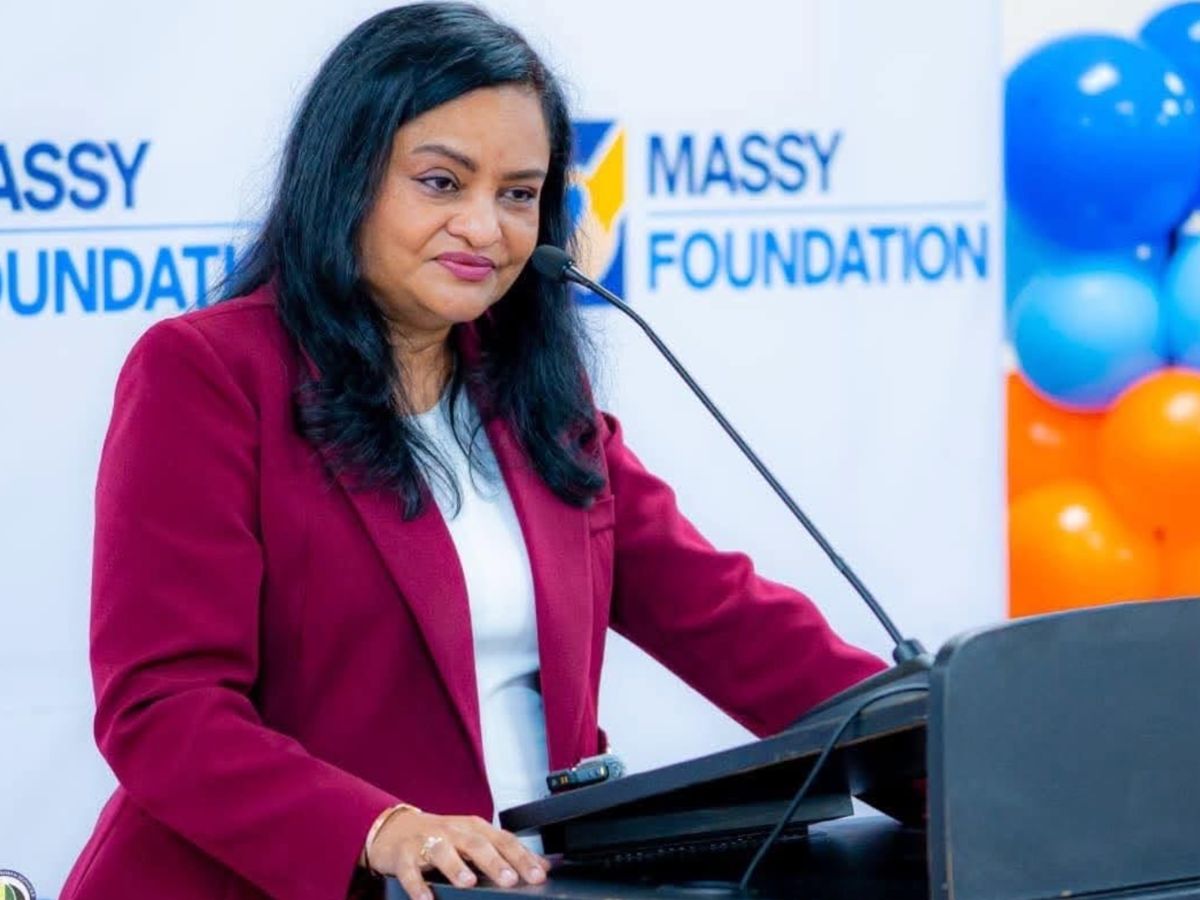
The Massy Foundation has opened its latest grant funding cycle, calling on established non-profit and community organisations to submit proposals for project-based support aimed at social and economic development.
The programme directs capital toward three areas: food security, public health and well-being, and educational access. Applications for the current round close on 30 September 2026.
Officials at the Foundation said the aim is to fund practical projects capable of producing measurable outcomes over time, rather than one-off interventions with limited follow-through. Grants will go to organisations able to demonstrate both a clear community need and a credible plan for sustaining their work once initial funding runs out.
Within food security, the Foundation is looking to back initiatives that improve access to food, strengthen local production and support agricultural systems less exposed to supply disruptions. Recent shocks to food supply chains across the Caribbean have pushed several governments and private funders to prioritise resilience over short-term relief, and the Foundation's criteria reflect that shift.
The health and well-being category covers projects that expand access to care, improve wellness services or otherwise raise quality of life in underserved communities. Applicants working in this space will need to show how their proposed activity connects to broader public health outcomes rather than isolated service delivery.
Education and skills development rounds out the three focus areas. Here the Foundation wants to support programmes that widen access to learning, raise outcomes for students and build skills that translate into employment or self-sufficiency. Organisations working with vocational training, adult literacy or school-based interventions fall within scope.
To qualify, applicant organisations must be formally registered as a non-profit or community entity and must have at least two years of documented operating history. The Foundation is not accepting proposals from newly formed groups or informal collectives this cycle, a restriction it says is intended to reduce the risk attached to untested organisations.
Each proposal must stand alone as a single project rather than form part of a broader, undefined programme of work. Applicants are expected to set out key performance indicators and other measurable markers of success, along with a model showing how the project would remain viable once Foundation funding ends. The emphasis on sustainability is consistent with a broader trend among regional grant-makers, who have grown more cautious about funding projects that lapse once external money stops.
Applicants must submit structured proposals that spell out the community need being addressed, how funds would be allocated, a timeline for execution and the impact they expect to achieve. The Foundation has not published a fixed funding ceiling per project, though it has indicated that allocations will vary according to scope and demonstrated need.
Successful applicants will receive grant funding directly, with disbursement tied to the milestones set out in their proposals. The Foundation has not detailed whether funds will be released in a single tranche or staggered against progress, a question likely to matter to organisations planning cash flow around the award.
The September deadline gives prospective applicants roughly three weeks from the opening of the cycle to prepare submissions, a relatively tight window for organisations without dedicated grant-writing staff. Community groups working across Guyana and the wider Caribbean have previously flagged short application periods as a barrier to participation, particularly for smaller organisations competing against better-resourced counterparts.
The Massy Foundation is the philanthropic arm of the Massy Group, a conglomerate with operations spanning the Caribbean and Latin America. Its grant programmes have historically supported community projects in Trinidad and Tobago, Guyana and Barbados, among other markets where the Group maintains a commercial presence.
Organisations interested in applying have been directed to the Foundation's official channels for full submission guidelines and supporting documentation.