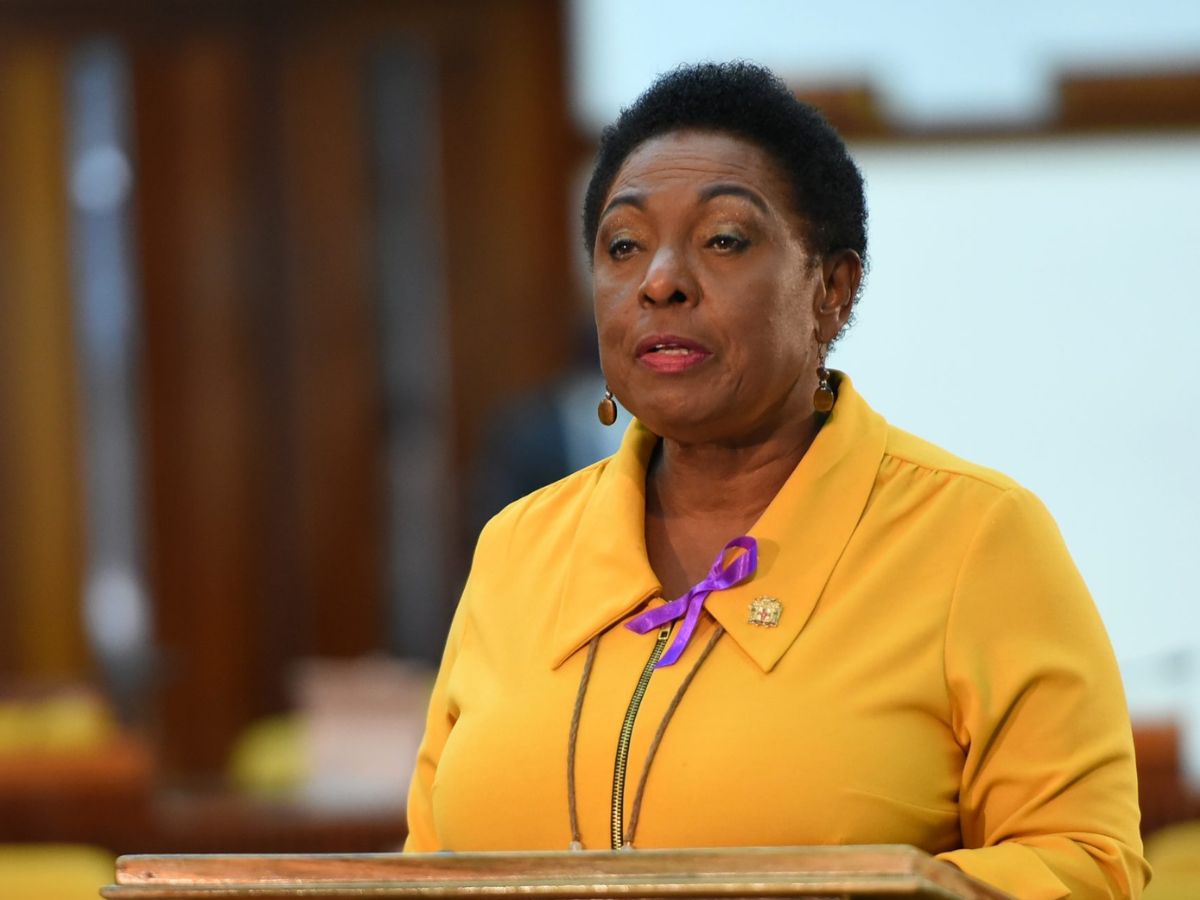
Jamaica has formally petitioned King Charles III, in his constitutional role as the country's head of state, asking him to refer three questions on the legality of chattel slavery to the Judicial Committee of the Privy Council. The petition was delivered in London on Monday by a Jamaican delegation led by Culture Minister Olivia Grange.
The action does not seek a specific sum in damages. Grange has said the government is not yet putting a figure on any claim, and that the purpose of the filing is to obtain a legal determination before deciding what follows from it. "We want the answers," she said. "Once we get the answers, or once we get a response to those questions, then the next steps will be determined."
The petition poses three questions to the Committee. The first asks whether the capture, transportation and enslavement of Africans was ever lawful under historical English common law. The second asks whether the practice of chattel slavery in Jamaica amounted to a breach of international law. The third asks whether the United Kingdom bears a legal obligation to provide a reparatory remedy to the descendants of enslaved Jamaicans for the resulting harm.
Jamaica's legal route rests on a mechanism established in 1833, when the Judicial Committee was created as the highest court of appeal for the British Empire. Beyond hearing appeals, the Committee retains a rarely used power to issue advisory opinions on matters referred to it by the monarch. Jamaica has kept the Committee as its final court of appeal since independence, which gives the country standing to invoke this route. Buckingham Palace has confirmed receipt of the petition, while noting that the King has no personal role in deciding its substance and will act on the advice of his ministers.
Edward Fitzgerald, the lead legal counsel on the filing, has framed the approach as a way of using an established constitutional procedure to test a legal assumption that has rarely been challenged directly: that slavery was lawful simply because it operated unchallenged for centuries. Legal specialists following the case have described the manoeuvre as a considered use of an obscure but genuine constitutional channel, rather than a purely symbolic gesture.
The timing was not incidental. The filing coincided with the anniversary of the 1781 departure of the Zong, a Liverpool-registered ship that sailed from West Africa with 442 enslaved people on board and whose case later became a reference point in English legal history concerning the treatment of enslaved people as cargo.
Jamaica's petition sits within a broader regional campaign. CARICOM's Ten-Point Plan for Reparatory Justice has for over a decade set out the Caribbean's collective case for reparations, and Jamaica's own National Council on Reparations has pushed the issue domestically. Prime Minister Andrew Holness has described the petition as a watershed moment for that wider movement, and government officials have stressed that the legal filing runs alongside, rather than in place of, the region's continuing political campaign.
The delegation's visit to London extended beyond the petition itself. Grange also held talks with the British Museum on the repatriation of cultural artefacts removed from Jamaica, a separate but related strand of the country's engagement with its colonial history.
Government officials in Kingston have called for calm and informed public debate on the filing, distinguishing the legal question now before the King from any future financial negotiation. Whether the King refers the matter to the Judicial Committee remains to be seen, and any resulting opinion would take further time to produce. Officials have not set out an expected timeline, saying the process will depend on the pace at which the Privy Council takes up the questions once, or if, they are formally referred.