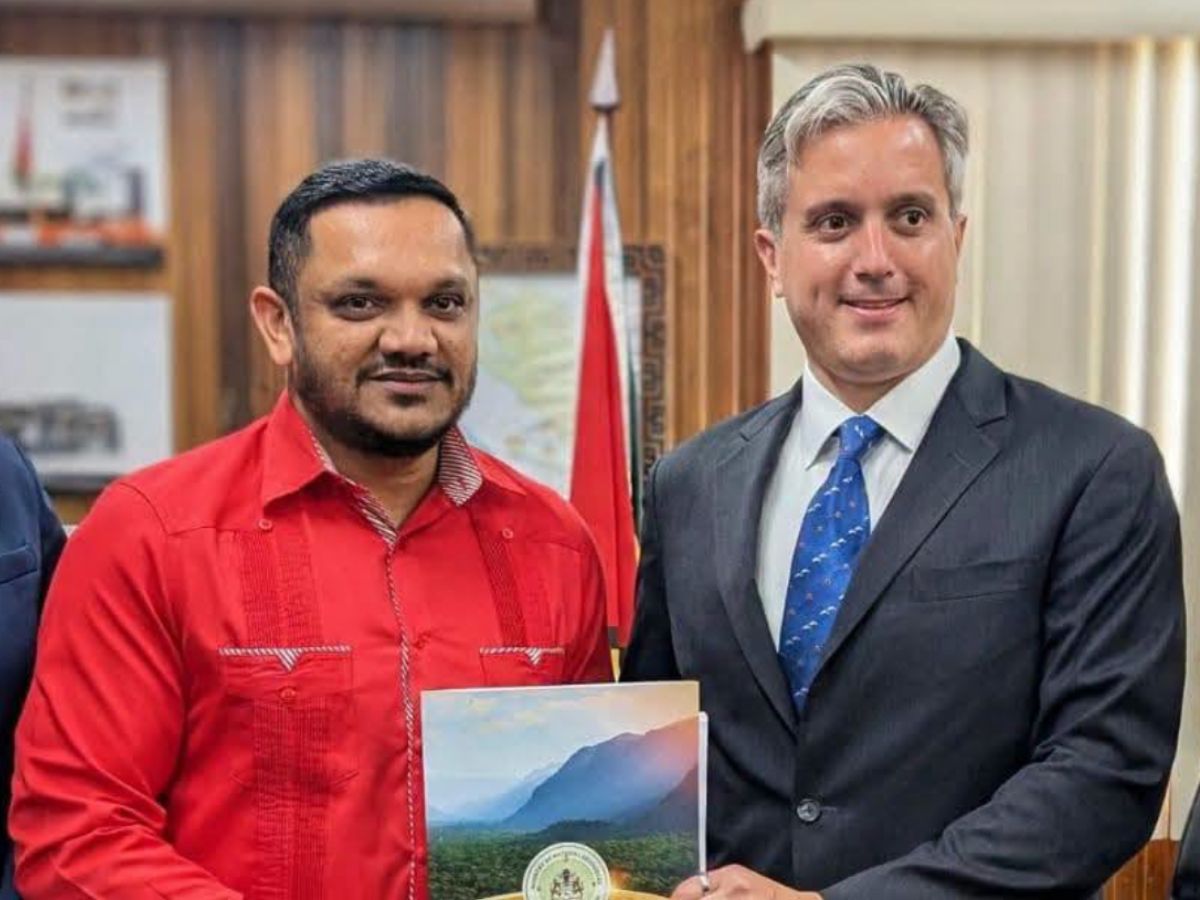
The government of Guyana has finalised a mineral agreement with Mako Mining Corp, clearing a key regulatory hurdle for the development of the Eagle Mountain Gold Project. The agreement, signed between the Ministry of Natural Resources, the Guyana Geology and Mines Commission and Mako's wholly owned subsidiary Stronghold Guyana Inc, establishes the legal, fiscal and operating framework under which the project will proceed.
The deal is structured under Guyana's Mining Act and provides legal stability for mining licences, prospecting licences and authorisations, along with fiscal terms, for ten years, subject to specific environmental provisions. At the end of that period the two sides may renegotiate the terms or renew them unchanged. Guyana's standard mining fiscal regime applies to the project, including an eight per cent net smelter royalty and a twenty five per cent corporate tax rate, which company filings estimate could generate close to one hundred and forty seven million US dollars in royalties over the life of the mine.
Mako is not new to Guyana. The Vancouver based company, listed on the TSX Venture Exchange and Nasdaq, has maintained a presence in the country for over ten years and has developed a longstanding relationship with its mining sector. It also operates the San Albino gold mine in Nicaragua and acquired the Mt Hamilton project in Nevada earlier this year. The Eagle Mountain licence, held in Guyana by local firm Kilroy Mining Inc under a joint operating arrangement with Stronghold, covers a resource estimated at 1.18 million ounces of gold in the indicated category and a further 582,000 ounces inferred.
Preparatory work at the site, located near Mahdia in Guyana's interior, has already begun. Mako's chief executive Akiba Leisman said the company has invested more than thirty million US dollars so far and has started early construction of minor infrastructure. Major construction work is scheduled to begin in the third quarter of 2027 and is expected to run for around fourteen to fifteen months before the first gold pour. Gold production is currently estimated to commence by the end of 2028, subject to the completion of the requisite regulatory and environmental approvals. An Environmental and Social Impact Assessment was submitted to Guyana's Environmental Protection Agency in March this year, with the public comment period closing in June.
The government has pointed to the domestic labour market as a central benefit of the agreement. Officials have said they expect the project to prioritise the hiring of Guyanese workers, the use of local contractors and suppliers, and the provision of skills training. Leisman said the company intends to hire around two hundred and fifty Guyanese workers directly once construction is under way. The agreement also commits Mako to an annual contribution to the Ministry of Natural Resources' Training Centre, with funding directed towards capacity building and institutional development. That funding is due to begin no later than twenty four months after the mining licence is granted, or twelve months after production starts, whichever comes first.
Beyond employment, the agreement sets out commitments on environmental stewardship and community development programmes, which the government has said are intended to ensure that the project contributes to Guyana's broader economic development rather than operating in isolation from it. The Ministry of Natural Resources, together with the Guyana Geology and Mines Commission and other relevant agencies, will continue working with Mako as the project advances, with a stated aim of ensuring compliance with the country's laws and protection of its environmental, social and economic interests.
Gold remains central to Guyana's economy outside the oil sector that has dominated headlines in recent years. It was the country's largest export before oil overtook it, and production has continued to grow, with declarations rising by roughly fifty thousand ounces in 2025 and the sector earning close to one billion US dollars in 2024 as larger producers expanded output. The Eagle Mountain agreement is being presented by the government as evidence of continued investor interest in that sector, though the timeline set out by Mako remains contingent on approvals that have not yet been finalised.