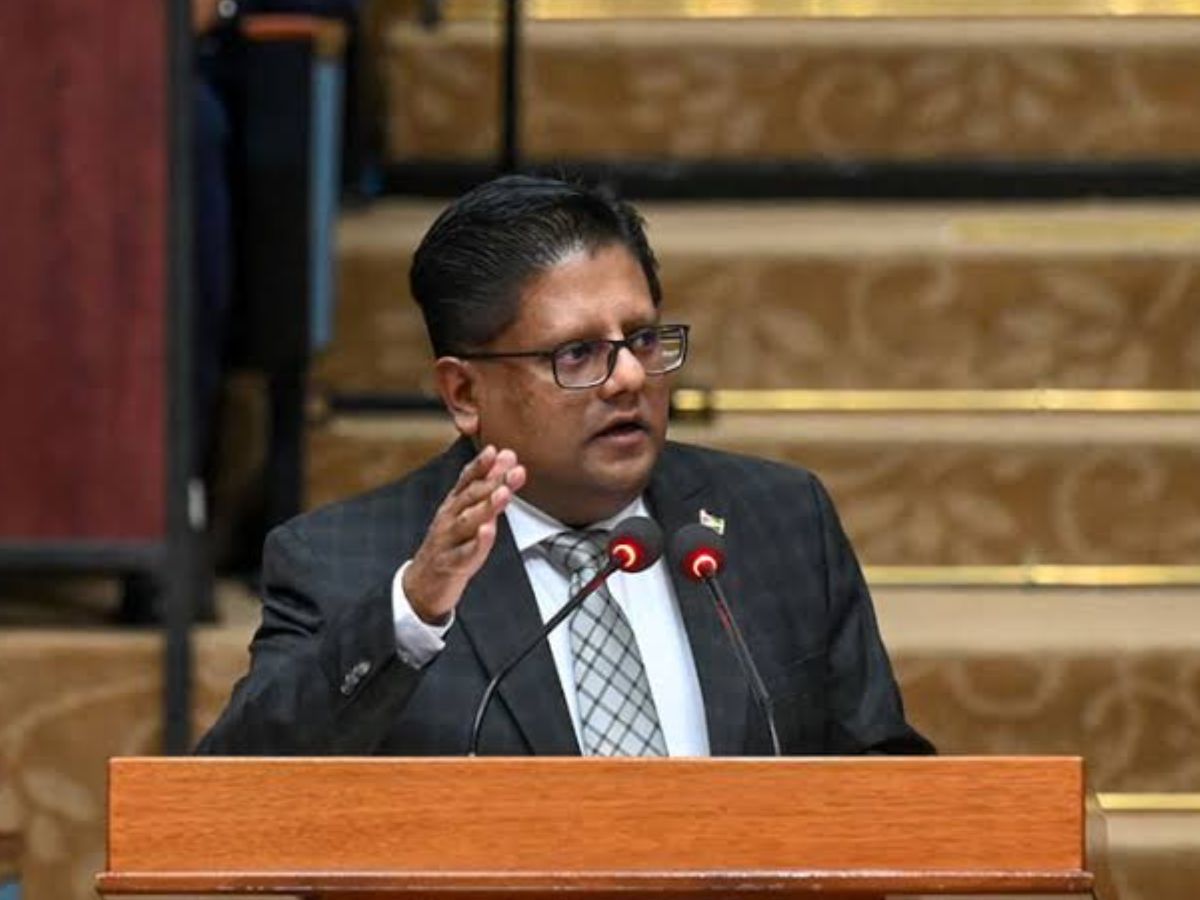
Guyana's Finance Minister, Dr Ashni Singh, used a high-level ministerial dialogue at the United Nations in New York to set out the country's approach to food security, describing measures aimed at expanding domestic production and protecting households from rising costs. The discussion, which brought together officials from across Latin America and the Caribbean, focused on reducing hunger and sustaining progress made in the region over recent years.
Singh pointed to Guyana's own record, noting that hunger and undernourishment in the country have fallen to below 2.5 per cent, a figure well below both the regional and global averages. He said the reduction reflected years of policy intervention rather than a single measure, though he was careful to add that the country remains exposed to pressures originating well beyond its borders.
That vulnerability formed a significant part of his address. Singh warned that progress towards the global goal of ending hunger has been uneven, with extreme weather, recurring El Niño conditions and geopolitical tensions all capable of disrupting production and supply chains with little warning. He referred specifically to rising prices for wheat, fertiliser and diesel, inputs on which much of the region's agriculture still depends. Higher costs at the production and transport stages, he said, tend to filter through to food prices on shop shelves, placing the greatest strain on households that can least absorb it.
Much of Singh's address concerned what Guyana is doing domestically to reduce that exposure. He described continuing investment in transport infrastructure intended to open up new agricultural land and improve the connection between farms and markets, alongside the development of a regional food hub equipped with cold-storage facilities to support agricultural trade. The stated aim, he said, is to lower production costs and allow producers to benefit from greater economies of scale.
Singh also set out efforts to bring more scientific and data-driven methods into farming. Hydroponics and shade houses have featured prominently in this push, offering a degree of protection against the unpredictable weather that has increasingly affected traditional cultivation. Tax incentives and other measures designed to draw private investment into agriculture and agribusiness were presented as part of the same strategy, intended to broaden the base of production beyond what the state alone can fund.
On affordability, Singh pointed to the nationwide rollout of farmers' markets, framed as a way of improving competition and cutting out inefficiencies in food distribution. The government's broader objective, he said, is to ease pressure on food prices while improving both the supply and quality of nutritious food available to consumers.
Nutrition among children received particular attention. Singh confirmed the continuation of the National School Feeding Programme, which provides fortified hot meals to pupils, alongside child and youth health programmes and school screening initiatives. These measures, he argued, serve two purposes at once: meeting immediate nutritional needs while catching health problems early enough to act on them.
Economic growth featured as well. Singh cited the creation of 156,000 jobs over the previous five years, arguing that employment and rising household incomes have a direct bearing on people's ability to afford a basic, adequate diet. Food policy, in his telling, cannot be separated from wider economic performance.
Singh closed by reaffirming Guyana's commitment to regional cooperation, referencing CARICOM's "25 by 2025 + 5" initiative, which aims to lift agricultural production and expand trade between member states. The underlying goal, he said, is to reduce the Caribbean's reliance on food imports and build resilience against the supply, climate and price shocks that have repeatedly tested the region's food systems in recent years. He gave no indication that this work is close to finished, describing it instead as an ongoing effort that will require sustained investment well beyond the current period.