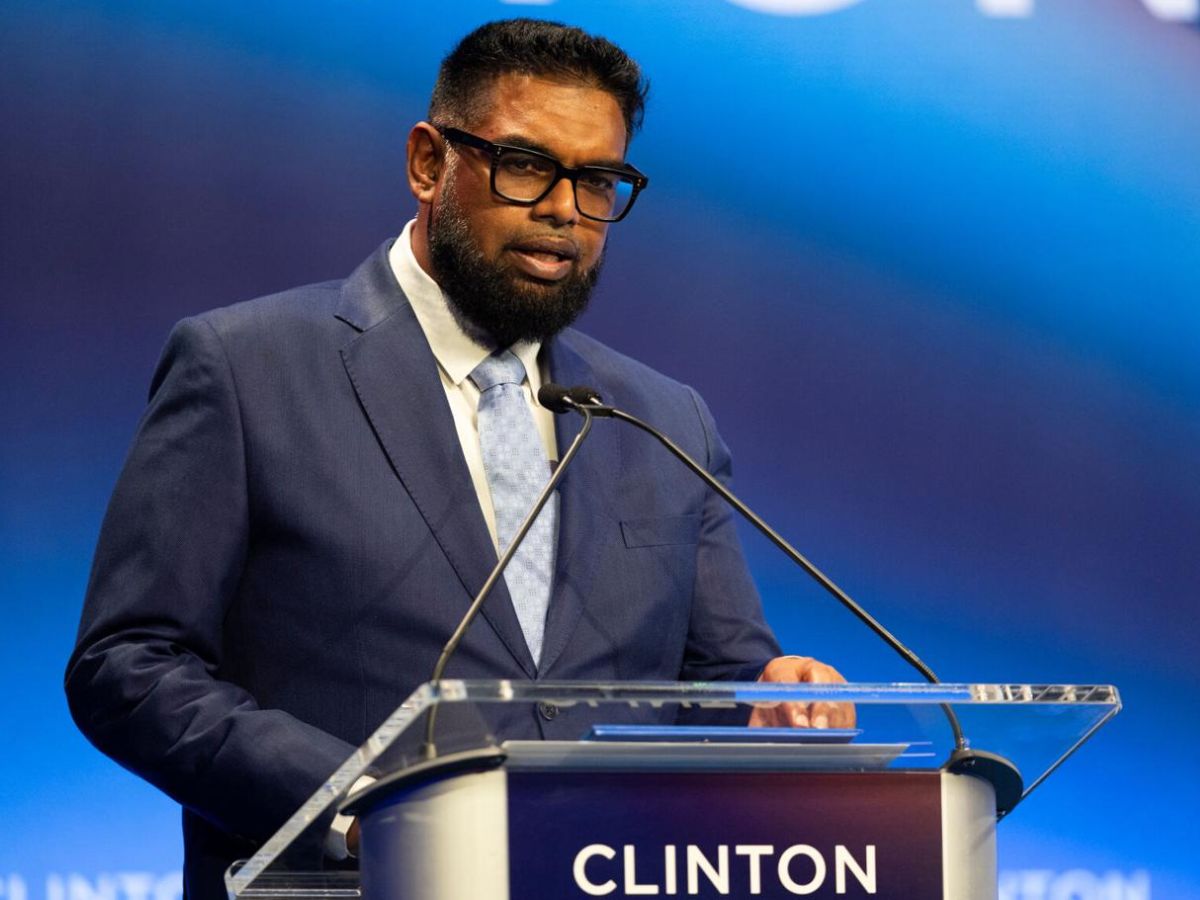
President Irfaan Ali of Guyana told an audience in New York this week that partnerships offer smaller developing countries a route around limitations in finance, technology and skilled personnel that they could not overcome alone. Speaking at the Clinton Global Initiative's "Powering Scientific Breakthroughs" event, Ali argued that collaboration allows nations like his to access expertise and capital that would otherwise sit beyond their reach.
His argument rests on a basic imbalance. Smaller states face the same global pressures as larger economies, from pandemics to climate change, but with a fraction of the financial and human resources to respond. Ali named several areas where he believes scientific and technological progress is most urgently needed: healthcare, energy security, food security, climate and biodiversity, artificial intelligence and digitisation, pandemic preparedness, infrastructure, and the development of human capital. Rather than expecting small states to fund and build every one of these capabilities independently, he presented partnerships as a way of expanding what a country like Guyana can realistically achieve.
Healthcare has become the clearest example of this approach in practice. Guyana has extended its partnership with the Mount Sinai Health System in an effort to modernise its public healthcare system by 2030. The plans cover electronic health records, telemedicine, diagnostics, and greater use of data in clinical decision-making, alongside workforce training. Ali pointed to recent progress in medical training and technology adoption, including the country's use of remote robotic cardiac surgery. He also cited a reduction in medical evacuations from a remote hinterland location, which he attributed to investment in local infrastructure, technology and personnel.
Ali went further, suggesting that Guyana's relatively small size makes it well suited to serve as a testing ground for new research and technologies. He pointed to political will, the availability of human resources, and the country's capacity to bring different organisations together as factors that make such pilot projects feasible. The comments appeared aimed at drawing further research and development partnerships to the country, positioning Guyana less as a passive recipient of aid and more as an active site for innovation.
Digital infrastructure featured prominently among the initiatives Ali described. These include a national payment platform, expanded Wi-Fi access in hinterland communities, the digitisation of government services, and the ongoing development of the My Guyana platform. Each is intended to widen access to services for populations that have historically been harder to reach, particularly those outside the capital.
On energy and the environment, Ali referred to Guyana's involvement in the Global Biodiversity Alliance and its broader efforts around forest certification and carbon credits. These initiatives form part of the country's attempt to draw on international collaboration to address climate and biodiversity priorities that would be difficult to tackle through domestic resources alone.
Food security emerged as another area where Ali sees room for Guyana to expand its influence beyond its own borders. He described ambitions for the country to become a food security hub for the Caribbean, pointing to its arable land and freshwater resources as advantages relatively few countries in the region can match. Guyana's collaboration with Brazil's agricultural research organisation, EMBRAPA, was cited as an example of how such resources might be converted into wider regional capacity through partnership and technical support.
Underpinning all of these points was Ali's central claim: that a country's capability should not be judged only by its population size or financial reserves. Strategic partnerships, he argued, allow smaller states to take on projects that would be impossible to manage on their own. His address left open a broader question that extends well beyond Guyana, namely how developing countries more generally might use collaboration to build capabilities that domestic resources alone could never support.