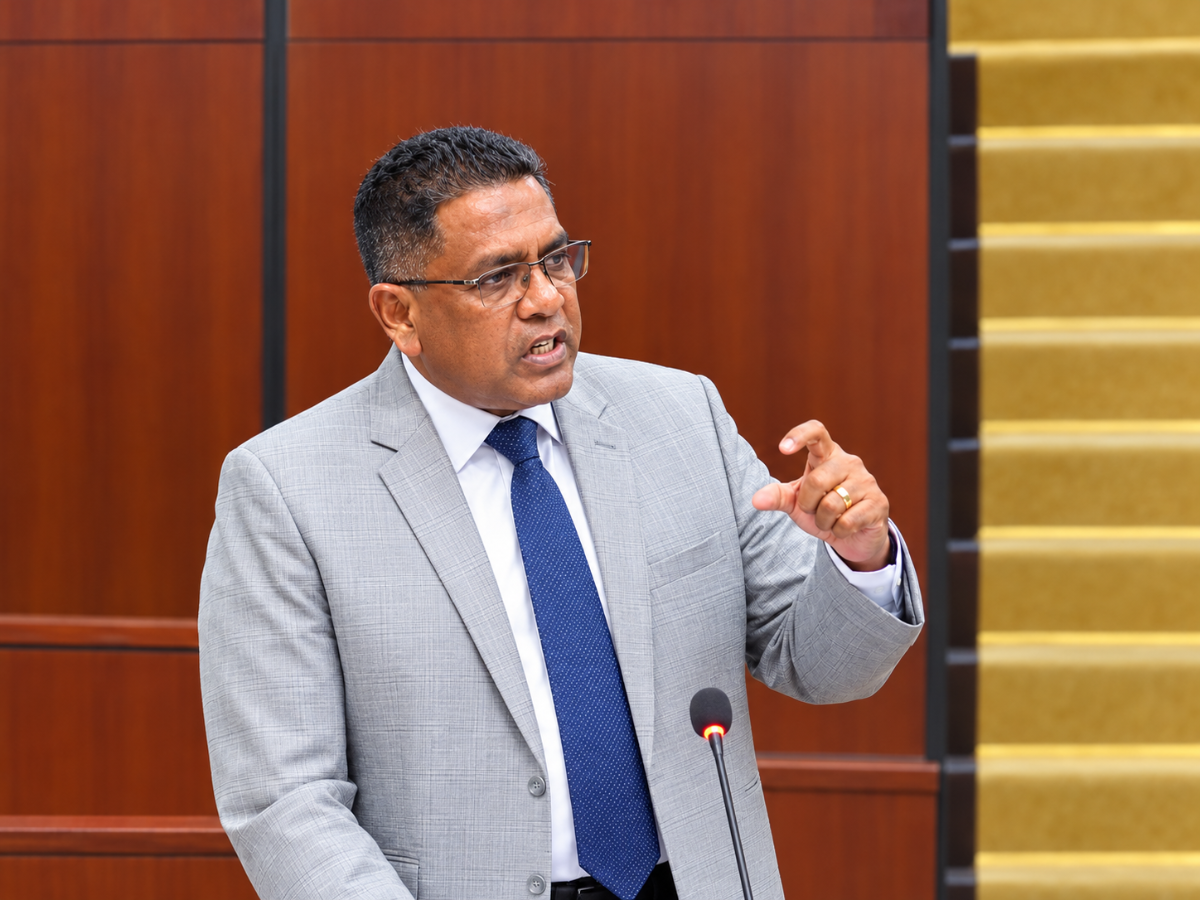
President Dr Irfaan Ali has announced that Guyana will designate 1.5 million hectares, or 3.7 million acres, of state forest as a permanent conservation zone. The commitment was made at a United Nations event on the "30 by 30" biodiversity target, the international goal of protecting 30 per cent of the planet's land and oceans by 2030.
The area covers the Acarai-Rupununi and Acarai-Corentyne corridors in southeastern Guyana, a largely unbroken stretch of rainforest bordering Brazil and Suriname. The designation places Guyana among the countries making the largest single conservation commitments under the Kunming-Montreal Global Biodiversity Framework, the agreement adopted in 2022 that set the 30 by 30 target. Guyana is classified as a High Forest Cover, Low Deforestation nation, a group of countries that have preserved most of their forest cover while facing limited international financing for doing so.
Roughly 85 per cent of Guyana's landmass is forested, but only around 9 per cent currently sits within a formally protected area, including Kaieteur National Park, the Kanuku Mountains and Shell Beach. The new designation would roughly double the country's protected land. Guyana's government has previously pledged to expand its protected areas as part of a wider push to align conservation with the country's economic development, which has accelerated sharply since offshore oil production began in 2019.
The scientific case for protecting the corridor rests substantially on a survey carried out in November 2024. A team of scientists, working alongside more than fifty Indigenous experts from the Waiwai, Wapishana, Trio and Macushi peoples, documented over thirty species new to science and dozens more not previously recorded in Guyana, in what researchers described as one of the least explored parts of the Amazon basin. Findings from the survey were presented in Georgetown in July 2025 and have since informed government planning for the area.
The protected zone forms part of Guyana's Low Carbon Development Strategy, the policy framework the government has used since 2009 to link forest conservation with financing, most notably through the sale of carbon credits. Under the new arrangement, 20 per cent of forest-carbon revenue generated from the protected area will go directly to Indigenous and forest communities, to be spent through self-directed Village Sustainability Plans rather than allocated by central government. Officials have described this as a "people-centred" model of conservation, one intended to place decisions over land use and revenue in the hands of the communities who live within the corridor rather than in a national agency.
Guyana's approach has drawn attention from other biodiverse but lower-income nations facing similar pressure to develop natural resources while preserving forest cover. In 2024, President Ali launched the Global Biodiversity Alliance at the UN General Assembly, a coalition intended to help such countries access international finance and share technical expertise on conservation. The Alliance has grown quickly since its founding summit in Georgetown in July 2025, expanding from seventeen member organisations to more than 130.
The Alliance's second conference and financing forum is scheduled for 30 and 31 October 2026. Organisers have said the event will focus on drawing private capital into nature preservation, alongside public funding, and on building financial mechanisms that reward countries for maintaining intact ecosystems rather than converting them to other uses. Guyana's government has said it expects the October conference to produce concrete commitments rather than further declarations of intent, though it has not disclosed specific financing targets ahead of the meeting.
The announcement comes as Guyana continues to balance its environmental commitments against one of the fastest-growing economies in the world, driven by offshore oil revenue. Officials have argued that the two goals are compatible, with resource income used in part to fund conservation and climate resilience programmes, though the scale of the country's oil expansion has drawn scrutiny from environmental groups who question whether forest protection can offset the emissions associated with new extraction.