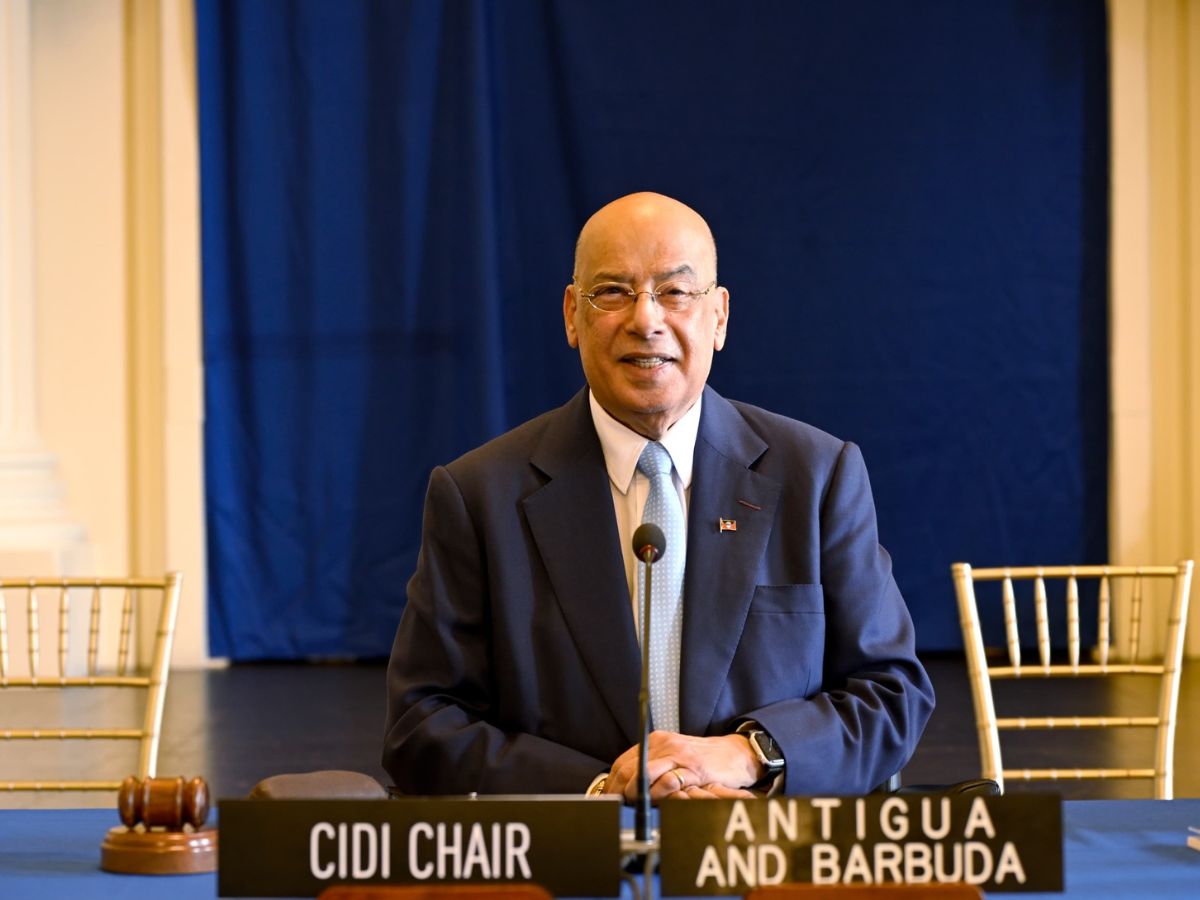
The Chancellor of the University of Guyana, Sir Ronald Sanders, has directed university authorities to resolve an ongoing delay in issuing official marks for law students and has ordered a full administrative review into the failure.
The delays concern grades for Criminal Law I and Criminal Law II from the 2024/2025 academic year. Students affected by the hold-up have faced uncertainty over their academic standing at a time when many require confirmed results for applications to regional law schools. Addressing the matter, Sir Ronald described the delay as completely unacceptable and issued an apology on behalf of the institution to the students concerned.
The issue was formally brought to the Chancellor's attention on 17 September 2026 by the President of the University of Guyana Students' Society. Sir Ronald referred the complaint to Professor Stafford Griffith, Chairman of the Transitional Management Team, with instructions for an immediate investigation and corrective action. An initial deadline of 18 September 2026 was set for resolving the backlog. That deadline produced only a partial resolution, prompting the Chancellor to issue further directives aimed at ensuring every affected student is accommodated and shielded from academic or professional disadvantage.
Under the measures now in place, the university will issue certified explanatory documentation, interim academic records or direct statements to regional law schools and the Council of Legal Education. The purpose is to prevent students who face application deadlines from being penalised for delays outside their control. University officials have been told to treat this as a priority rather than a routine administrative matter.
The Chancellor has also instructed the Registrar and the Examinations Division to communicate directly with affected students about the status of their grades. This instruction followed confusion over what constitutes an official result. Sir Ronald clarified that the internal marking of examination papers by lecturers does not amount to the formal release of approved results, a distinction that appears to have contributed to the delay and to students' uncertainty about where matters stood.
Separately, an administrative investigation has been launched to establish why the grades remained outstanding well beyond the university's standard deadlines. The review will examine why earlier assurances given to students and staff were not honoured, and whether comparable delays exist in other departments across the university. Sir Ronald has asked for a clear account of the internal processes that allowed the backlog to persist, rather than a general statement of intent to improve.
Findings from the review will be reported to the University Council and the Transitional Management Team. Officials say this will form the basis for updated procedures governing examination approvals and the release of results, with the aim of establishing clearer lines of accountability. Whether these changes will be formalised into written policy, or left to informal practice, has not yet been specified.
The episode has drawn attention to broader questions about administrative capacity within the university, particularly in departments handling professional qualifications with strict external deadlines. Law students in Guyana often rely on timely results to meet application windows set by regional bodies, meaning delays of this kind carry consequences beyond the university itself.
For now, the immediate priority remains ensuring that no student is disadvantaged while the underlying causes are examined. University officials have indicated that updates will be provided to students as the review progresses, though no firm date has been given for its completion. Sir Ronald's intervention signals that the matter is being treated as a matter of institutional credibility, not simply a scheduling issue confined to one academic department.