The Guyanese government is expediting its landmark Wales gas-to-energy initiative, targeting December 4 for the initial testing of its turbines. The immediate objective of this "first fire" phase is to channel an initial 57 megawatts of electricity into the national grid, offering a buffer against soaring domestic power consumption. The date marks the clearest signal yet that officials view the project's completion as a matter of urgency rather than routine infrastructure planning.
The push for rapid deployment is a direct response to escalating electricity demand driven by high temperatures and rapid commercial and residential development. National generation capacity is currently sufficient to meet demand, but the existing distribution infrastructure is buckling under the increased load. Officials report that transmission lines and transformers are routinely exceeding their design capacities, leading to equipment fires and widespread system trips. Households in several regions have experienced repeated outages in recent months, prompting complaints from businesses reliant on continuous power for refrigeration and machinery.
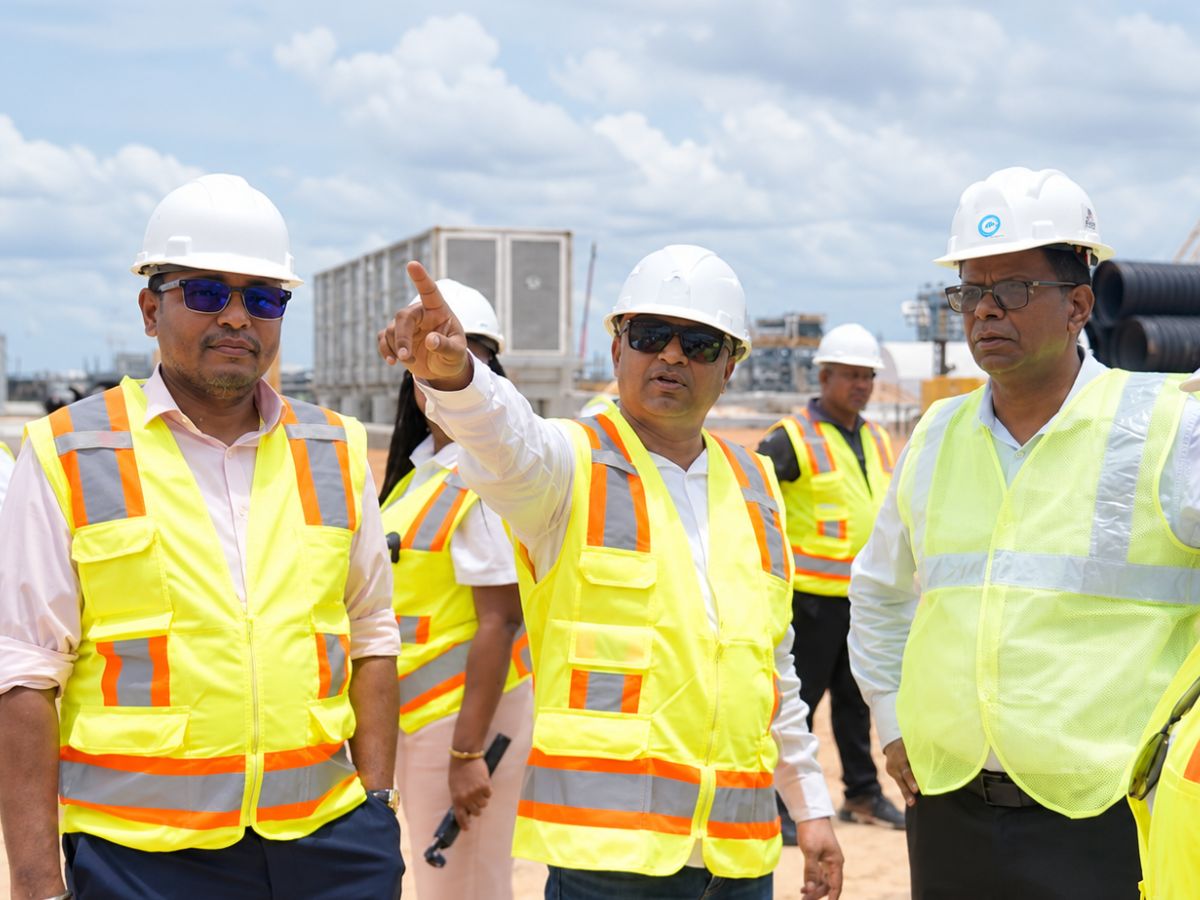
A workforce of 1,300 personnel, coordinated by international engineering firms, is currently preparing the site for the December deadline. The facility is already equipped with essential infrastructure, including liquefaction plants, sludge catchers, and multiple gas and steam turbines. A dedicated substation is also under construction to step up the generated power for national distribution. Site managers have described the current phase of work as the most labour-intensive stage of the build, with construction running across extended shifts to meet the timeline.
Following the initial 57 megawatt injection, the first phase of the project is designed to supply 300 megawatts. Total capacity is expected to reach 600 megawatts upon full completion, a figure that would represent a substantial share of the country's current generation output. The scale of the undertaking places it among the largest energy infrastructure projects attempted in the Caribbean region in recent years.
To accommodate the forthcoming energy supply and prevent further network failures, the state utility provider is undertaking an $800 million modernisation of its transmission infrastructure. This parallel initiative involves the installation of new substations and the construction of hundreds of kilometres of high and medium voltage transmission lines to better distribute the power load across expanding communities. Engineers involved in the works have noted that without this overhaul, the additional generation capacity from Wales would have limited practical effect, since much of the current grid was not built to carry the loads now being demanded of it.
Representing the largest electricity generation investment in the nation's history, the completed project is expected to alter the local energy landscape considerably. By reducing reliance on imported fuels and doubling national generation capacity, the initiative aims to stabilise energy costs and deliver a 50 per cent reduction in electricity tariffs for households and industrial consumers.
For a country whose economy has been reshaped by offshore oil production over the past five years, the Wales project carries a symbolic weight beyond its technical specifications. Guyana's rapid growth has outpaced the capacity of its power network, and the gap between economic ambition and physical infrastructure has become one of the more visible strains on daily life. Business owners in Georgetown have pointed to outages as a recurring cost of doing business, one that undercuts some of the gains from the country's broader economic expansion.
Whether the December timeline holds will be an early test of the government's ability to deliver a project of this size on schedule. Delays in large energy infrastructure builds are common, and the complexity of integrating new generation capacity with an ageing and overstretched grid adds further risk. For now, officials remain committed to the date, and the coming months will show whether the Wales facility can begin easing the pressure on a network that has struggled to keep pace with the country it serves.