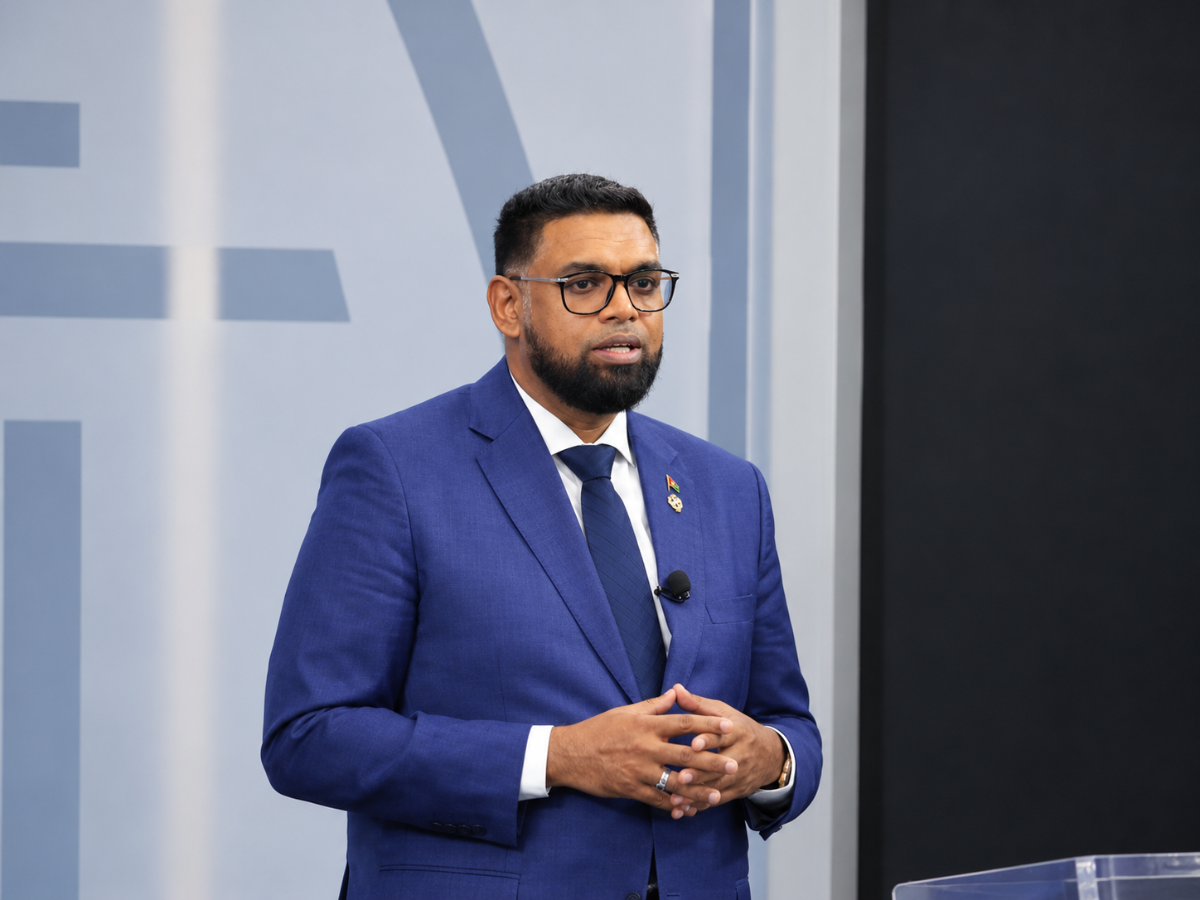
The Government is negotiating with commercial banks to make loans for agricultural production cheaper, with support aimed at medium- and large-scale operators, President Irfaan Ali told the Farmers' Conference on Monday 12 October. He linked the effort to plans to expand food production, reduce import dependence and strengthen Guyana's position as a regional food hub.
Dr Ali said the Government has brought the commercial banks together to discuss incentives modelled on those offered for low-income housing loans. Republic Bank has committed to setting aside resources for agricultural lending at a preferential interest rate, and talks on the rate continue. Demerara Bank is offering poultry loans at 5 per cent, and the Government is working on incentives that could reduce that further. No figure for the Republic Bank facility has been announced.
Demand for finance appears to be strong. Almost 30 per cent of applications to the newly launched Guyana Development Bank were for agriculture, which the President said points to renewed confidence in the sector and growing interest among young people and women.
The President set the talks against production figures since 2020. Rice output rose by 18 per cent and vegetables by almost 21 per cent, while fruit production grew by almost 10 per cent. Coconut production rose by almost 250 per cent and poultry by more than 110 per cent. He also reported large increases in honey production. He credited infrastructure investment, supportive policies and the efforts of farmers, and said rising domestic demand calls for higher output and productivity.
Several new targets followed. Guyana is working to produce half of its poultry hatching eggs locally by the end of next year and nearly all of them by the end of 2028. A major Guyanese private investment in aquaculture is expected by the end of 2026. Onion production in Region Nine could allow the country to meet its entire domestic requirement for the first quarter of 2027 without imports. Dr Ali has also asked the Minister of Agriculture to proceed with a 30-acre coconut seedling project, which he said will save money over time.
On markets, the President said negotiations are under way with the regional distributors Massy and ANSA McAL, and that about five containers of agro-processed products should ship by the end of this year. Pepper products from an agro-processing business in Black Bush Polder are already sold in supermarkets in Qatar. He encouraged wider use of long-term purchasing agreements between farmers and processors, which give farmers more stable prices and processors a steady supply.
Storage occupied a large part of the address. Dr Ali said the added storage is meant to protect both buyers and growers from supply disruptions, whether they come from the weather, animal and plant disease or movements in world prices. The Government has begun building rice stores in Regions Two and Three and a national honey store, and it is adding cold storage and a regional fresh produce hub. Private money is also flowing into poultry storage. These projects form part of a plan for a three-month food supply buffer, and the Government wants Guyana to become a regional centre for food storage and supply with closer links to northern Brazil and the Caribbean.
The President also tied public spending to farm results. He said new farm-to-market roads and drainage systems should come with productivity plans drawn up with farmers, so that the works lead to more cultivated land, higher yields and stronger links to markets. He said every farm should have such a plan. He also pointed to investment at the Guyana School of Agriculture to give students experience with modern technology and model farms.
Dr Ali reminded farmers that banks, processors and retailers share responsibility with the Government for raising production and keeping food affordable. He said he expects the combined effort to build a much larger sector by 2030.