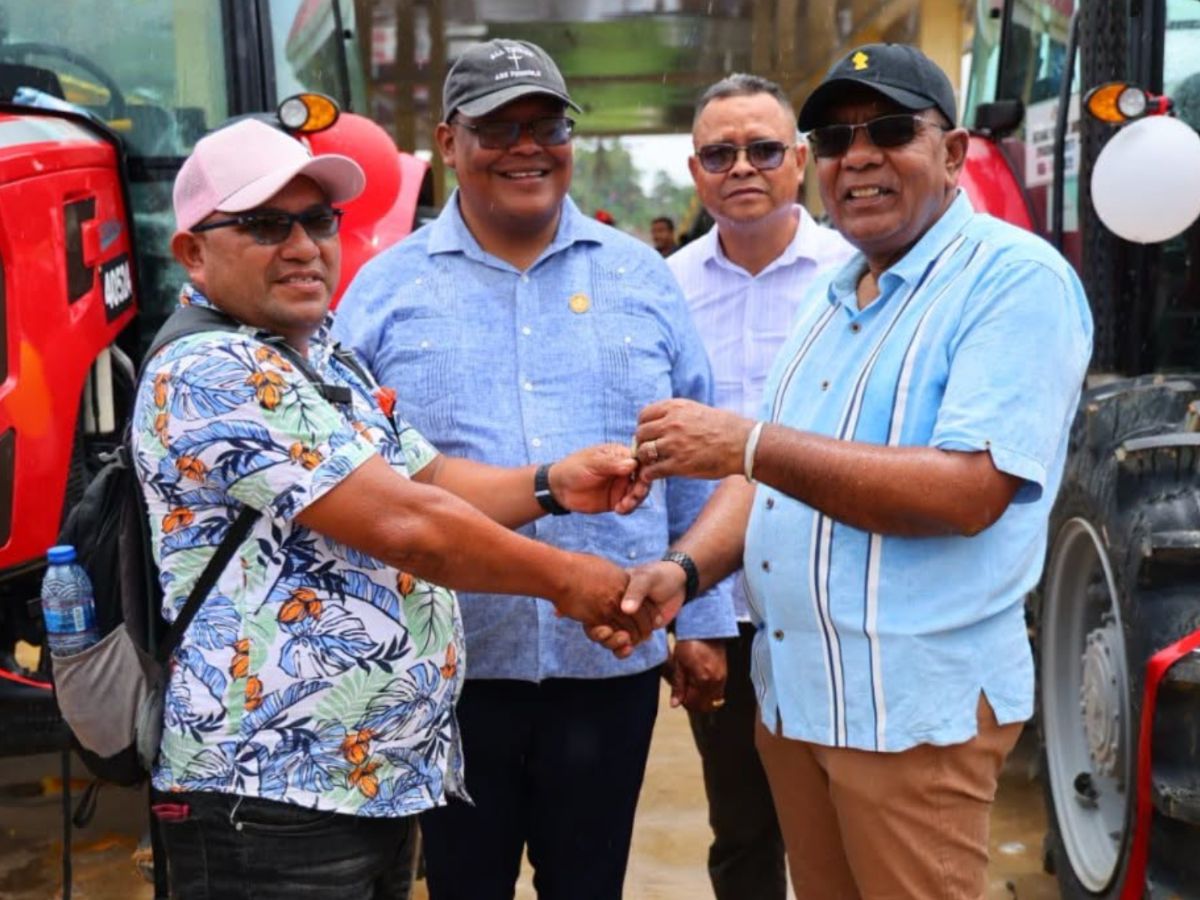
The Minister of Agriculture has commissioned $230 million worth of heavy equipment in Kumaka, Region One, as part of a government push to upgrade waterway maintenance and expand agricultural output in Barima-Waini. The handover took place before local residents and community leaders, marking one of the more substantial infrastructure deliveries the region has seen in recent years.
The core of the investment consists of one pontoon and two excavators, together valued at $230 million. Officials said the equipment will be deployed principally for waterway clearance and maintenance, a persistent challenge in a region where transport and farming both depend heavily on river access. The excavators are expected to support drainage and irrigation works tied to agricultural production, while the pontoon will assist with the movement of heavier machinery and materials along the waterways that connect Barima-Waini's scattered communities.
Alongside this larger equipment, two tractors were distributed directly to the villages of Manawarin-Arawansa and Burahara. Unlike the pontoon and excavators, which will serve the wider region, these tractors are intended for immediate use by farmers in those specific communities. Officials framed the distribution as evidence that the investment reaches beyond centralised infrastructure and into the hands of individual farming villages, where equipment shortages have long constrained productivity. Regional development, as described by officials at the event, depends as much on this localised access to machinery as it does on larger waterway works.
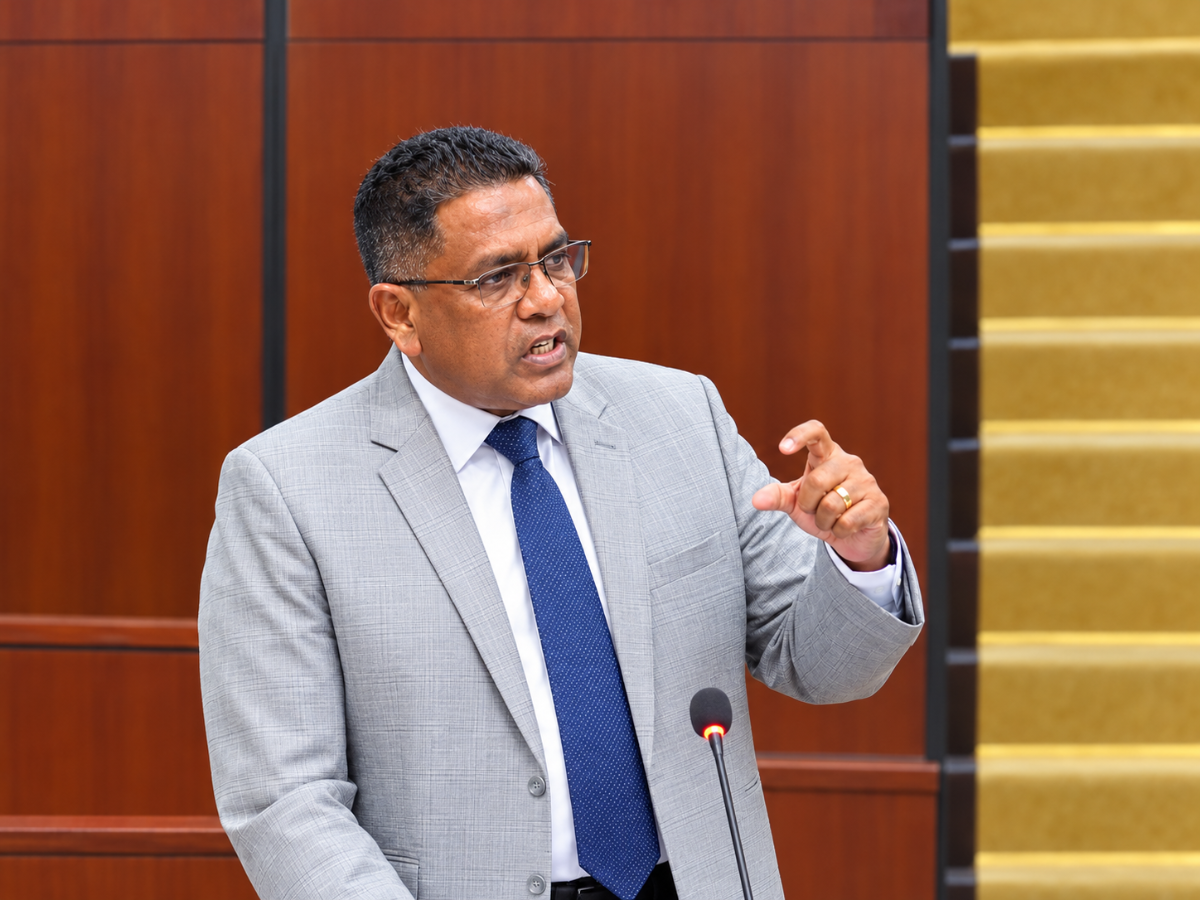
The delivery follows commitments made during earlier outreach visits to the region by the President and the Agriculture Minister. According to the Minister, the equipment represents the fulfilment of pledges given directly to residents during those visits rather than a new or unplanned initiative. The Minister told those gathered that the government's approach favours delivering physical resources over prolonged discussion of development plans, a comment that reflects the administration's broader messaging on rural investment. That framing was presented by the Minister as government policy; it was not independently verified against comparable claims made in other regions.
Beyond the equipment handover, the Minister used the occasion to address the region's agricultural workforce, directing regional leaders to actively recruit young people into farming. The government pledged to support further education for those who take up the industry, though specific details of that support were not outlined at the event. What was confirmed is a narrower and more immediate commitment tied to secondary education. Within one month, schools in the region are to receive livestock, including cattle and swine, along with 300 broiler chickens.
That commitment is directly linked to the CSEC Agricultural Science curriculum, which requires students to complete a practical component involving livestock management. Schools in remote regions have often struggled to meet this requirement due to a lack of animals and facilities, leaving some students at a disadvantage compared with peers in better-resourced areas. The delivery of livestock and poultry is intended to close that gap and allow students in Barima-Waini to fulfil their examination requirements without relying on informal arrangements or travel to other schools.
Taken together, the equipment handover and the education pledge point to a two-pronged approach from the government: infrastructure aimed at improving present-day agricultural output, and a smaller but more targeted intervention aimed at the region's next generation of farmers. Whether the youth recruitment drive translates into measurable participation remains to be seen, and no timeline was given for that broader initiative beyond the one-month window set for the livestock delivery to schools.
Residents at the Kumaka event welcomed the equipment, though some noted that waterway maintenance needs in the region extend well beyond what a single pontoon and two excavators can address. The government has not indicated whether further deliveries to Region One are planned, though officials suggested that Thursday's handover would not be the last such intervention in Barima-Waini this year.