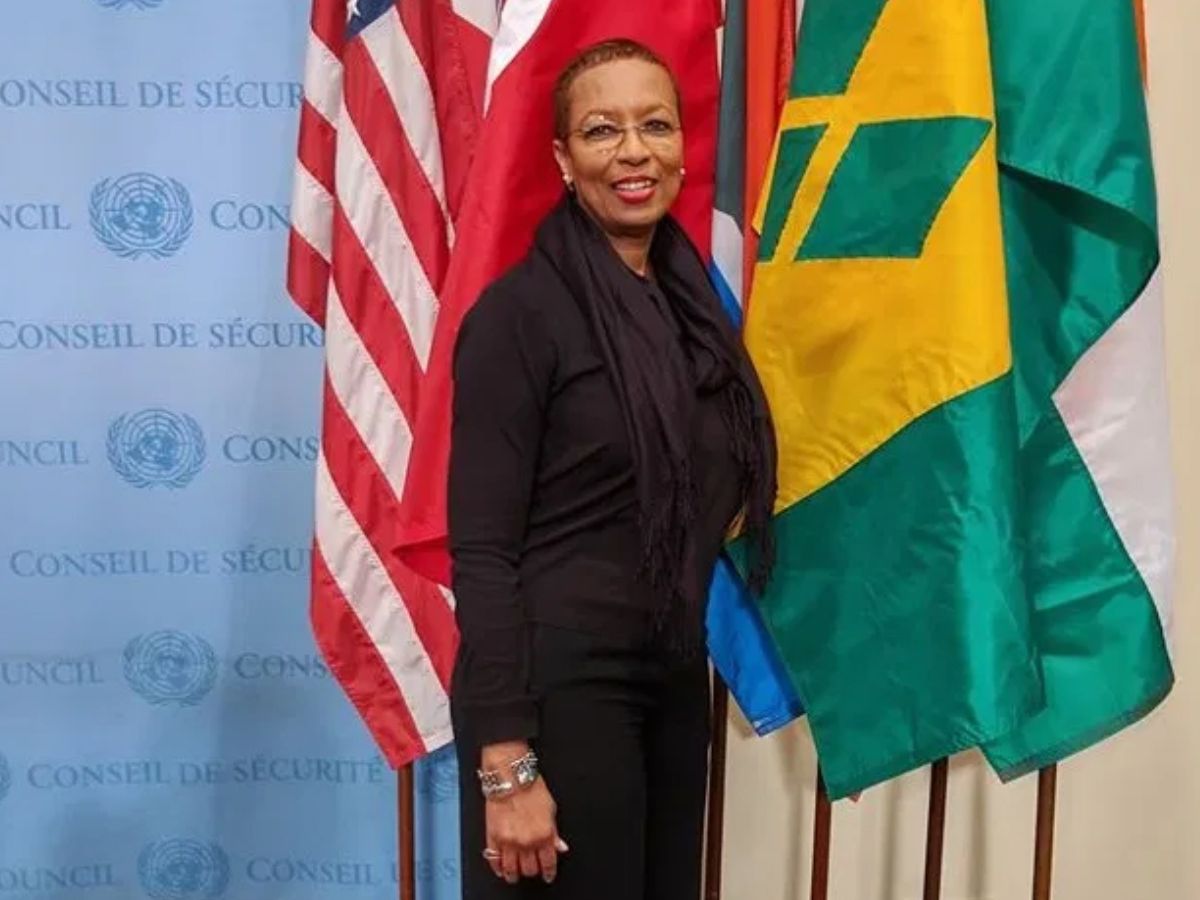
A former Saint Vincent and the Grenadines ambassador to the United Nations has argued in a published essay that the next Secretary-General should come from the Caribbean. I. Rhonda King names Guyana's Carolyn Rodrigues-Birkett as the region's candidate. Ms King was her country's Permanent Representative during its Council term in 2020 and 2021.
Ms King says debate over the selection usually centres on regional rotation and professional experience, and that far less is said about outlook. She argues that outlook shapes how a Secretary-General reads a crisis, whom she listens to and when she acts. She describes what she calls the Caribbean Sense of Life, a phrase she says she coined in 2008. In her account, it grew out of small societies where many origins, faiths and languages share limited space. She says it produces habits of listening before speaking, treating compromise as ordinary and relying on persuasion because those without power have no other tool.
She writes that these habits are scarce in international affairs at present. She cites deepening suspicion between states, financial strain and falling confidence in multilateral institutions, and conflicts the Security Council has been unable to resolve. The Secretary-General, she says, cannot command and has limited resources and no army, so the office relies on attention, patience and the confidence of governments that distrust one another. Ms King says every serious candidate is competent and that temperament is what sets them apart.
On the regional case, she notes that Latin America has held the office and the Caribbean has not. The United Nations is 80 years old and has had nine Secretaries-General, none from the Caribbean. Ms Rodrigues-Birkett has served as Guyana's foreign minister and as its Permanent Representative to the United Nations, Ms King writes.
She then lists what she describes as the Caribbean's record in multilateral diplomacy. In 1989, she says, Trinidad and Tobago revived the proposal for an international criminal court at the General Assembly. Shridath Ramphal of Guyana led the Commonwealth through the final years of the struggle against apartheid. Caribbean members of the Alliance of Small Island States helped secure the 1.5-degree goal in the Paris Agreement, and Barbados has since led the case for reform of the international financial system through the Bridgetown Initiative. Ms King says this shows Caribbean states advancing ideas that serve the wider membership and building coalitions across regions. These claims are made in the essay and have not been checked here.
On Security Council experience, Ms King says Saint Vincent and the Grenadines was the smallest state ever elected to the Council. During her country's term it joined the three African members in an arrangement known as the A3+1, which gave Africa and the Caribbean a shared voice. She says Guyana continued the arrangement during its own term in 2024 and 2025, with Ms Rodrigues-Birkett leading its delegation. According to Ms King, she negotiated with each permanent member on difficult files, including Haiti, and therefore knows the Council from within.
Ms King calls on the General Assembly, which appoints the Secretary-General, to state clearly the qualities the moment requires and to ask the Council to recommend a candidate who has them. She says the Assembly has earned that voice through a more open selection process, including public dialogues with candidates and published candidacies.
She also addresses the five permanent members, who she says will shape the recommendation. The Caribbean, she argues, has no great-power ambitions, threatens none of their interests and keeps working relations with all five. A Secretary-General from the region would owe none of them a particular debt, she writes. She asks them to weigh carefully what they know of Ms Rodrigues-Birkett's conduct at the Council table.
The essay does not cover other candidates, the results of earlier straw polls or any opposing views on the Caribbean's claim.