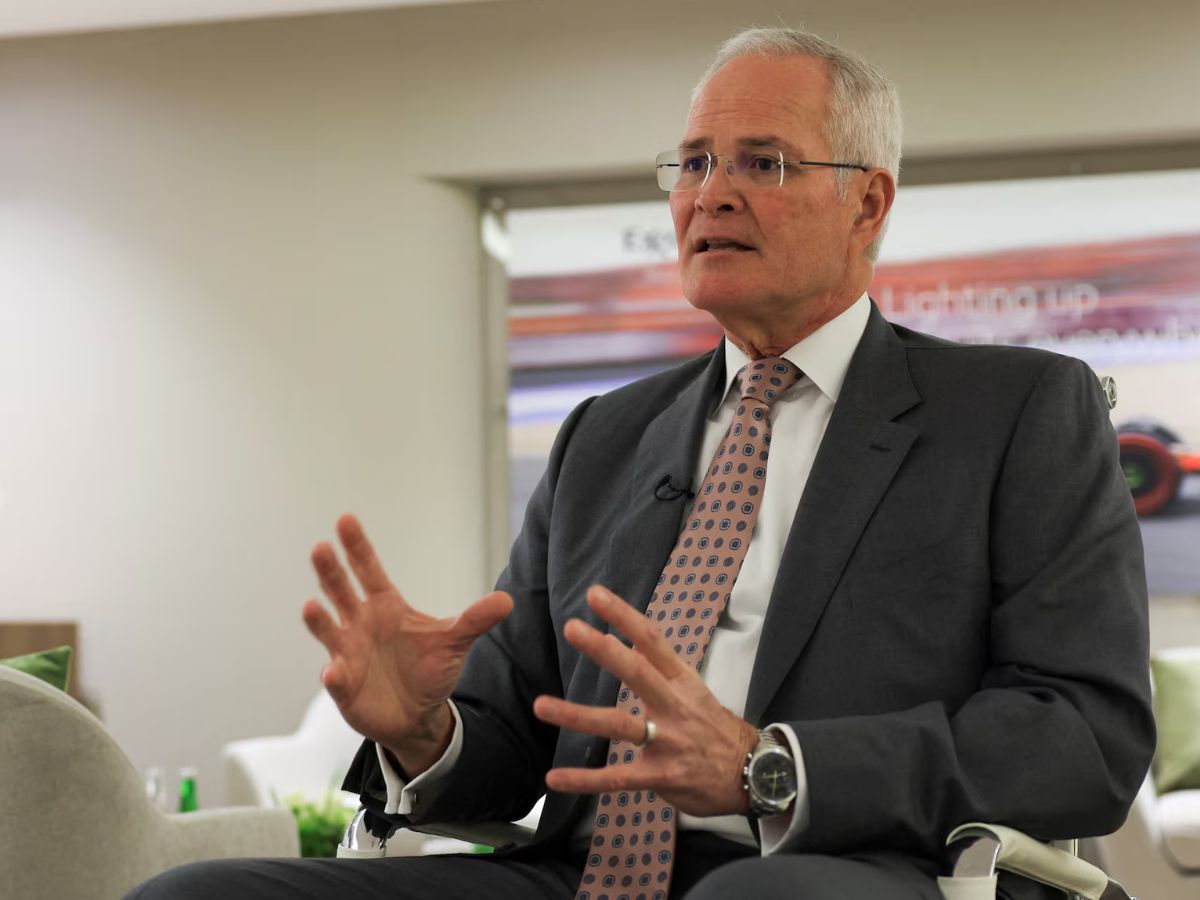
ExxonMobil has laid out a timeline for its exploration of the TTUD-1 offshore block in Trinidad and Tobago, with seismic imaging expected to conclude this year ahead of any decision on drilling an exploration well. The company's vice president of exploration, John Ardill, outlined the schedule as the operation moves from data collection toward a possible test of the acreage's geology.
TTUD-1 spans more than 7,000 square kilometres in the Eastern Tobago Basin, in water depths exceeding 2,000 metres. The block consolidates several previously unawarded deepwater areas and marks ExxonMobil's return to Trinidadian waters after more than two decades away. The company holds a production sharing contract for the acreage, signed in August 2025, and operates the block with a minority partner holding a small stake.
Seismic imaging expected by year-end
ExxonMobil expects to complete seismic imaging of the block by the end of 2026. The survey, carried out using a 3D seismic vessel equipped with streamer technology, is designed to map the subsurface geology across the acreage and identify structures that could hold hydrocarbons. Once the imaging phase concludes, the company will move into a period of processing and interpreting the data, a step that typically takes several months before any firm conclusions about drilling targets can be drawn.
Ardill has described the geology under investigation as comparable to deepwater reservoirs found in Guyana and Angola, both of which have produced substantial oil finds for the company in recent years. That resemblance, he has said, is part of what makes the Trinidad acreage worth pursuing, though he has stopped short of promising a discovery on the scale of Guyana's Stabroek Block.
Potential drilling timeline
Should the seismic results support it, ExxonMobil expects an exploration well could be drilled in late 2027 or early 2028. The company has been careful to frame this as a projection rather than a confirmed date, noting that the decision will depend on what the seismic data shows and on the subsequent work needed to select a drilling location. No well has yet been scheduled, and the timeline could shift depending on how the interpretation phase unfolds.
Trinidad and Tobago exploration context
The TTUD-1 award represents ExxonMobil's most significant re-entry into Trinidadian waters in over twenty years, and the company has described it as an important piece of its wider regional exploration programme, which already includes extensive operations in neighbouring Guyana. Unlike some other offshore projects in the region, where consortia involving companies such as BHP, Woodside, BP and Shell have progressed discoveries towards commercial development, TTUD-1 remains at an early exploration stage. No oil or gas has yet been confirmed on the block, and the current phase is limited to imaging and data analysis rather than appraisal or development work.
Comparison with Guyana
Ardill has said that ExxonMobil's work in Trinidad is progressing at a faster pace than the equivalent early stages in Guyana, pointing to Trinidad's existing oil and gas infrastructure, deepwater ports and established industry as factors that could speed up the process. He has drawn a direct comparison with Guyana's development, where seismic work began in 2013, the Liza discovery followed two years later, and first oil was achieved in 2019.
This comparison reflects ExxonMobil's own assessment of its operational pace rather than an independent verification of progress. The company has an evident interest in presenting the Trinidad campaign favourably, and the geological outcome in Trinidad remains unproven. Analysts and officials in Trinidad have welcomed the pace of activity, though the comparison with Guyana concerns process rather than results, since no discovery has yet been made on the TTUD-1 block.
What happens next
The immediate focus for ExxonMobil is completing and analysing the seismic data gathered over the course of the survey. Engineers and geoscientists will use the results to evaluate the block's potential and to narrow down possible drilling locations. Those findings will shape decisions on timing, on where any exploration well might be sited, and on whether further seismic or geological work is required before drilling begins.
For now, the prospect of a well in late 2027 or early 2028 remains contingent on that analysis. ExxonMobil has given no firm commitment beyond the current seismic phase, and officials in Trinidad and Tobago will be watching closely for signs of how quickly the company intends to move once the data is in hand.