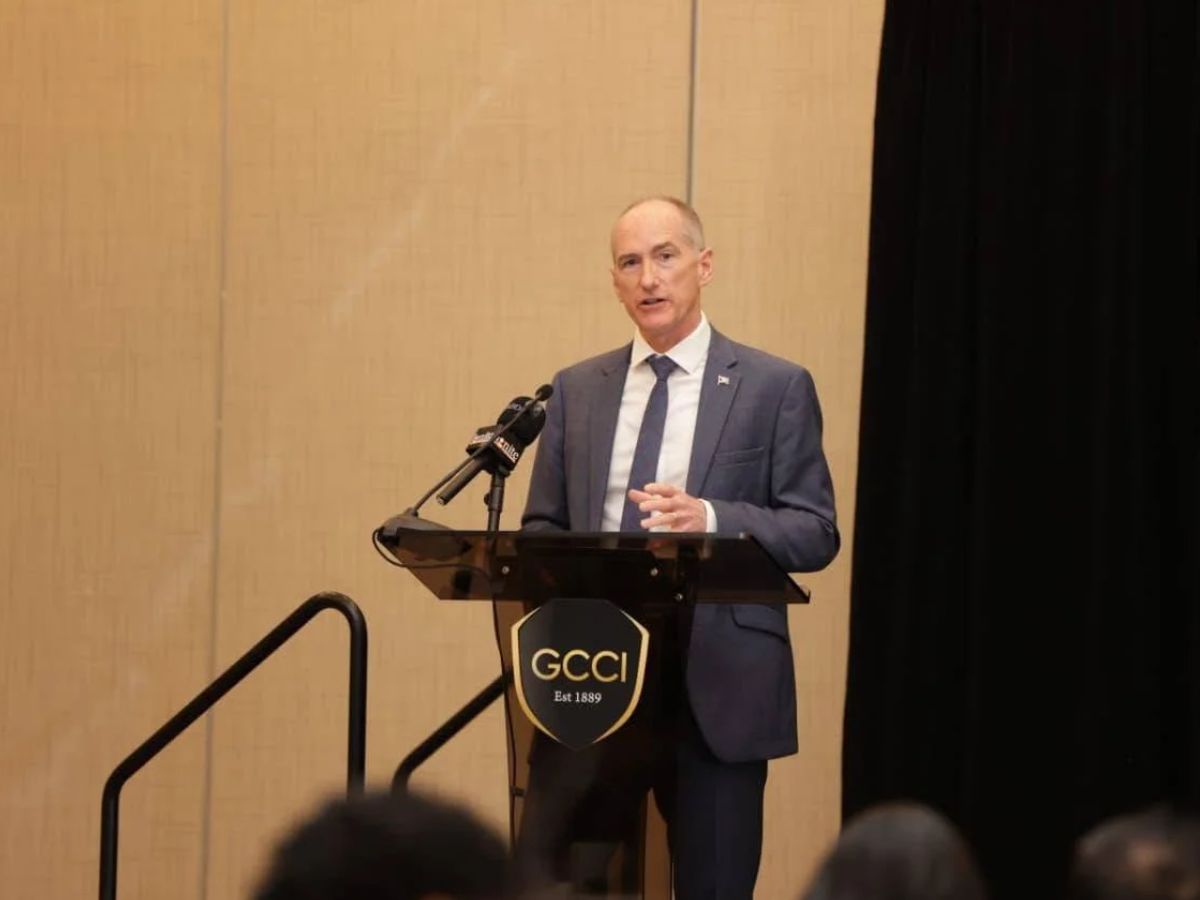
Alistair Routledge, president of ExxonMobil Guyana, has said the private sector will have a critical role in the country's next phase of energy development, particularly as it builds a natural gas industry. He was speaking on Thursday at the Georgetown Chamber of Commerce and Industry (GCCI) Energy Luncheon. Routledge said Guyana's oil and gas resources are finite and must be developed in a way that maximises the benefit to Guyanese people.
He said the country entered the global energy market at a time when diversification and energy security matter internationally, which makes collaboration important. Planning for the next stage, he said, should begin with an assessment of what has already been built. "You always have to figure out, from where are we today?" he said. When oil was discovered offshore in 2015, he recalled, there was little infrastructure to support a modern offshore operation. Eleven years later, he said, Guyana has two world-class shore bases and a growing network of companies able to serve the industry.
Routledge described the growth of the local workforce as one of the main achievements of that period. He said more than 70 per cent of the workforce supporting oil and gas operations in Guyana is now Guyanese. He added that over 50 per cent of ExxonMobil Guyana's local workforce are women, a proportion he called unheard of in the industry. Local companies, he said, have formed partnerships, brought in specialist expertise and invested in their own facilities and equipment. He said this gives the country "a pretty strong foundation" from which to start the next phase. These figures are Routledge's own, and no independent data was cited.
On natural gas, Routledge said private-sector bodies can help connect investors and specialists with local businesses. He named the GCCI, the Private Sector Commission and the chambers in Berbice as organisations with a vital role in helping those with capital and expertise to deploy it wisely and in bringing local firms into the industry.
He also pointed to how quickly the offshore oil industry has developed. He said it went from first discovery to first oil in 4.5 years and has since reached 900,000 barrels a day. He said he expects output to reach 1,000,000 barrels a day by the end of this year. ExxonMobil is the operator of the production he described, and the forecast is his expectation and not a confirmed figure. Routledge credited the government, the private sector, business organisations and educational institutions for the progress made.
He acknowledged that building a gas industry will bring difficulties. Other countries have done it, he said, but every country is different and Guyana's path will be unique. He gave no timetable for gas projects, no investment figures and no specific commitments to local firms.
Routledge pledged ExxonMobil Guyana's continued support and called on those involved to work together on the challenges of the next stage of development.