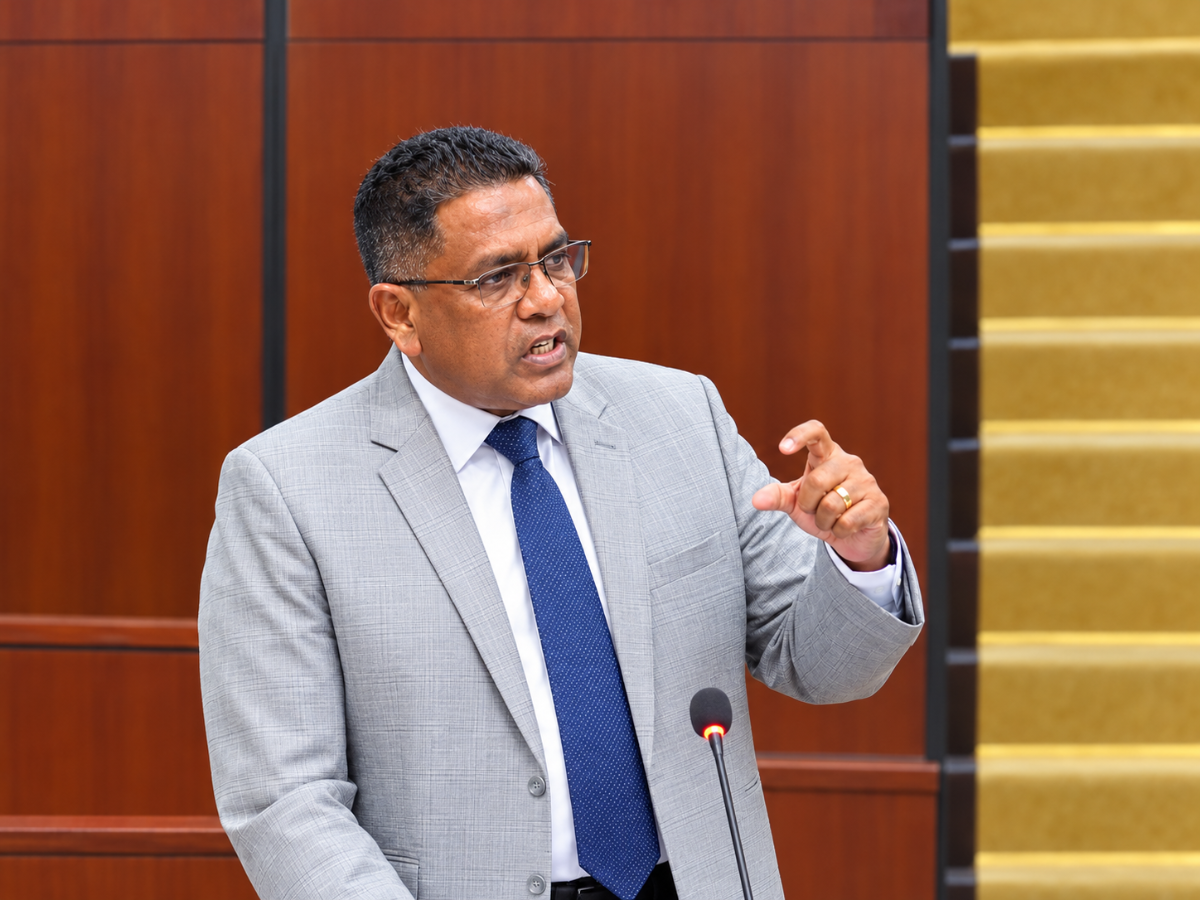
A $21.8 million training centre and office is being established at the Guyana School of Agriculture (GSA) to strengthen practical teaching in livestock production, animal health and veterinary public health. The facility forms part of a $44 million government investment in the school's livestock farm this year. Agriculture Minister Zulfikar Mustapha announced the project at the school's 61st graduation ceremony, held at Pegasus on Tuesday 13 October.
The 102 graduates were the largest class in five years, up from 84 last year. Mr Mustapha said the growing number of women and young people in agricultural education helps the institution develop. Since its establishment in 1963, the school has produced 4,997 graduates, who work as farmers, extension officers and animal health professionals, among other roles.
The ceremony also recognised the first graduates of the Certificate in Livestock Production and Management, a programme introduced recently to support the livestock industry. Mr Mustapha told them that expanding domestic production depends on people who understand livestock management, animal health, production efficiency and sustainable farming, and he urged them to put their training to use in that field.
The new centre is meant to supply the hands-on experience that students need for work in the sector. Mr Mustapha tied the investment to a wider rise in public spending. He said national investment in agriculture grew from $18.4 billion in 2020 to $113.2 billion in 2026, and that the money supports modernised production systems, expanded infrastructure and better access to technology. Tuition fees at the school have been abolished, and the 2026 budget increased its allocation to $590 million to make up for the income that student fees once provided.
The minister said the school's work will extend beyond its own students. He directed GSA to introduce short, practical courses for working farmers so that good practice reaches the farms directly. The school has already introduced digital farm record systems, and the minister said its partnership with the National Agricultural Research and Extension Institute (NAREI) underpins ongoing training for farmers and extension officers. He also pointed to partnerships with the Inter-American Institute for Co-operation on Agriculture and EMC, which have supported training in hydroponics and protected agriculture. The records are intended to encourage data-informed management of farms.
Further capital spending is planned. Tenders for the construction of a Centre of Excellence at the school are expected before the end of 2026. Mr Mustapha has described the centre in the past as a place with more practical subjects, where farmers can be brought into the school's programmes. Talk of the facility dates back to 2023.
The Ministry of Agriculture has a technology project of its own under way. Mr Mustapha said President Irfaan Ali will commission a centralised situation room and data centre at the Ministry. The situation room is designed as a central repository for real-time agricultural data to support evidence-based decisions, project monitoring and policy development.
The school began operations on 9 September 1963 at Mon Repos, on the East Coast of Demerara. It has since added forestry, fisheries, agro-processing, animal health and veterinary public health to its original agriculture course, and livestock production and management is the most recent addition. The new training centre will be the first major building to serve that newest programme, though the Ministry has not given a completion date.