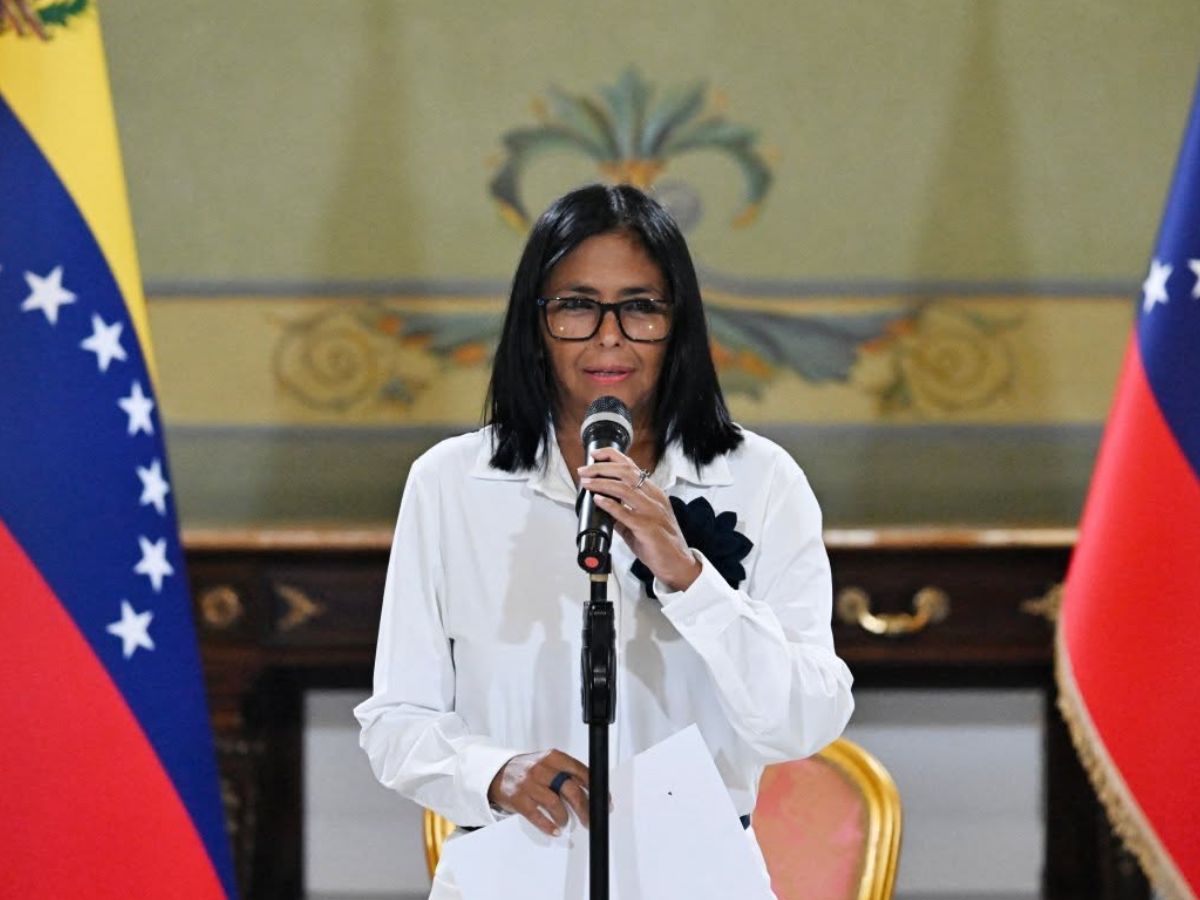
Venezuela's interim president, Delcy Rodriguez, returned from the UN General Assembly in New York this week without any signed agreements and without a date for elections. The visit was her first to the United States since American forces captured her predecessor, Nicolas Maduro, in a raid in January.
Rodriguez had hoped to secure deals on debt, energy and mining, and to show that a country once under sanctions was open to business. In her speech to the assembly she said Venezuela would hold elections as part of a transition to "full democracy". She gave no indication of when. Sources had told Reuters before the trip that talks with US officials, multilateral lenders, allied governments and energy and mining companies were expected to produce at least preliminary agreements. As of Saturday, none had been announced.
Antonio De La Cruz, a Washington-based analyst, said the results were modest when set against the attention the visit received. He asked where the disbursements, the reconstruction package and the business deals were, and said Rodriguez now faced the task of explaining when Venezuelans would vote.
President Donald Trump addressed the assembly on Tuesday while Rodriguez was present. He said "to the victor belong the spoils" and reminded delegates that the US was ready to use its military strength. He did not name Rodriguez in his speech. The two held a brief meeting on the sidelines, for which no readout was published. Secretary of State Marco Rubio later said they had discussed restructuring Venezuela's sovereign debt and that Washington had pressed for political change. He said the project must end in a free and fair election.
Rodriguez has given no signal on an election for nine months. US officials have said the process will take time, and experts estimate at least 12 months would be needed to appoint reliable electoral authorities and organise a vote. Opposition parties and analysts say a date should be set soon. The White House and Venezuela's information and foreign affairs ministries did not respond to requests for comment.
On financing, the head of the Inter-American Development Bank said the lender was working to secure approval for a $2.5 billion bridge loan for Venezuela. Reuters reported on Tuesday that some members of its board opposed the loan. Separately, ExxonMobil has reportedly held talks about returning to the Petromonagas project, which is partly owned by Russia's state-owned Roszarubezhneft. A source said a Russian delegation asked to meet Venezuela's foreign minister, Felix Plasencia, to discuss Russian stakes in Venezuelan oil projects. Russian officials did not immediately comment.
Rodriguez had few allies at the assembly. Cuba's delegation, once Venezuela's closest partner, left the hall when Trump spoke about Cuba. Sources said officials from Caracas and Havana avoided each other. Other leftist leaders who had backed Maduro kept their distance. Spain's prime minister, Pedro Sanchez, finished a phone call before standing to greet her, and later described the exchange as "normal". Brazil's president, Luiz Inacio Lula da Silva, told CNN that the US treats Rodriguez as though it were her boss and that in her position he would call elections.
More than 50 Venezuelans protested outside the UN, carrying signs reading "New Face, Same Regime" and chanting that Rodriguez should join Maduro in the Brooklyn jail where he awaits trial. Some signs showed her in an orange jumpsuit.
Media reports said the opposition leader Maria Corina Machado, who could be a strong candidate in any future vote, was again prevented from returning to Venezuela from Panama while Rodriguez was in the US. Nicmer Evans, a political analyst and former supporter of Hugo Chavez, wrote on X that Rodriguez had allowed herself to be "doubly humiliated" in exchange for Trump withholding support from Machado. He added that elections would come when the United States saw fit.
With no agreements announced and no date set, the question of when Venezuelans will vote remains unanswered.