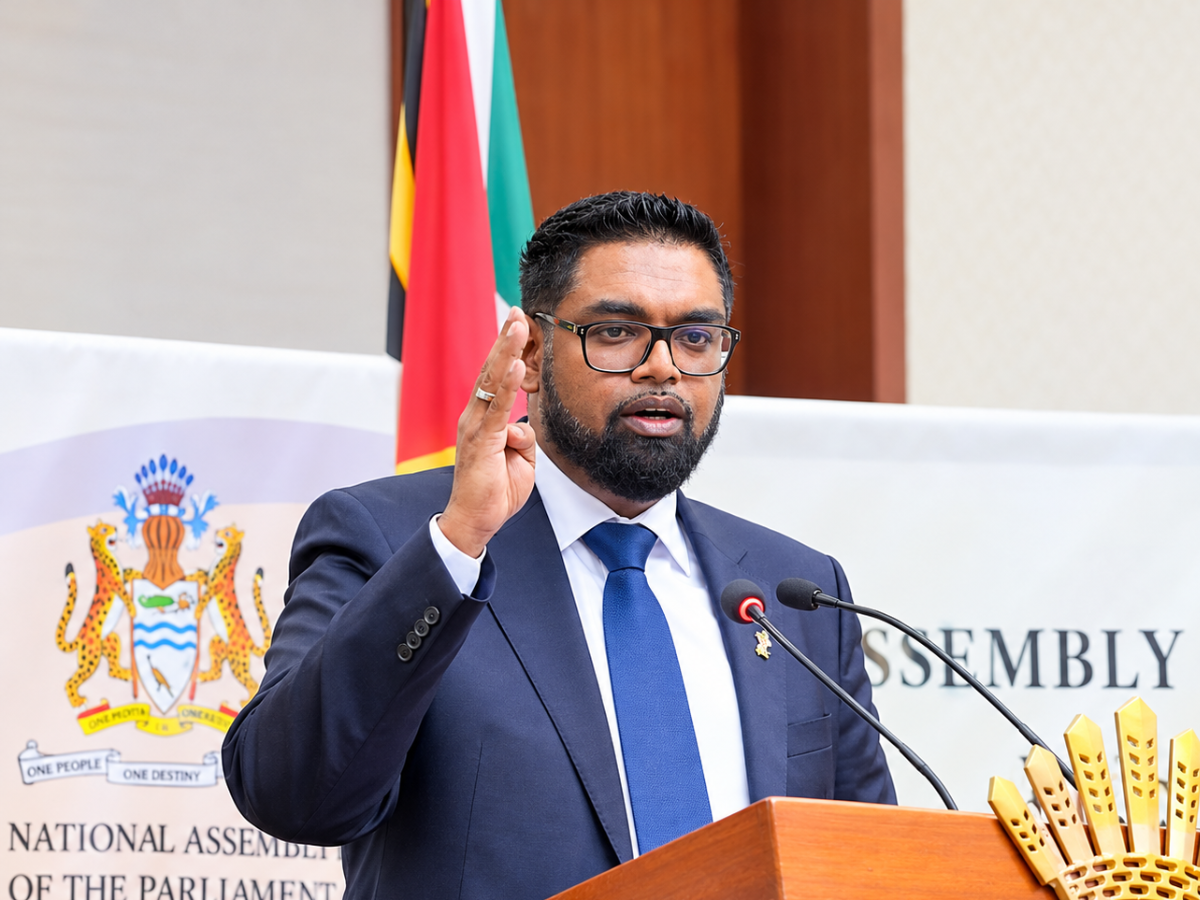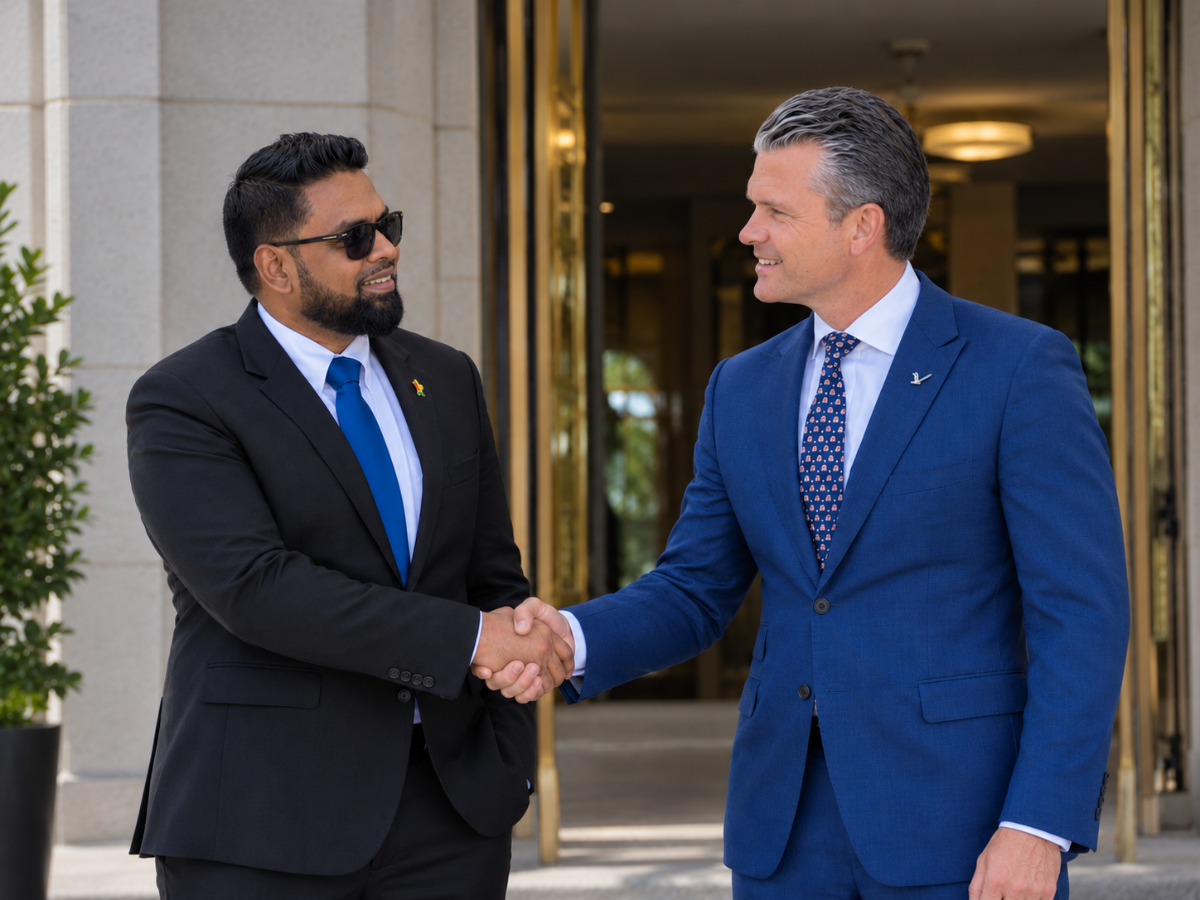
Guyana and the United States signed a Joint Declaration for an Enhanced Defense Partnership at the Pentagon on 21 October. The Pentagon said the agreement is meant to strengthen military cooperation, expand joint training and address security threats in the Caribbean. Hegseth called it a landmark declaration that lifts the two countries' defence cooperation into an all-domain partnership.
The declaration commits the US military and the Guyana Defence Force (GDF) to expanded training, multidomain joint exercises, air domain awareness and intelligence sharing. It follows a series of agreements this year. Guyana joined the Americas Counter-Cartel Joint Security Declaration in March, which covers border security, counter-narcotics work and the protection of critical infrastructure. In August, the two governments signed a Memorandum of Understanding that builds on an existing security cooperation memorandum.
The day before the Pentagon ceremony, Ali met senior US defence officials in Georgetown and confirmed a Statement of Intent on joint military engagement. He said it would proceed with full respect for the sovereignty and laws of both countries. Asked whether the statement could lead to a formal defence treaty, he said discussions were continuing. Ali also pointed to the existing Shiprider Agreement, which lets US forces, working with local authorities, pursue, intercept and board vessels suspected of drug trafficking in Guyanese waters.
The territorial dispute with Venezuela over the Essequibo region sits behind much of this activity. Caracas claims roughly two thirds of Guyana's territory, and the matter is before the International Court of Justice. Georgetown has maintained that it wants its airspace, coastline and maritime zones defended in practice as well as in law. Ali and Vice President Bharrat Jagdeo have said Guyana has no plans for offensive action against Venezuela and wants to develop its defence capabilities. The government's position is that a stronger GDF supports a peaceful settlement under international law and does not replace it.
Economic considerations carry equal weight. Offshore oil production, which began in commercial quantities in 2019, has made Guyana one of the fastest growing economies in the world. Platforms, pipelines and shipping lanes now represent assets of substantial value that a small military has had to protect with limited resources. Ministers have argued that foreign investors require a stable security environment before committing capital for the long term, and that credible air and maritime surveillance forms part of that assurance.
Organised crime is the other stated priority. Guyana's coastline and remote interior make it a transit point for narcotics moving through the region, and officials in both capitals describe the trade as linked to armed groups that operate across borders. Both governments hold that no single state can dismantle such networks alone. Pooled intelligence and coordinated operations, they say, give smaller forces access to detection capacity they could not fund themselves.
The declaration also raises questions about the terms on which closer cooperation proceeds. Guyana's constitution and its stated non-aligned foreign policy shape what it can accept, and Ali has returned repeatedly to the language of mutual respect for domestic law. Defence analysts in the region generally hold that foreign assistance works best when it builds local capability and leaves decisions about deployment with Guyanese authorities. A partnership that left the GDF dependent on external operators would be harder to defend politically at home, and could complicate relations with neighbours that have no wish to see a rivalry between Washington and Caracas play out on their borders.
The government describes deterrence as the purpose of the arrangement. A better equipped and better informed GDF, it argues, lowers the chance that any actor tests Guyana's borders, and gives it a firmer place in security cooperation across South America and the Caribbean. The US has framed the declaration as part of a wider hemispheric policy, and Hegseth said the work was only beginning. Whether the Statement of Intent becomes a treaty will indicate how far both governments intend to take it.