
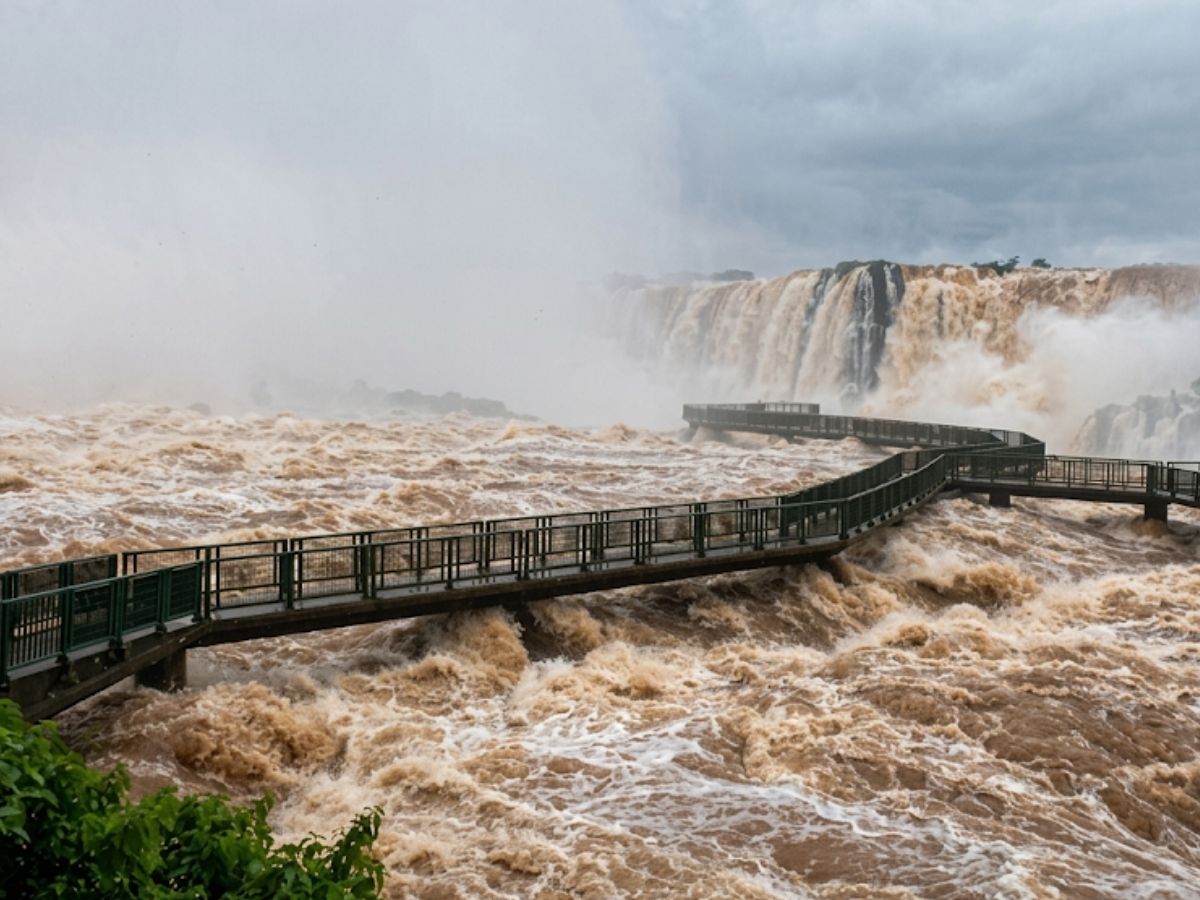
Water levels at the Iguazu Falls have risen sharply in recent days, turning the already formidable landmark into a scene of unusual force. The falls, which straddle the border between Argentina and Brazil, have taken on a different character altogether, with the volume and speed of the water reshaping the familiar view that draws visitors from around the world.
The falls are formed by the Iguazu River as it tumbles over a basalt plateau, splitting into some 275 individual cascades across a stretch of roughly two and a half kilometres. Under normal conditions, this arrangement produces one of the most photographed sights in South America. In recent days, though, the individual cascades have become harder to distinguish. Mist rises higher above the gorge, and the roar of the water has grown louder, audible well beyond the immediate viewing areas.
The cause lies well upstream. Heavy rainfall across the river's catchment area has swollen the Iguazu and its tributaries, sending far more water over the falls than usual. Rainfall of this intensity tends to arrive in bursts during the wetter months, and when it does, the effect on the falls can be immediate. Rivers that begin in the highlands of Brazil's Paraná state gather volume as they descend, reaching the falls within days of a significant storm system passing through.
The scale of the increase becomes clearer with reference to typical flow rates. The Iguazu Falls usually carry an average of around 1,756 cubic metres of water per second. During episodes of heavy rain, that figure can climb dramatically, at times multiplying several times over. Such surges are not unprecedented, but each one reshapes the landscape in ways that draw comparisons among long-time visitors and park staff, who describe the difference between an ordinary day and a flood event as stark.
On the ground, the change has been impossible to miss. Tourists visiting the falls in recent days have reported being drenched by spray from viewing platforms that would normally offer a drier vantage point. Park authorities on both the Argentine and Brazilian sides have been monitoring conditions closely, and some walkways and lower viewing circuits have been restricted or closed where safety concerns arise from the volume and unpredictability of the water. These closures are a routine precaution during periods of high flow, intended to keep visitors away from areas where spray, slippery surfaces or sudden changes in water level could pose a risk.
Local guides note that the surge, while dramatic, is also temporary. Rivers that rise quickly after heavy rain tend to recede over subsequent days and weeks, and the falls will likely return to something closer to their usual rhythm once the rainfall upstream subsides. In the meantime, the heightened flow has become something of a draw in itself, with visitors keen to witness the falls in a state few get to see.
Iguazu Falls has held UNESCO World Heritage status since the 1980s, recognised on both sides of the border for its ecological significance and natural beauty. It remains one of the most visited natural attractions in South America, drawing more than a million tourists annually to the surrounding national parks in Argentina and Brazil. The current surge adds to a long history of seasonal variation at the site, where the balance between drought and flood has shaped the landscape for millennia.
For those able to witness it, the swollen falls offer a reminder of how quickly conditions at a natural landmark can shift. What appears fixed and permanent in photographs is, in practice, governed by rainfall patterns hundreds of kilometres away, arriving at the gorge with a force that can transform the view within days.

.jpg)
.jpg)
.jpg)