
.jpg)
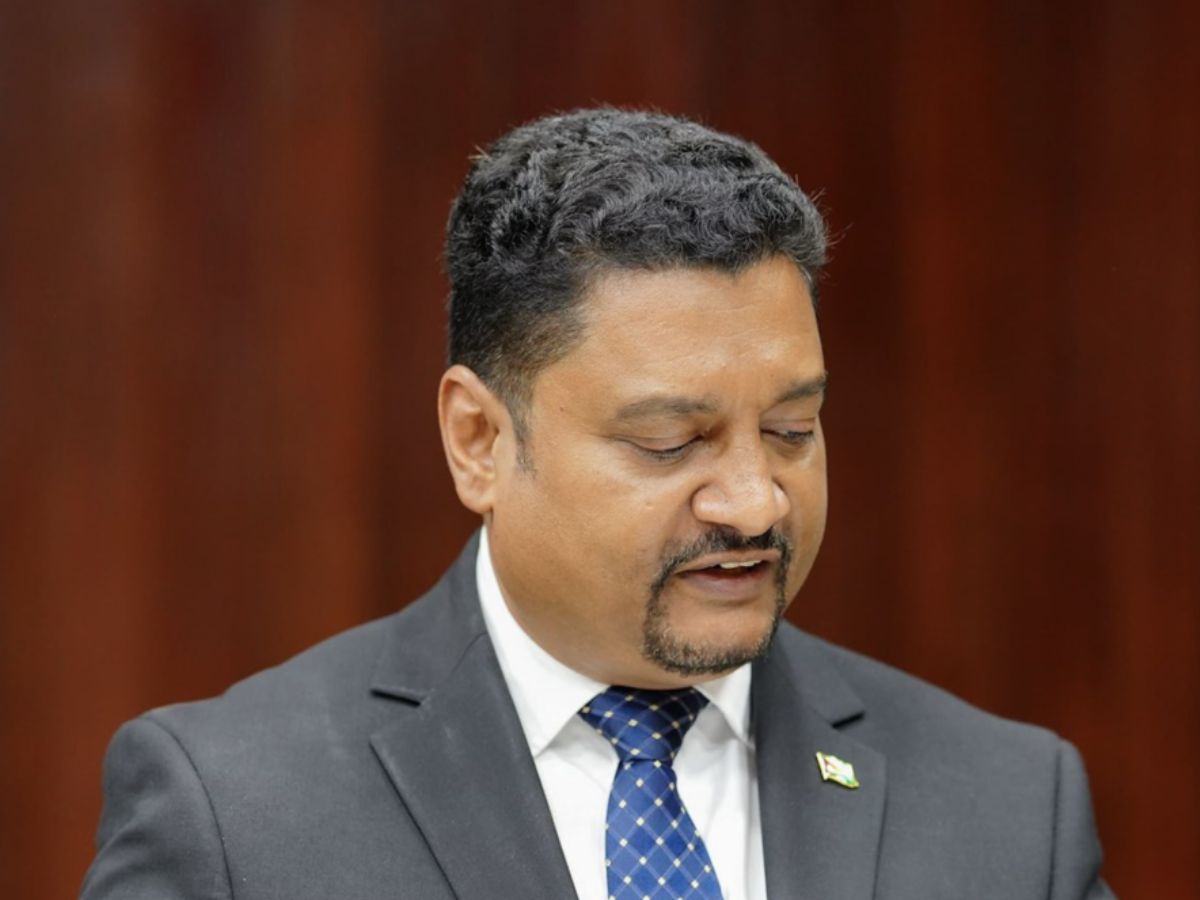
Security agencies across the region have stepped up efforts to investigate a series of death threats directed at James Singh, head of Guyana's Customs Anti-Narcotic Unit (CANU), after intelligence pointed to a Spanish-speaking criminal network believed to be operating out of Venezuela. Singh confirmed that he remains unharmed and that the agency's leadership structure is intact, though he acknowledged the threat is ongoing and being treated with the seriousness such warnings demand.
The threats have placed fresh scrutiny on the cross-border dynamics between Guyana and Venezuela, two neighbours whose relationship has grown increasingly strained in recent years. Officials investigating the case have run into a familiar obstacle: the absence of reliable, direct channels for intelligence sharing with Venezuelan authorities. Diplomatic tension between the two governments has made routine cooperation on security matters difficult, leaving Guyanese investigators without a straightforward route to verify the identities or whereabouts of those behind the plot.
Rather than wait for those channels to open, Guyana has turned to wider regional and international partnerships to fill the gap. Agencies involved in cross-border narcotics enforcement have been drawn into the effort, pooling intelligence gathered through networks that extend beyond the immediate Guyana-Venezuela border. The aim, according to officials familiar with the investigation, is twofold: to identify who is responsible for orchestrating the threats, and to disrupt the operational capacity of the network before it can act on them. Neither objective depends on Venezuelan state cooperation, a workaround that has become increasingly common in the region when formal channels stall.
The origin of the threats has been traced back to May 2026, when Guyana's Ministry of Home Affairs first drew a connection between mounting hostility toward CANU and a marked increase in successful drug interdictions carried out under Singh's leadership. The unit's operations had disrupted several trafficking routes during that period, and officials believe the scale of those losses prompted retaliation from groups whose smuggling operations were affected. The timing has lent weight to the theory that the threats are not random intimidation but a calculated response to specific enforcement successes.
Guyana's Police Commissioner has since confirmed that the threats are being treated as a serious security breach rather than an isolated incident. In public remarks, he stated that those found responsible would face the full weight of the law, and that protective measures around Singh and CANU personnel have been reviewed and reinforced. The Commissioner's comments were notable for their directness, offering little ambiguity about how seriously the force intends to pursue the matter, even as the practical difficulty of reaching suspects across the border remains unresolved.
For CANU, the episode underscores a tension that has become increasingly familiar to small state law enforcement agencies operating near contested or poorly monitored borders. Success in disrupting trafficking routes can generate real security costs for the officers involved, particularly when the networks affected have the resources and reach to respond with threats or worse. Singh's continued presence at the head of the unit, despite the threats, has been read by some officials as a signal that operations will not be scaled back in response to intimidation.
What happens next depends largely on how effective the regional intelligence sharing proves to be. Investigators have not disclosed a timeline for identifying those behind the threats, and the absence of formal cooperation with Venezuela means much of the work will rely on indirect sources and partner agencies rather than direct verification. For now, Guyanese authorities have signalled that the investigation will continue regardless of the diplomatic obstacles, treating the case as a test of the country's capacity to protect its own enforcement personnel from threats originating beyond its borders.


.jpg)