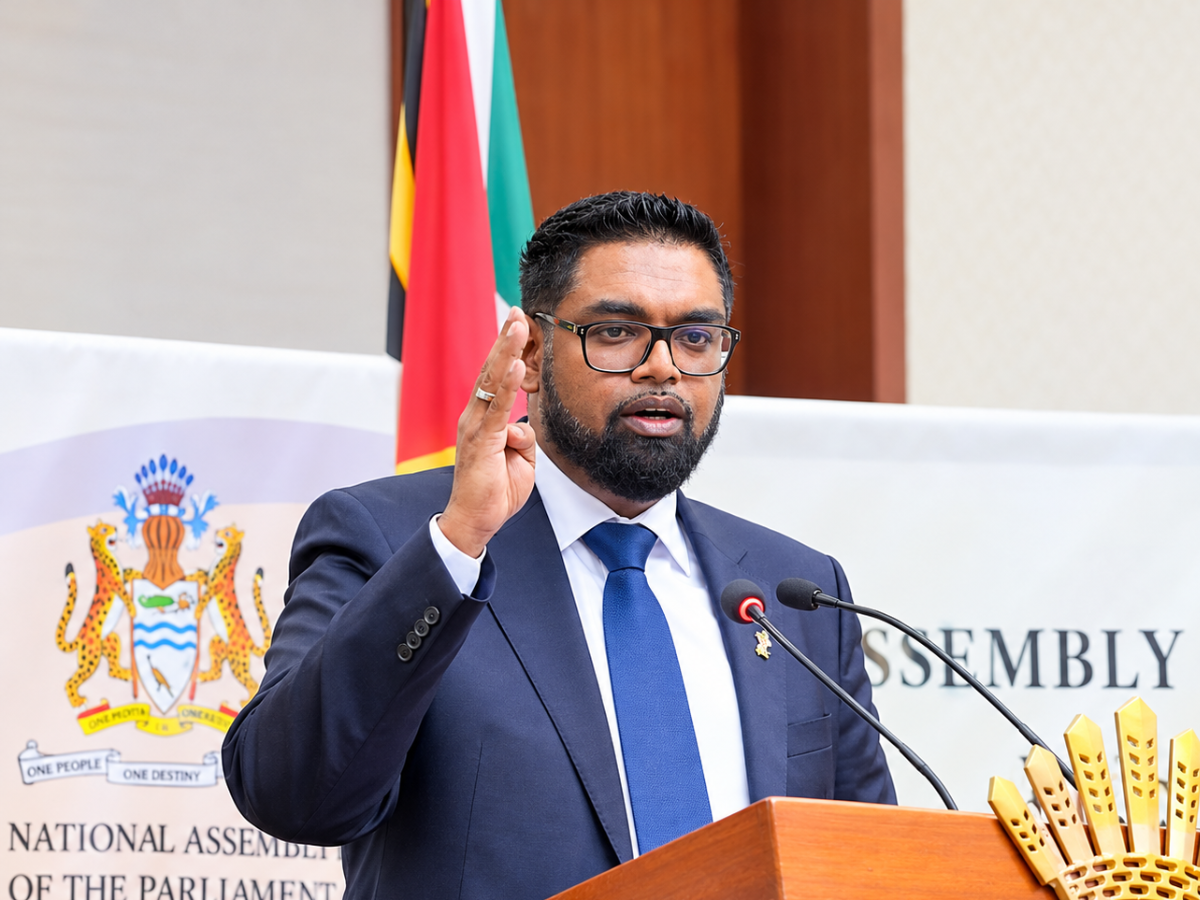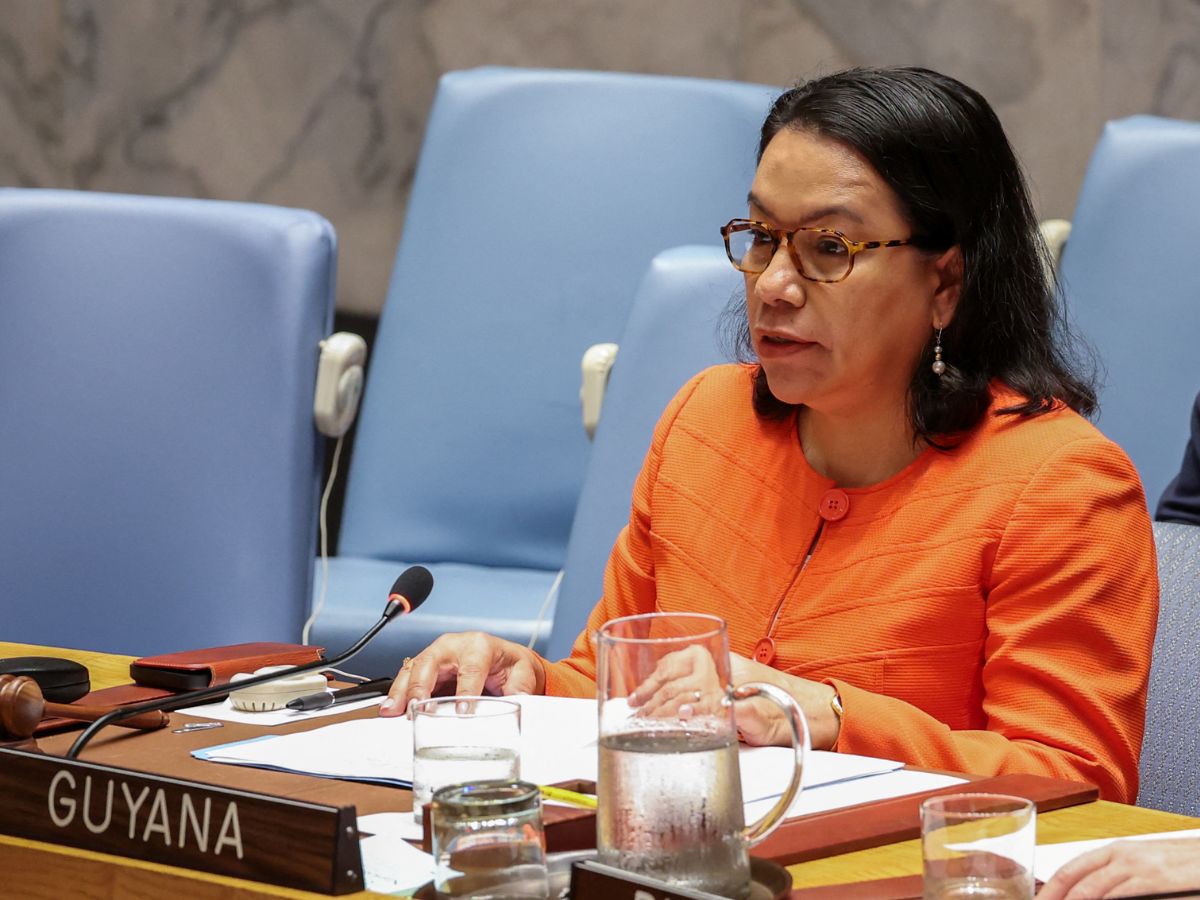
President Irfaan Ali of Guyana used his address to the 81st session of the United Nations General Assembly this week to make a direct appeal to the five permanent members of the Security Council, asking them to support Ambassador Carolyn Rodrigues-Birkett's bid to become the next UN Secretary-General. Ali told the assembly that he was calling on the P5 and every other member to look beyond the small country that nominated her. He did not refer directly to reports that the United States has signalled opposition to her candidacy over her past description of the situation in Palestine as "genocide", though the appeal came against that backdrop.
Ali placed the formal responsibility for the nomination process with the Security Council, presenting Rodrigues-Birkett's candidature as one endorsed by the wider Caribbean Community and inviting member states to judge her on her vision, experience and record rather than on the size of the nation that put her forward. He argued that the organisation needs leadership capable of restoring trust between developed and developing states without abandoning principle.
The Guyanese president's remarks built on a decision taken by regional leaders some two months earlier. At CARICOM's Fifty-First Regular Meeting of the Conference of Heads of Government, held in July, leaders recorded in their communiqué that they strongly welcomed Guyana's nomination of Rodrigues-Birkett and expressed their full endorsement of her candidacy. That backing followed a vision statement she delivered to the summit, in which she set out priorities centred on reasserting the UN Charter's core principles, reforming the organisation's institutions and rallying member states around renewed cooperation across peace and security, human rights and development.
Rodrigues-Birkett's candidacy carries significance beyond the immediate contest for the post. She was formally listed among the UN's declared candidates on 15 June this year, having been nominated by Guyana the same month. Were she to be appointed, she would become the first woman to hold the office in the organisation's eighty-year history, and the first person from the Caribbean to do so. Guterres's second term concludes on 31 December, meaning a successor is due to take office in January.
Ali's speech also drew on Rodrigues-Birkett's own background. He described her as an Indigenous woman from the Barima-Waini region who rose from a small Amerindian village to serve as Guyana's Minister of Amerindian Affairs and later its Minister of Foreign Affairs, before working at the UN's Food and Agriculture Organization and taking up her current post as Permanent Representative to the UN in 2020. She led Guyana's delegation during its 2024-25 term as a non-permanent Security Council member.
The procedural path ahead remains uncertain. Under UN practice, the Security Council recommends a single candidate to the 193-member General Assembly, which then makes the formal appointment. Reaching that recommendation requires the assent of all five permanent members, China, France, Russia, the United Kingdom and the United States, any one of which can block a candidate through its veto. The council has been testing support through a series of non-binding straw polls. In the most recent of these, held in late September, Rodrigues-Birkett recorded eight "encourage" votes against six "discourage" votes, placing her marginally behind Costa Rica's Rebeca Grynspan, who received nine encourage votes in the same round.
That result leaves the contest finely balanced. Rodrigues-Birkett has continued a round of bilateral meetings with foreign ministers on the margins of the General Assembly session in New York, seeking to shore up support beyond the Caribbean before the Security Council moves toward a final recommendation later in the year.