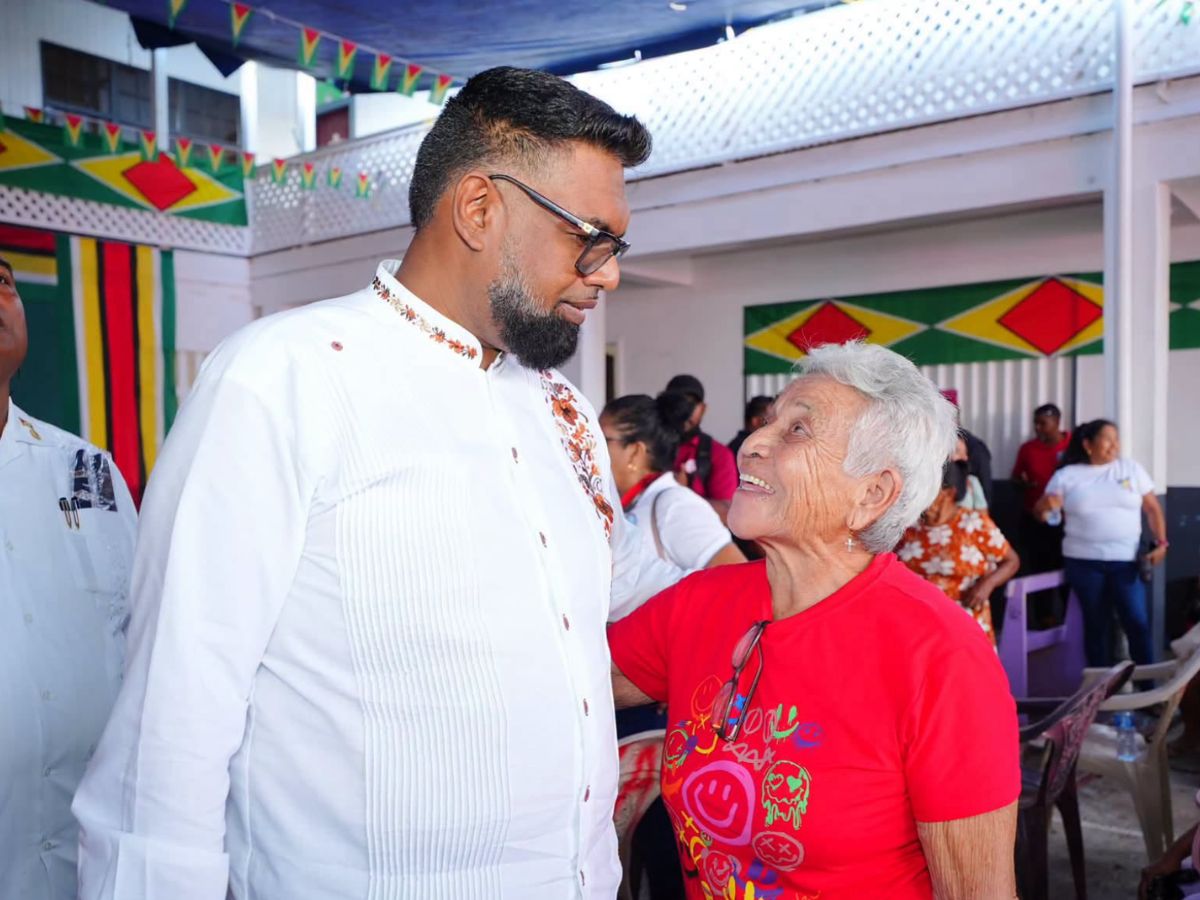
President Dr Irfaan Ali travelled to Santa Rosa in Region One this week, warning that inflated transport costs are driving up the price of food in Guyana's hinterland communities. Speaking at a public meeting, he pressed government agencies and private operators to explain why aviation investment in the region had not translated into cheaper freight for residents. Outside the venue, a small group of protesters gathered, and the President chose to bring them into the meeting rather than confront them at the gates, using the moment to argue that citizens are entitled to be heard directly by their government.
The economic complaint at the centre of the visit concerned the cost of everyday staples. Ali cited the price of chicken and beef in Moruca and surrounding areas, noting that residents were paying substantially more than communities with road access to markets. He said the gap could not be explained by production costs alone and pointed to freight charges as the main driver. His frustration was directed in particular at the aviation sector, where he said state spending had not produced the reduction in cargo prices that hinterland communities had been promised. Public money, he argued, had gone into improving air links to remote areas without a corresponding fall in what it cost to move goods along them.
To address the immediate problem, the President proposed a new cargo service connecting Charity and the Moruca sub-region, to be run by young entrepreneurs from the area. The intention, he said, is to build a service that covers its own costs while keeping freight charges low enough to make a visible difference to household budgets. Officials framed the scheme as a commercial operation with a social remit, rather than a subsidised programme dependent on continued government funding.
Alongside the logistics proposal, Ali set out a longer-term response built around food production rather than transport. He said the Guyana Development Bank would be used to expand poultry farming and other agricultural activity within the region, reducing communities' reliance on goods brought in from the coast. The reasoning, as he presented it, is straightforward: produce grown or reared locally does not carry the freight costs that have pushed up prices for imported staples, and a larger local supply would give residents an alternative to goods shipped in from outside.
The protest outside the Santa Rosa Secondary School, where the meeting was held, drew a modest number of demonstrators raising concerns about local conditions. Rather than treating the gathering as a disruption, Ali invited the group inside to state their grievances to the meeting directly. He told attendees that citizens have a right to raise concerns and be heard respectfully, and that his government intended to engage with dissent rather than avoid it. The episode was brief, and the meeting continued once the protesters had spoken.
Ali placed the Santa Rosa visit within a wider pattern of outreach across Guyana's regions, in which ministers and officials travel to hinterland and riverine communities to hear concerns and respond in person. He listed infrastructure, education, healthcare and social grants, including pensions and disability support, as the areas his administration has prioritised in the region. He contrasted this approach with what he described as political point scoring, saying his government preferred to address problems raised by residents rather than debate them.
The outreach in Santa Rosa reflects a format the government has used elsewhere in Guyana, pairing direct engagement with residents against announcements on specific local grievances. Whether the proposed cargo service and expanded agricultural production will bring down food prices in Moruca in practice remains to be seen, and will depend on how quickly the new arrangements are put in place.

.jpg)