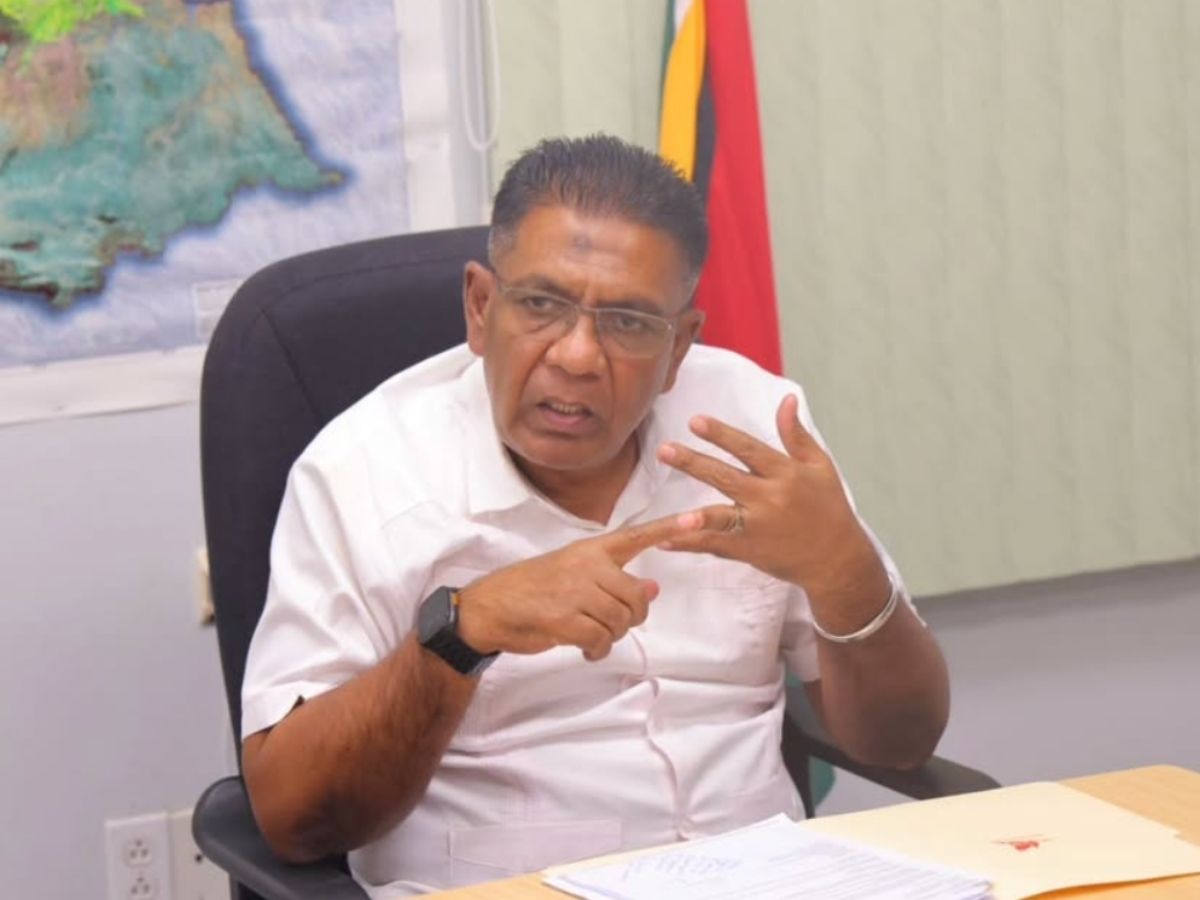

Azruddin Mohamed spent this week courting political allies rather than addressing the extradition case that could remove him from Guyanese politics altogether. The leader of the We Invest in Nationhood movement held talks with A Partnership for National Unity aimed at forging a coalition, even as he continues to fight extradition to the United States on charges of gold smuggling and money laundering. When journalists asked whether his party had contingency plans should the extradition proceed, Mohamed declined to answer.
The talks between WIN and APNU were described by Mohamed as positive and constructive. Representatives from both sides indicated that terms of reference are being drafted, along with a possible memorandum of understanding that would formalise the partnership ahead of future political activity. A joint statement summarising the outcome of the discussions had been promised by both parties, but by the end of the day no such statement had been issued. Neither side offered a public explanation for the delay, and it remains unclear whether the drafting of terms of reference has been completed or is still under negotiation.
Mohamed's willingness to discuss the shape of a future coalition, while declining to engage with questions about his own legal jeopardy, has drawn attention from observers of Guyanese politics. The WIN movement has built its support base partly on Mohamed's personal profile, which makes the outcome of the US case a matter of direct relevance to the party's electoral prospects as well as its leadership structure.
The question of Mohamed's legal position hung over the talks without being directly addressed. Mohamed and his father, Nazar Mohamed, are contesting extradition to the United States over allegations of large-scale financial crime. Last month, the Caribbean Court of Justice unanimously dismissed the pair's appeal against the extradition process, a ruling that clears the way for proceedings to resume in Guyana's magistrates' courts. The decision removed one of the last legal obstacles standing between the men and a formal extradition hearing.
The charges at the centre of the case allege large-scale gold smuggling, money laundering and related financial offences. The US Treasury's Office of Foreign Assets Control sanctioned the Mohameds and several of their corporate entities in June 2024, citing serious corruption. Prosecutors have also alleged that the scheme deprived the Guyanese state of more than US$50 million in evaded taxes and royalties, a figure that has featured prominently in domestic political debate over accountability and resource governance.
The case against the Mohameds is the product of an investigation that stretches back more than a decade. It began in the mid-2010s and drew on cooperation between Guyanese authorities and several US federal agencies, including the FBI, the DEA and the Department of Homeland Security. That length of investigation reflects the scale of the alleged operation, which prosecutors say relied on a sustained pattern of falsified paperwork rather than isolated instances of smuggling.
According to prosecutors, the alleged scheme involved the export of more than 10,000 kilogrammes of gold between 2017 and 2024, carried out through fraudulent customs declarations and the reuse of government seals to disguise the shipments' true origin and value. The volume involved, spread across seven years, points to an operation that prosecutors characterise as systematic rather than opportunistic.
Physical evidence cited in the indictment includes a seizure of gold worth approximately US$5.3 million, intercepted at Miami International Airport. That seizure forms part of the evidentiary basis prosecutors intend to rely on should the extradition proceed to trial in the United States.
For now, the political calculus in Georgetown appears to be running on a separate track from the legal one. Mohamed's engagement with APNU suggests an effort to consolidate opposition support regardless of the outcome of the extradition case, while his refusal to discuss contingency planning leaves open the question of what would happen to WIN's leadership if the case against him advances. With the CCJ ruling now clearing the domestic courts to proceed, that question may not remain unanswered for much longer.

.jpg)