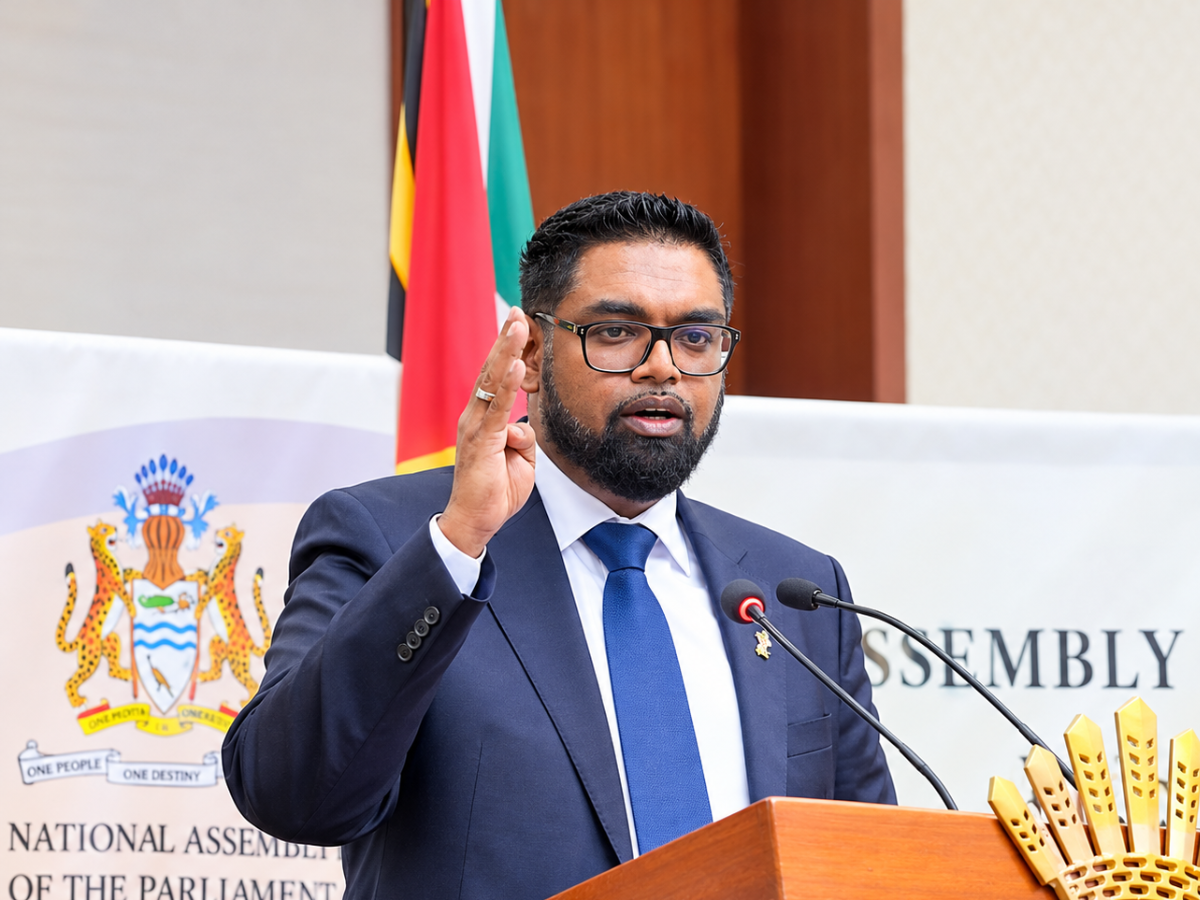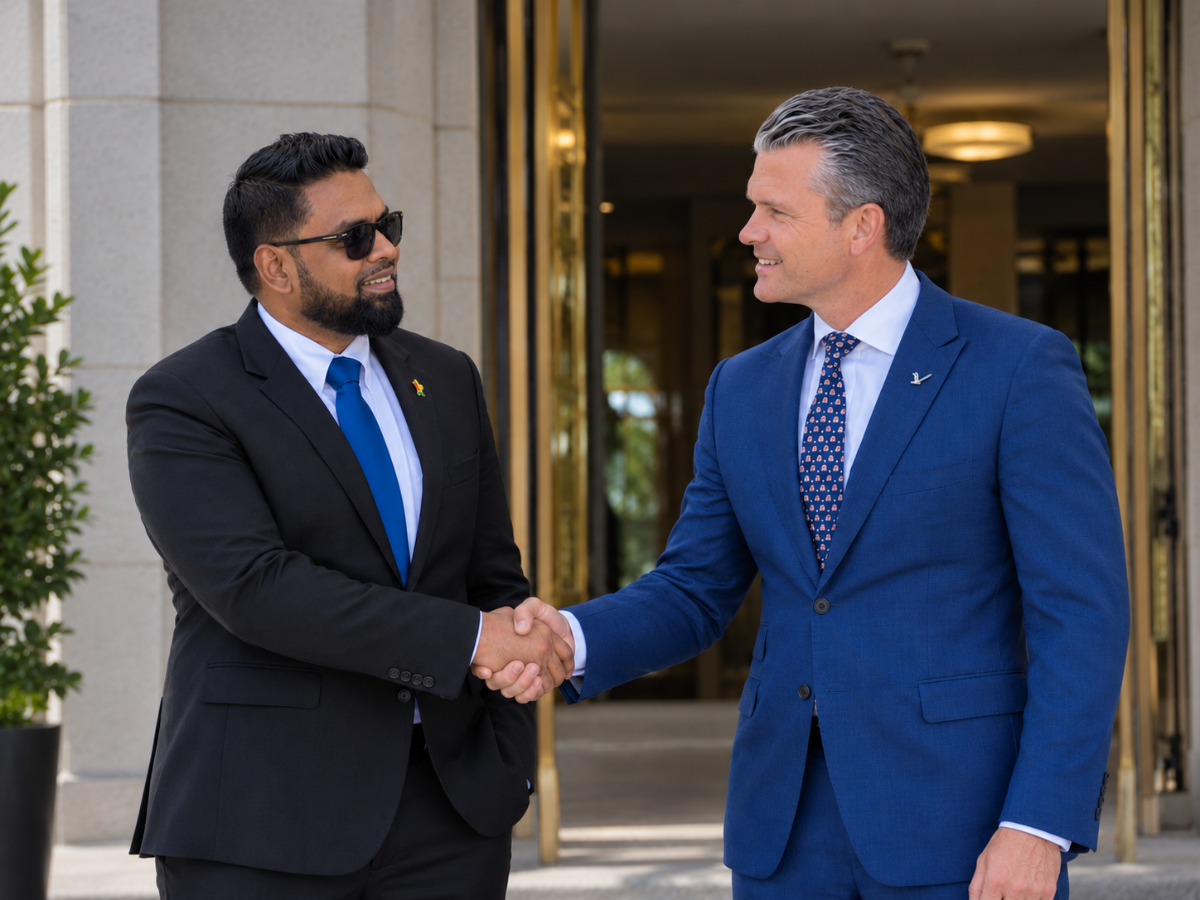
The Guyanese government has denied any involvement in the decision by the United States to place the American visa of High Court Justice Gino Persaud under review, following days of speculation over whether the move was linked to the judge's rulings against the state.
Attorney General Anil Nandlall addressed the matter directly on his weekly television broadcast this week, stating that the government of Guyana, including the president, the vice president and the attorney general, has no influence whatsoever over American foreign policy or any aspect of US governance, and in particular no influence over whom the United States permits to travel to America. He described suggestions that the administration had a hand in the travel restriction as baseless.
Justice Persaud was prevented from boarding a flight to Jamaica at the weekend. He was part of a delegation of Guyanese judicial officers travelling to Kingston for the Commonwealth Magistrates' and Judges' Association annual conference, which runs from 20 to 24 September, with an itinerary that required transit through Miami. Airline representatives told him at check-in that his visa had been flagged and was under administrative review, and advised him to contact the American Embassy in Georgetown.
Persaud had reportedly travelled to the United States a few months earlier without any difficulty. American officials have not disclosed the reasoning behind the review. Speaking on the sidelines of a security conference in Georgetown, United States Ambassador Nicole Theriot said the embassy had not been aware of the review before it happened, and that while overseas missions periodically send background information to federal authorities, administrative visa reviews are initiated and decided directly in Washington, meaning consular staff on the ground are often not informed until a final decision has been made. Persaud himself has not commented publicly. He later travelled to Jamaica by an alternative route.
The review follows months of friction between the judiciary and the executive over a ruling Persaud handed down in July concerning the Guyana Revenue Authority's treatment of imported luxury vehicles belonging to the family of Azruddin Mohamed, a prominent businessman and opposition politician. Persaud ruled that the tax authority could not impose post-clearance taxes of around 421 million Guyanese dollars on a Lamborghini and two other vehicles. Nandlall criticised the judgment at the time, arguing it stripped the state of its capacity to collect revenue that was owed, and the Revenue Authority has since taken the case to the Court of Appeal.
The vehicle dispute sits alongside separate and more serious legal proceedings in the United States. Nazar Mohamed and his son Azruddin face an indictment in the Southern District of Florida. Nazar Mohamed is charged with conspiracy to commit money laundering and conspiracy to commit mail and wire fraud, while his son faces charges of conspiracy to commit money laundering and wire fraud, with prosecutors alleging the family's company evaded an estimated fifty million dollars in Guyanese gold export taxes and royalties between 2017 and 2024. Washington has requested their extradition, a process that continues separately from the tax appeal. Nandlall has stressed that the vehicle ruling has no bearing on the extradition case.
Nazar Mohamed has rejected any suggestion of a connection to the judge beyond the courtroom. He said the only link between his family and Persaud is that matters involving them came before him as a judge of the High Court, and that neither he nor his son has ever met Persaud, conducted business with him or had any personal or professional relationship with him. Even so, Mohamed has argued that the timing of the visa review, set against public criticism of Persaud by senior officials, raises questions he believes deserve scrutiny. He has said he does not know what caused the review but considers the surrounding circumstances difficult to ignore.
The episode has drawn wider comment on the position of Guyana's judiciary at a moment when the country's rapid oil-driven growth has brought increased scrutiny of its courts and contracts from abroad. Commentators in Georgetown have noted that a sitting High Court judge learning of a foreign travel restriction only at an airport check-in desk points to a communication failure somewhere in the process, whatever its underlying cause. For now, the central facts remain unresolved: no government has stated publicly why the review was opened, and the judge at its centre has said nothing.