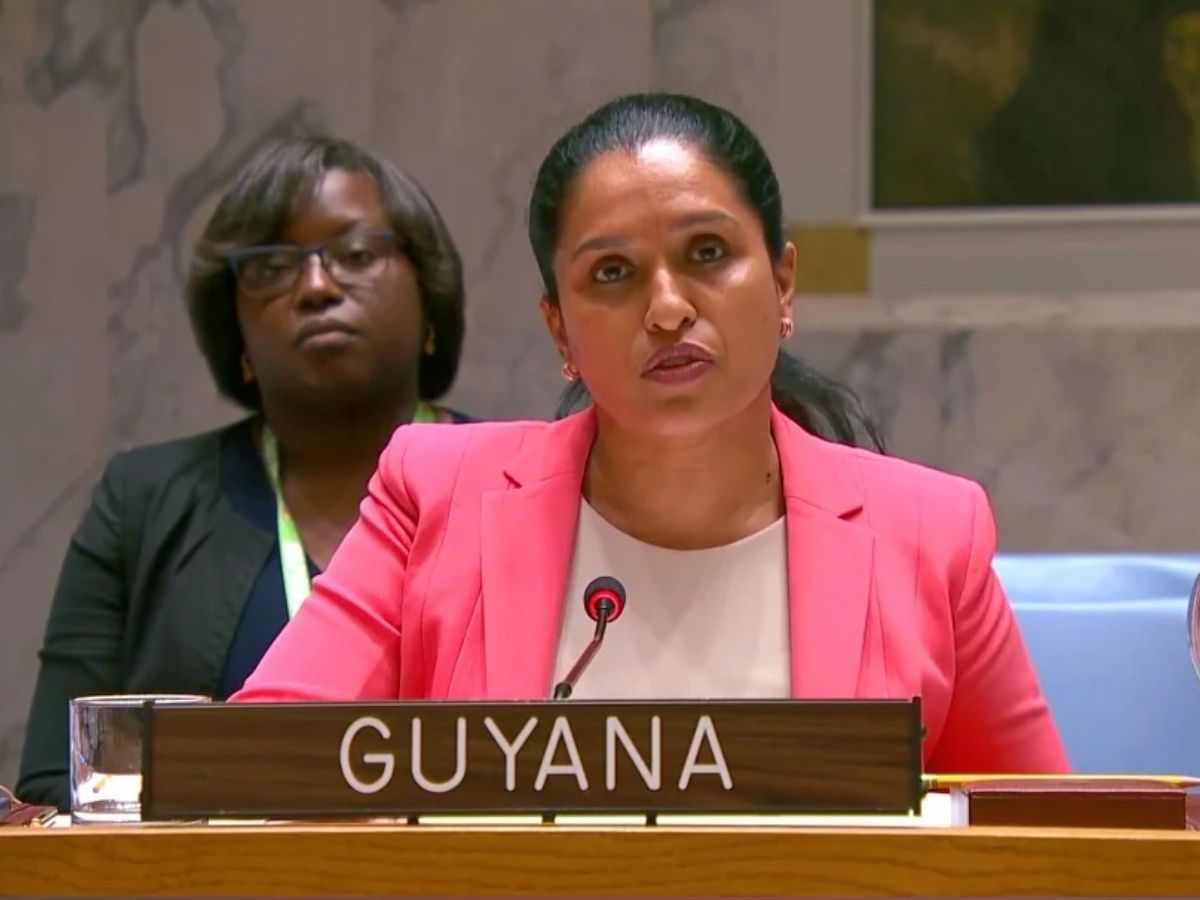
Ambassador Trishala Persaud, Deputy Permanent Representative of the Permanent Mission of Guyana to the United Nations, formally assumed the chairmanship of the Sixth Committee (Legal) of the 81st Session of the United Nations General Assembly on Monday. She opened proceedings with a call for delegations to maintain the Committee's established practice of consensus.
In her opening statement, Ambassador Persaud described the Committee's position among the General Assembly's Main Committees as distinctive. She also stressed the importance of international law to the principles and purposes of the United Nations. "The role of the Sixth Committee and its authority among Main Committees is unique, as is the central importance of international law for the achievement of the principles and purposes of the United Nations," she said.
She referred to the preamble of the UN Charter, in which the peoples of the United Nations reaffirmed their faith in fundamental human rights. The same passage records the Organization's determination to establish conditions under which justice and respect for international law can be maintained.
The Chair observed that the Committee meets at a challenging time for multilateralism and international law. She asked delegations to preserve its longstanding practice of consensus while responding to existing and emerging global issues. Ambassador Persaud said she was confident that substantive progress would be made during the session, in a spirit of co-operation.
The Sixth Committee is the primary forum in the General Assembly for the consideration of legal questions. The Assembly has six Main Committees, and every member state is entitled to be represented on each of them. All 193 members therefore take part in the Sixth Committee's deliberations on an equal footing.
Its work is closely tied to the United Nations mandate for the codification and progressive development of international law under the Charter. Article 13 of the Charter directs the General Assembly to initiate studies and make recommendations for that purpose. The International Law Commission, established by the Assembly in 1947, reports annually to the Sixth Committee, which examines its work and recommends action to the plenary. The Committee's sessions take place in the autumn, and its deliberations usually end with draft resolutions forwarded to the full Assembly for adoption.
Decision-making by consensus means that texts are often agreed without a formal vote. Supporters of the practice say it gives the resulting instruments broader acceptance among states, since every delegation has had an opportunity to shape the wording. Critics note that it can lengthen negotiations, because the objection of a single delegation may hold up agreement on a draft. Ambassador Persaud's request that delegations preserve the practice came with an acknowledgement of the strain on multilateralism.
The chairmanship carries practical responsibilities. The Chair guides debate, oversees the programme of work and seeks agreement among delegations when positions diverge. Chairs of Main Committees are drawn from the regional groups of the United Nations, and the post is regarded as a significant appointment for a mission of Guyana's size.
Guyana's chairpersonship reflects the country's commitment to promoting the rule of law and to contributing to the UN mandate on the codification and progressive development of international law. Ambassador Persaud serves as Deputy Permanent Representative of Guyana's mission to the United Nations in New York.
Delegations now begin the work of the session under her direction, with the Committee's agenda of legal questions before them.