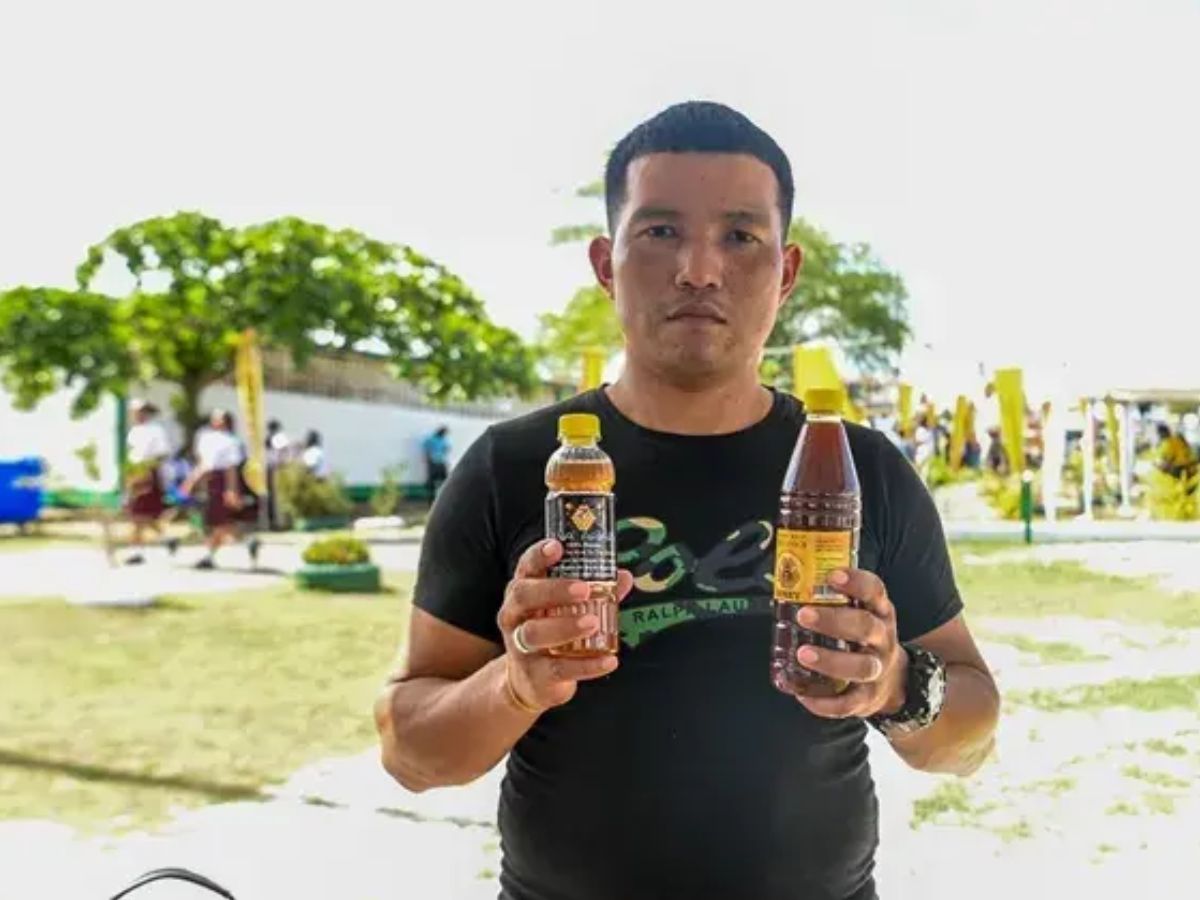
Guyana's beekeeping sector has grown from a small domestic activity into a component of national agricultural policy. State investment in equipment, technical assistance and specialised facilities has raised honey output more than tenfold in four years, and officials now expect to supply regional markets that currently rely on imports.
National production stood at 3,745 gallons in 2022 and reached 40,000 gallons in 2025. The 2025 figure was 54 per cent higher than the previous year's. Annual output is forecast to approach 50,000 gallons by the end of 2026. The number of active hives rose from 1,145 to 1,983, spread across roughly 280 registered beekeepers. Production has therefore grown far faster than hive numbers, which points to better yields per hive as well as simple expansion.
Policy has also aimed to widen participation. Programmes target women, young people and indigenous communities, with the intention of bringing them into commercial beekeeping rather than leaving the activity to hobbyists.
Geography supports the expansion. Dense forest, a tropical climate and extensive coastal mangroves give bees forage for much of the year, which allows a longer productive season than is possible in temperate countries. Officials also point to the condition of local habitats. Pollinator populations have declined in many honey-producing regions because of habitat loss, and Guyana intends to market its relatively intact landscape as a selling point for what it describes as green apiculture.
The state has supplied much of the physical equipment. Beekeepers have received more than 3,300 hive boxes and 52,000 frames, together with hive stands, wax sheets, extractors and protective clothing. Such items are a significant cost for new entrants, and their provision has lowered the barrier to starting a hive operation.
Two pieces of infrastructure are intended to improve the quality of what is produced. The country's first queen-rearing facility is being built at Kairuni. Queens determine the temperament, health and productivity of a colony, and a domestic supply should reduce dependence on imported breeding stock. Separately, the Guyana Livestock Development Authority is setting up laboratories to test honey and verify its quality. Certified testing is usually a condition of entry to export markets, so the laboratories are central to any trade ambitions.
Those ambitions are mainly regional. Guyana wants to displace the costly honey that Caribbean Community members currently import and to become the main supplier within the bloc. The aim sits within a wider CARICOM target of cutting the region's food import dependency by 25 per cent. Honey is a modest item in that bill, but it is one where a small producer can plausibly reach scale quickly, since the product stores well and ships easily.
The longer-term case rests on global demand. The worldwide honey trade is projected to grow from US9.9billionin2025toUS18.3 billion by 2034. Guyana's output is small against that total, and 50,000 gallons would amount to a very minor share. The country is, however, starting from a low base, and the gains of recent years suggest that further growth is feasible if equipment supply and testing capacity keep pace.
Several questions remain open. Output depends on weather, forage and colony health, and a single poor season could interrupt the trend. Export markets will expect consistent quality and documentation, and the laboratories will need to be operating before sales beyond CARICOM can be considered. The queen-rearing facility has yet to show whether it can supply the number of queens a larger national apiary requires.
For now, the figures indicate a sector that has moved quickly under state direction. Whether that pace can be sustained once subsidies taper and producers must compete on price will determine how much of the projected market Guyana is able to claim.