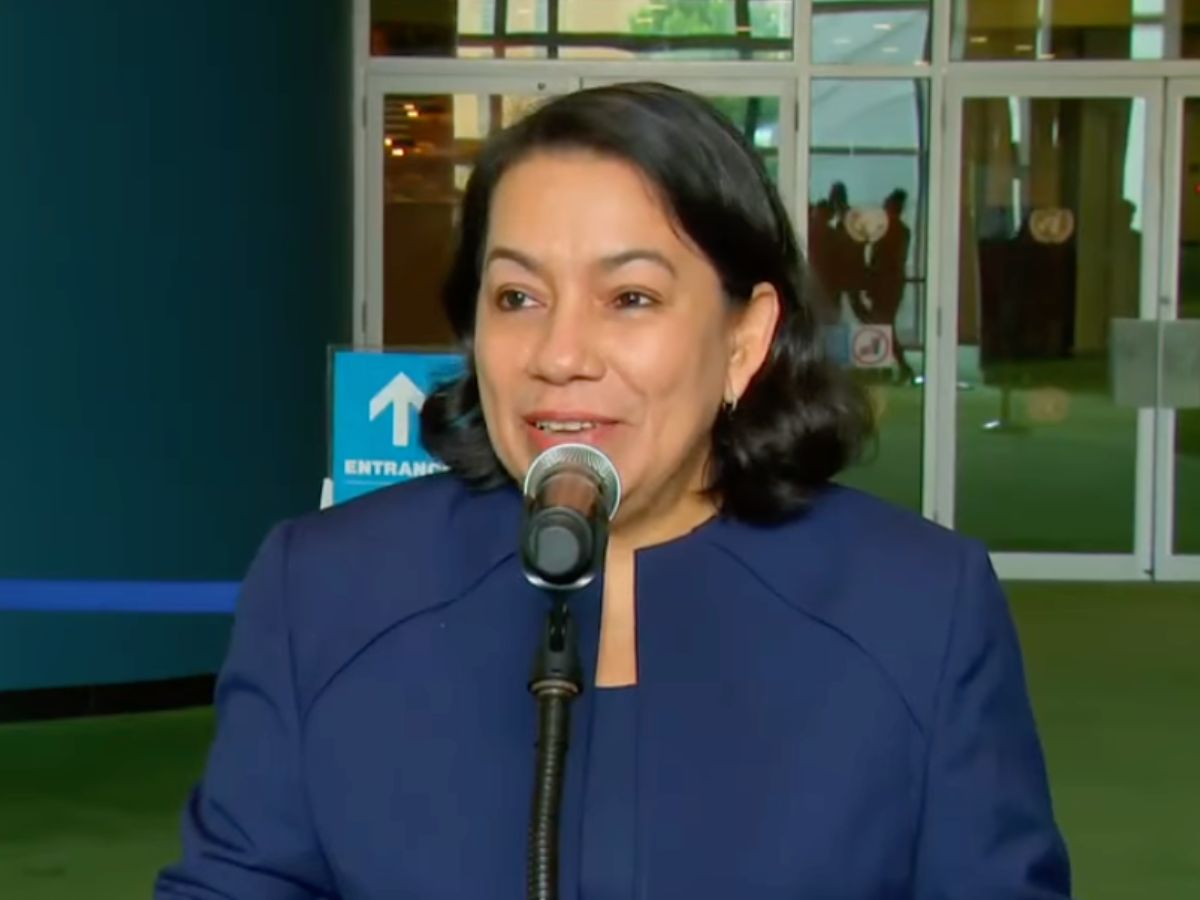
Carolyn Rodrigues Birkett, Guyana's permanent representative to the United Nations, has emerged as the frontrunner to become the next Secretary-General after the Security Council's second informal straw poll. She secured eight "encourage" votes, placing her narrowly ahead of Rebeca Grynspan of Costa Rica, the current head of the UN Conference on Trade and Development.
Christina Markus Lassen, Denmark's UN ambassador and the current president of the Security Council, confirmed that the poll had taken place. She gave no figures publicly. The results of straw polls are treated as confidential within the Council, and candidates learn how they fared only through private communication from their own state's representatives. Diplomats who took part are not authorised to disclose individual tallies, though details tend to filter out through diplomatic channels within days.
The straw poll is not a formal mechanism set out in the UN Charter but a practice the Security Council has developed to narrow the field before a final recommendation. Each of the fifteen Council members casts a ballot for every candidate, choosing one of three options: "encourage," "discourage" or "no opinion expressed." Candidates who draw discouraging votes from any of the five permanent members, the United States, the United Kingdom, France, Russia and China, face a serious obstacle, since a negative vote from a permanent member can function as a veto later in the process.
Under Article 97 of the UN Charter, the Secretary-General is appointed by the General Assembly on the recommendation of the Security Council. In practice this means the Council must agree on a single name to put forward, usually after several rounds of straw polling have thinned out the contenders. The General Assembly's role has traditionally been to ratify the Council's choice rather than to select independently.
Eight candidates remain on the ballot. Among them are two former heads of state, Michelle Bachelet of Chile and Macky Sall of Senegal, both of whom left office after leading their countries through periods of political change. The list also includes Rafael Grossi, director general of the International Atomic Energy Agency, and three figures with backgrounds in diplomacy and multilateral institutions: Maria Fernanda Espinosa and Ivonne A-Baki, both of Ecuador, and Olara Otunnu of Uganda, a former UN under-secretary-general.
Guterres's second term ends on December 31, and the Security Council has given itself little room to delay. Previous selection processes have stretched into the fourth quarter of the outgoing Secretary-General's final year, and this one is following a similar pattern. A further straw poll is expected before the Council settles on a name to send to the General Assembly.
The presence of two women at the top of the field has drawn attention in itself. No woman has held the post of Secretary-General since the United Nations was founded in 1945, despite repeated calls from member states and civil society groups for the organisation to end that record. Rodrigues Birkett and Grynspan now stand as the two candidates best placed to break it, though the Council's internal politics, particularly the preferences of the five permanent members, will ultimately decide the outcome.
Rodrigues Birkett has served as Guyana's permanent representative to the UN and has previously held ministerial posts in her home government, including responsibility for foreign affairs. Her rise in the polling reflects, in part, a broader push among some Council members for the next Secretary-General to come from a small state, on the grounds that a candidate from a less powerful nation may be seen as less beholden to great power interests.
No date has been set for the next round of voting. The Security Council is expected to continue polling privately in the coming weeks as it works towards a consensus candidate ahead of the December deadline.

.jpg)