.jpg)
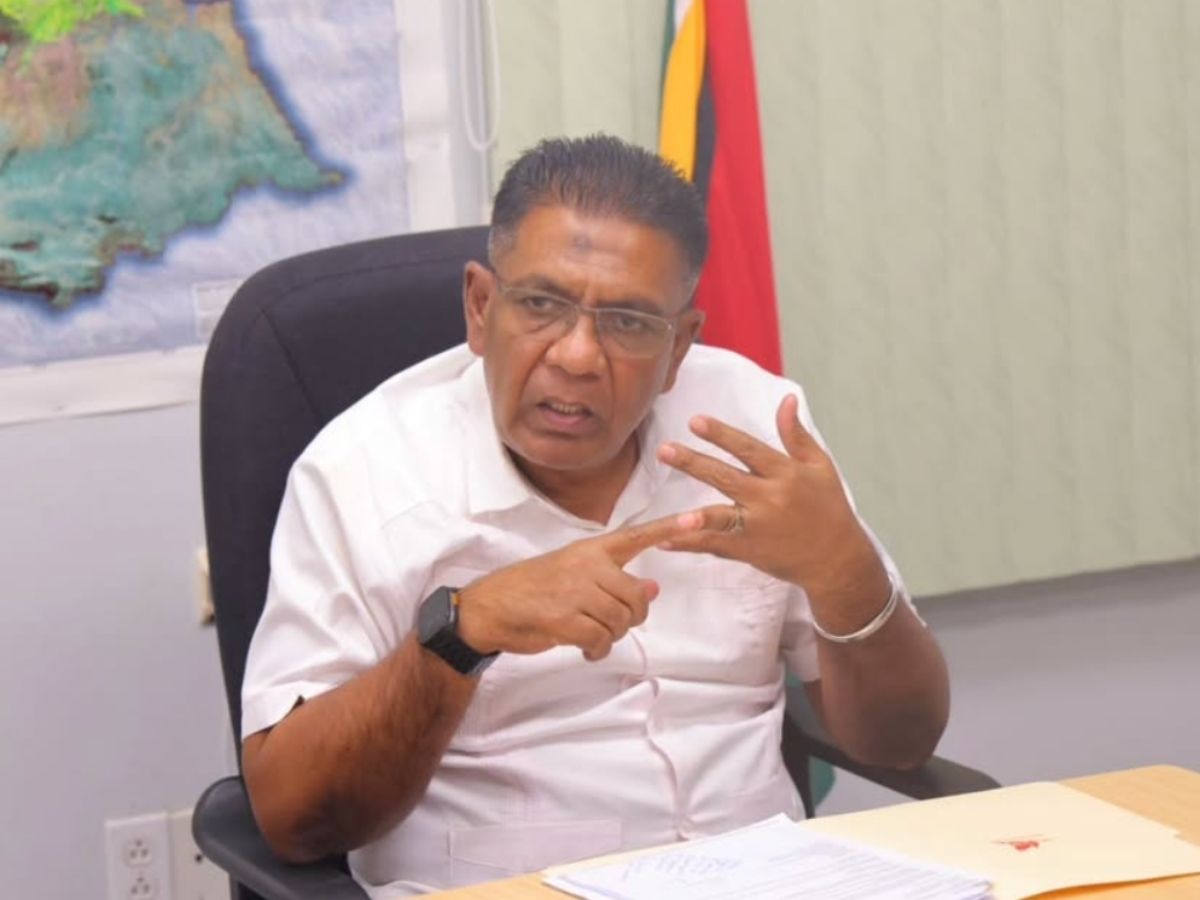
Vice President Dr Bharrat Jagdeo has told indigenous leaders that those responsible for safety failures aboard the MV Barima will face serious consequences, as investigators continue to piece together how the vessel came to be carrying passengers who were never recorded on its manifest.
Dr Jagdeo delivered the assurance during an address to the National Toshaos Council Conference, where the disaster has overshadowed proceedings since delegates gathered this week. He said the government would not shield anyone found to have breached maritime safety protocols, regardless of their position within the vessel's operating structure.
The investigation into the sinking is being carried out jointly by the Maritime Administration Department, the Guyana Police Force and the Guyana Defence Force. Officials from the task force are reviewing footage taken during the boarding process and interviewing survivors in an effort to establish how passengers not listed on the official manifest were permitted onto the vessel.
The manifest discrepancies have emerged as a central concern for investigators. Families of those who travelled aboard the MV Barima have reported that relatives who boarded the vessel do not appear on the documented passenger list, raising questions about how boarding was supervised and recorded before departure.
Two members of the rescued crew have been taken into police custody after testing positive for marijuana during blood tests conducted as part of routine medical evaluations following the incident. Their detention forms part of the broader inquiry into whether crew conduct contributed to the failures that led to the tragedy.
Authorities have set up a dedicated hotline for families who believe a relative was travelling on the vessel despite their name not appearing on the manifest. The measure is intended to help investigators build an accurate account of who was on board at the time of the sinking, separate from the official passenger records.
President Dr Irfaan Ali suspended his scheduled engagements to travel to the affected regions in the aftermath of the sinking. He visited Port Kaituma and Mabaruma in Region One, as well as communities along the Essequibo Coast, to meet directly with families of those killed or missing. The visits meant the formal opening of the National Toshaos Council Conference was pushed back, with organisers citing the president's regional travel as the reason for the delay.
The disruption has rippled through the conference itself. Several Toshaos from communities affected by the sinking left the gathering early to return home and be with their communities during the period of mourning. Their departure has left a visible gap in a conference that typically brings together Amerindian leaders from across the country to discuss development priorities for the year ahead.
Dr Jagdeo said the government was conscious of the disruption caused to those leaders and gave an assurance that their communities would not be sidelined in decisions on development matters as a result of their early departure. He said separate meetings would be arranged with the affected Toshaos once the mourning period had passed, so that their communities' priorities could still be represented in ongoing discussions.
The Vice President's remarks reflected an attempt to balance two competing demands facing the government this week: maintaining the momentum of a conference that shapes development policy for indigenous communities for the year ahead, while acknowledging that several of the leaders central to that process are now grieving losses from the sinking.
Officials have not yet given a timeline for when the investigation into the MV Barima will conclude, nor when charges, if any, might be brought beyond the two crew members currently in custody. The government has indicated that further updates will be provided as the joint task force completes its review of the boarding footage and survivor testimony central to establishing what happened before the vessel departed.

.jpg)