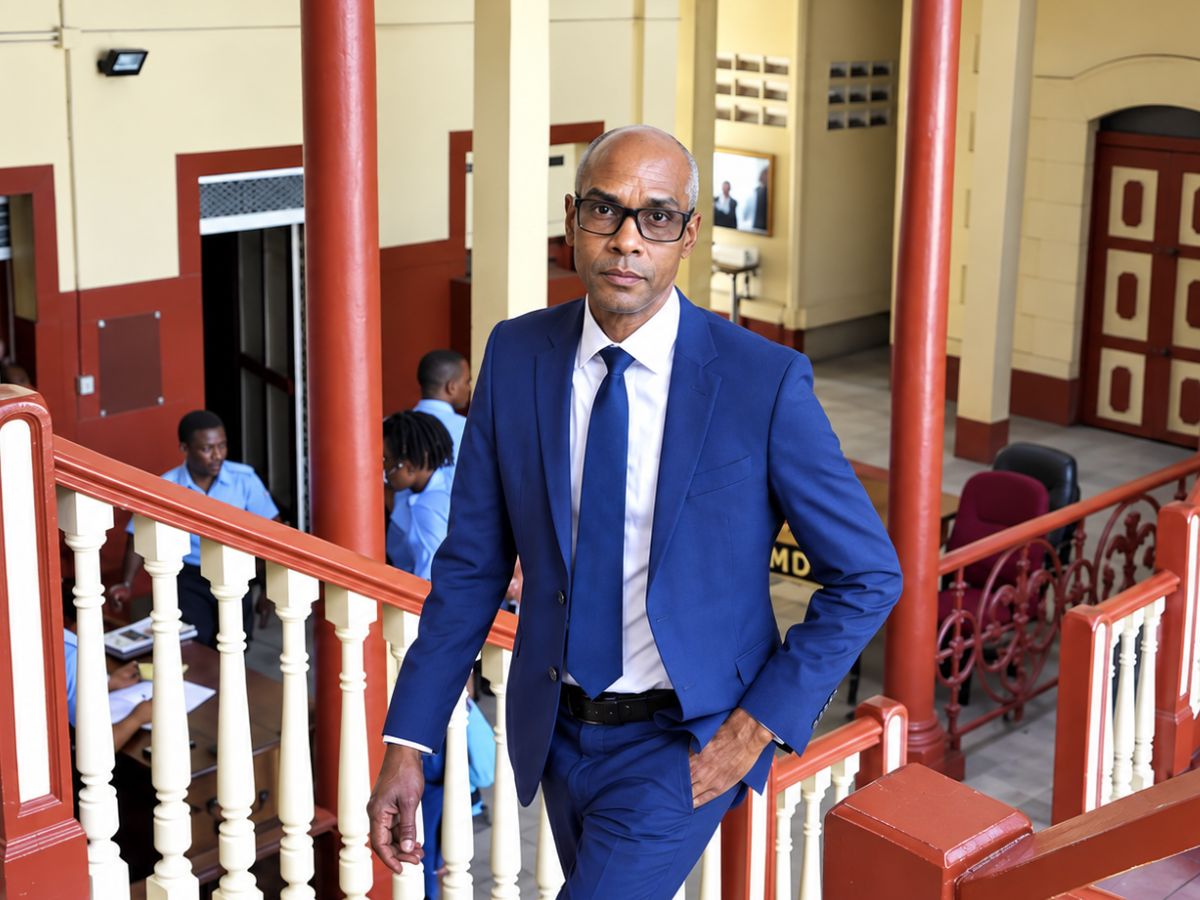
Aneal Giddings, the former Information Technology Manager for the national elections commission, told the court this week that he removed a data server from the tabulation room during a bomb scare on 5 March 2020, describing the move as necessary to protect electoral information rather than an act of defiance.
Giddings was giving evidence in a trial concerning the disputed March 2020 elections. He confirmed that during the incident he took the tabulation server and locked it inside his own car in the car park rather than proceeding directly to the muster point along with other staff.
The bomb threat occurred at the Region Four Command Center and prompted an evacuation of the building. While colleagues made their way to the designated assembly area, Giddings said he judged it more important to secure the server first.
Under questioning, Giddings acknowledged that he had no official authorisation to remove the equipment. He went further, admitting that he had been told directly by the then Deputy Chief Elections Officer to stop what he was doing. He did not stop. Asked why he disregarded that instruction, Giddings said his responsibility for the commission's information systems took precedence in the moment, and that he believed leaving the server unattended posed a greater risk than the threat itself.
Defence attorney Nigel Hughes pressed Giddings at length on the episode during cross-examination. Hughes had earlier indicated that video surveillance from that night would show Giddings carrying the server to his vehicle, and he introduced the footage as evidence.
The footage, once played, showed something narrower than advertised. It depicted Giddings leaving the compound, but at no point did it show him carrying a server or any other piece of equipment.
Prosecutor Darshan Ramdhani KC objected to the relevance of the clip. He argued that footage showing Giddings leaving empty-handed did nothing to undermine the witness's own account of what he had done with the server, since the two were not necessarily filmed at the same moment. Hughes responded that the footage had not been introduced to dispute the server's removal at all, but to support a separate line of questioning.
That line of questioning soon became clear. The defence put it to Giddings that he had also removed Statements of Poll from the command centre that night. Giddings rejected the claim outright, telling the court again that he had taken nothing beyond the server itself, and that neither the server nor any data held on it had gone missing or been tampered with.
The exchange left the court with two separate strands of allegation still unresolved: the circumstances of the server's removal, which Giddings has admitted to and defended, and the newer claim regarding the poll documents, which he denies. Neither Hughes nor Ramdhani indicated that either matter had been settled by the day's evidence.
Giddings remains under cross-examination, and Magistrate Faith McGusty has confirmed that proceedings will resume on Thursday. Whether the defence will produce further footage or documentary evidence relating to the Statements of Poll allegation was not disclosed in court.
The case forms part of continuing legal proceedings arising from the March 2020 elections, and the conduct of commission staff during the count has remained a point of contention well beyond the vote itself. Giddings' testimony this week added detail to an episode that has previously been described only in broad terms, namely that a server was removed from the tabulation room without authorisation during a security scare. What his evidence has not resolved is whether that removal was, as he maintains, a defensible act of data protection, or something the court will eventually treat differently once cross-examination concludes.