
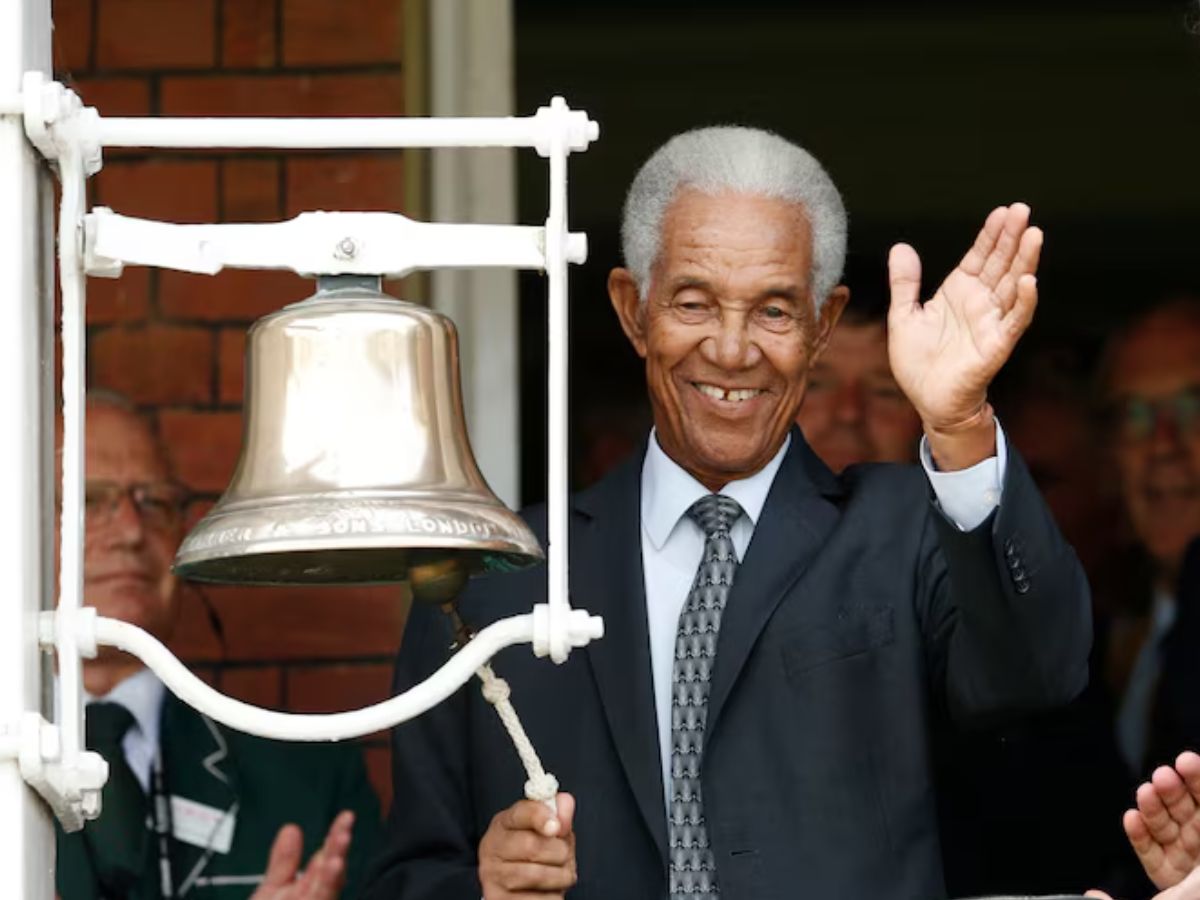
The death of Sir Garfield Sobers has drawn tributes from across the cricketing world, but for one former Guyanese official, the legacy of the Barbadian batting great extends far beyond his statistics on the field. Manniram Prashad, who served as Guyana's Minister of Tourism, Industry and Commerce, has described Sobers as a figure whose influence reached well past the boundary rope, into the realm of regional diplomacy and economic cooperation. In his tribute, Prashad framed Sobers not merely as a Barbadian sporting hero but as a statesman for the wider Caribbean, a description that speaks to a lesser known dimension of a man best remembered for his exploits with bat and ball.
Prashad's recollections centre on an encounter at the World Travel Market in London, one of the largest annual gatherings for the global tourism industry. At the event, the exhibition booths for Guyana and Barbados happened to be positioned beside one another. Rather than confining his attention to promoting his native island, Sobers used the moment, and the considerable weight of his global reputation, to speak on behalf of Guyanese tourism as well. Visitors drawn to the Barbados stand by the presence of a cricketing legend found themselves guided next door, introduced to Guyana's own attractions with the same warmth Sobers might have shown discussing his home island. Prashad recalled the episode as evidence of a man who saw no contradiction between promoting Barbados and promoting its neighbours.
That willingness to advocate across borders, according to Prashad, reflected something deeper in how Sobers understood the region. He viewed the Caribbean's nations not as separate economies competing for the same visitors and investment, but as parts of a single, interconnected whole. Prashad suggested that Sobers regarded the success of any one Caribbean territory as a gain for the entire region, a conviction that shaped how he carried himself whenever he appeared on the international stage. For a man whose fame had been built entirely on Barbadian and West Indian cricket, this was a notably expansive outlook, one that treated regional solidarity as a matter of principle rather than sentiment.
What made this advocacy effective, Prashad's tribute suggests, was the manner in which Sobers engaged with the public. Despite standing among the most recognisable sportsmen of his generation, he showed little of the reserve or self-importance that might be expected of a figure of his stature. Visitors to the World Travel Market who approached him found someone genuinely curious about their questions and generous with his time, willing to discuss Caribbean life and culture with the same enthusiasm he brought to conversations about cricket. Prashad's account paints a picture of a man whose ambassadorial instincts came not from training or obligation but from an underlying humility, the kind that allowed him to treat a chance encounter with a stranger at a trade fair with the same sincerity he might have shown a head of state.
Prashad has extended condolences to the government and people of Barbados, as well as to Sobers's family and the many admirers who followed his career across decades. The tribute closes with a recognition that Sobers leaves behind two intertwined legacies. One is that of an unmatched figure in the history of cricket, a player whose records and technique shaped the way the sport is understood. The other is quieter but no less significant, that of a man who used his standing not to elevate himself further but to open doors for his neighbours. For Prashad and others who encountered him away from the cricket ground, it is this second legacy, of a devoted advocate for Caribbean unity, that will endure alongside the sporting records.

.jpg)
.jpg)
.jpg)
.jpg)