
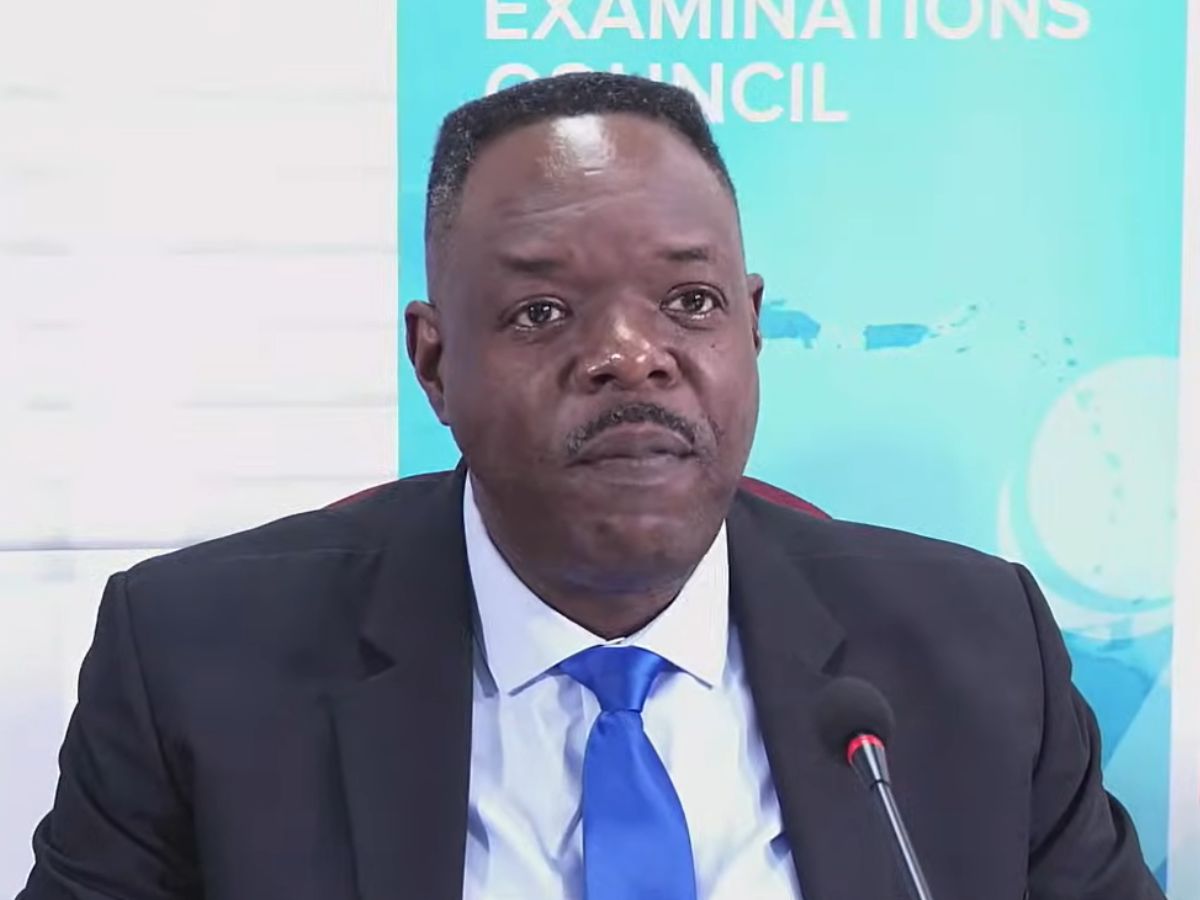
The Caribbean Examinations Council has announced a sweeping overhaul of its assessment methods, abolishing traditional coursework for non-practical subjects by 2028 in response to the growing influence of artificial intelligence. The move represents one of the most significant structural shifts in the examining body's history, driven by concern that students' submitted work can no longer be reliably verified as their own.
The decision follows extensive consultations across twenty-one regional states. Council leadership concluded that the rapid spread of accessible AI tools has undermined the reliability of take-home assignments to a degree the existing system cannot correct. Officials described the reform as a response to circumstance rather than a stance against technology itself, arguing that when coursework can no longer guarantee individual authorship, the credibility of the qualifications built on it is at risk. Universities and employers who rely on CXC certificates to judge student ability were cited as a central reason for acting now rather than waiting for the problem to worsen further.
Under the new model, School-Based Assessment will be removed entirely for theoretical and non-practical subjects, including mathematics, English, history and information technology. In its place will sit an invigilated examination designated Paper 032. The council was careful to note that the new paper is not designed simply to test recall under exam conditions. Students will be given their examination topics a month in advance, giving them time to conduct research beforehand. They will then be permitted to bring prepared reference notes into the exam hall itself, and the sitting will run for a longer period than a conventional paper, intended to give candidates room to work through analysis and synthesis rather than race against the clock. The structure is meant to preserve the research and reasoning skills coursework was originally designed to build, while removing the unsupervised conditions that made it vulnerable to AI-generated submissions.
Practical subjects have been treated differently. Agricultural science, physical education, visual arts, music and technical drawing will keep their coursework components, on the grounds that these disciplines depend on physical demonstration in ways that cannot be replicated in an exam hall or meaningfully assisted by AI software. The council did add that internal moderation for these subjects will be tightened, so that the exemption is not read as a loosening of standards elsewhere in the system.
The rollout will happen in stages. Students sitting the Caribbean Advanced Proficiency Examination will move to the new invigilated format completely from the May to June 2027 cycle. Secondary level students face a softer transition. Schools will be able to choose between the old coursework model and the new paper during 2027, before the invigilated exam becomes compulsory across the region from the May to June 2028 sitting. Coursework scores that currently transfer between sittings will keep that status, and the same transferability will extend to scores from the new paper once it comes into effect in 2027.
The scale of the change sets CXC apart from many exam boards elsewhere, which have so far responded to AI-related concerns with narrower measures such as revised plagiarism detection or amended submission guidelines rather than removing coursework outright. Whether the new format succeeds will depend largely on how well the advance notice and open-note conditions manage to test genuine understanding rather than simply shifting the point at which AI assistance might be used, a question schools across the region are likely to watch closely as the first invigilated papers approach in 2027.

.jpg)
.jpg)
.jpg)
.jpg)