
Guyana's GDP grew by roughly 40 percent in 2024, a figure that places it in a category occupied by almost no other nation on earth. Its offshore oil fields are producing at record volumes, and its government has committed to one of the most ambitious public infrastructure programmes in the Caribbean's recent history. Yet for all that momentum, one of the most consequential decisions affecting Guyana's fiscal future will be made not in Georgetown but in Washington, by a committee that has no mandate to consider Guyana at all.
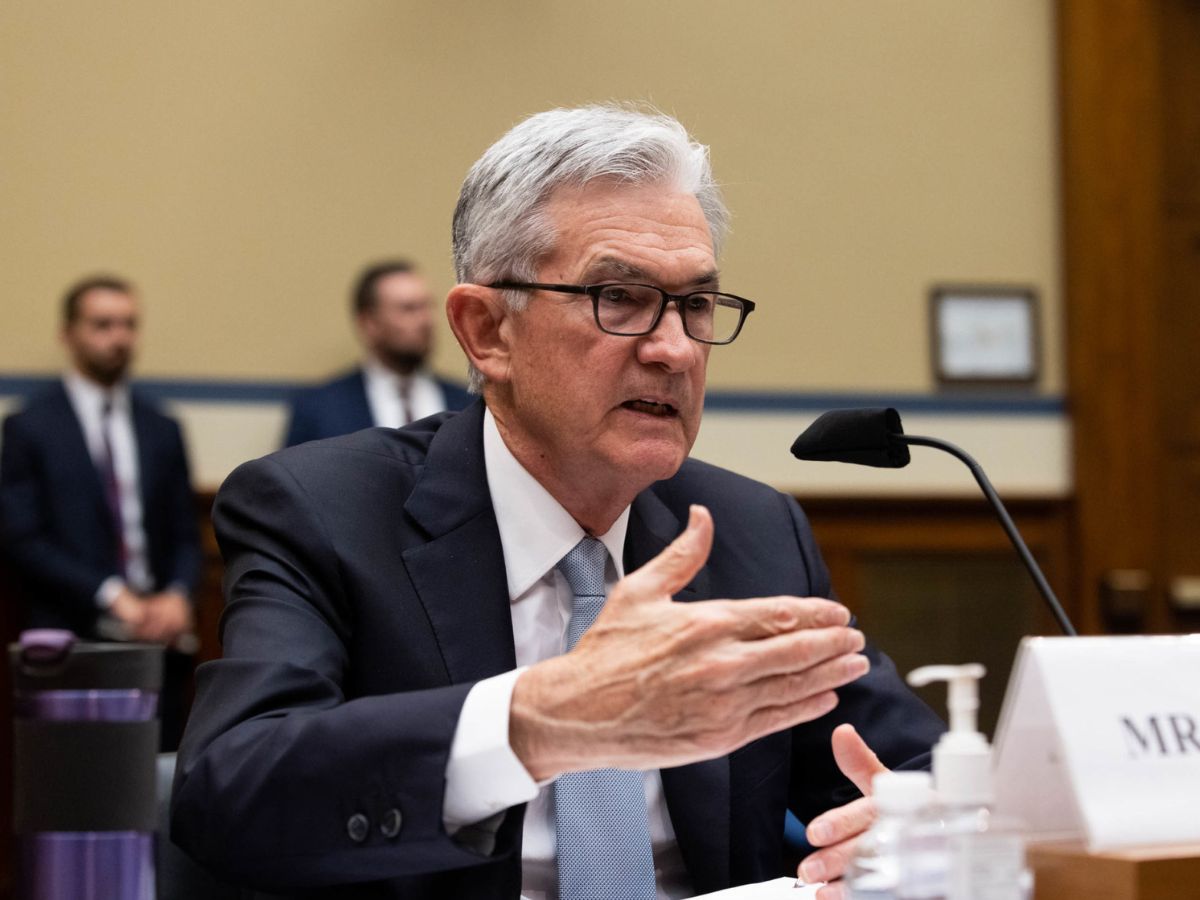
The U.S. Federal Reserve's prolonged period of elevated interest rates, maintained in response to domestic inflationary pressures, carries consequences well beyond American borders. For a small, dollarised economy that finances large portions of its capital expenditure through international credit markets, the Fed's stance functions as an invisible tax on ambition. The higher the benchmark rate in Washington, the more expensive it becomes for Georgetown to borrow, and the more of its oil revenues it must direct towards servicing debt rather than building roads, hospitals, and power grids.
This is the central tension in Guyana's current economic position. Rapid resource-led growth has generated the political appetite and the stated necessity for aggressive state investment in infrastructure. The government's development agenda includes expanded transportation networks, energy diversification projects, and upgrades to healthcare facilities, all of which require substantial long-term financing. When global borrowing costs rise in lockstep with U.S. rates, the yield demanded by international creditors on that financing rises accordingly. A loan structured at a more accommodating rate two years ago carries a materially different cost today, and any new sovereign debt issued in the current environment reflects conditions far less favourable than those Guyana might have hoped to secure.
The long-term consequence is straightforward: a greater share of future government revenue is committed to debt servicing, which reduces the discretionary spending available for the very public services the infrastructure was meant to support. For a country still building the institutional and physical architecture of a modern economy, that diversion of funds is not an abstraction. It represents clinics not yet built, roads still unpaved, and grid connections delayed.
The borrowing problem is compounded by a separate mechanism operating through the country's ports. Despite being a significant oil exporter, Guyana remains heavily dependent on imports for food, industrial equipment, and consumer staples. That dependence means that inflation in North America does not stay in North America. It travels south in shipping containers. When manufacturers and logistics operators in the United States face elevated input costs driven by tight monetary conditions, those costs are reflected in the prices they charge for exported goods. Guyana's consumers pay for them at the checkout.
The country's consumer price index has remained under pressure from this import pipeline. Local prices for goods that Guyana does not produce domestically respond to foreign monetary conditions with a lag, but they do respond. Citizens who have little direct exposure to the macroeconomic arguments about Federal Reserve policy nonetheless experience its effects each time the cost of basic goods increases without a corresponding rise in wages.
What makes this situation politically awkward for Guyana's policymakers is that they have very limited tools with which to respond. Exchange rate adjustment is constrained by the dollar peg. Domestic monetary policy has limited reach when the inflationary pressure originates externally. The available options are largely fiscal: managing the pace of borrowing, prioritising the most critical infrastructure projects, building reserve buffers, and working to develop domestic productive capacity in sectors where import dependence is highest.
Guyana's economic story over the past five years has been, by any statistical measure, remarkable. The country has moved from the margins of regional economic discussion to a position of genuine significance. But that ascent has come with an exposure that its policymakers are still learning to manage. The country's development trajectory is now materially connected to the decisions of central bankers in a country whose domestic policy objectives have nothing to do with Georgetown's growth plans. That is not a temporary condition. It is the structural reality of operating a small open economy in a world where one central bank sets the global cost of money.

.jpg)
.jpg)
.jpg)
.jpg)