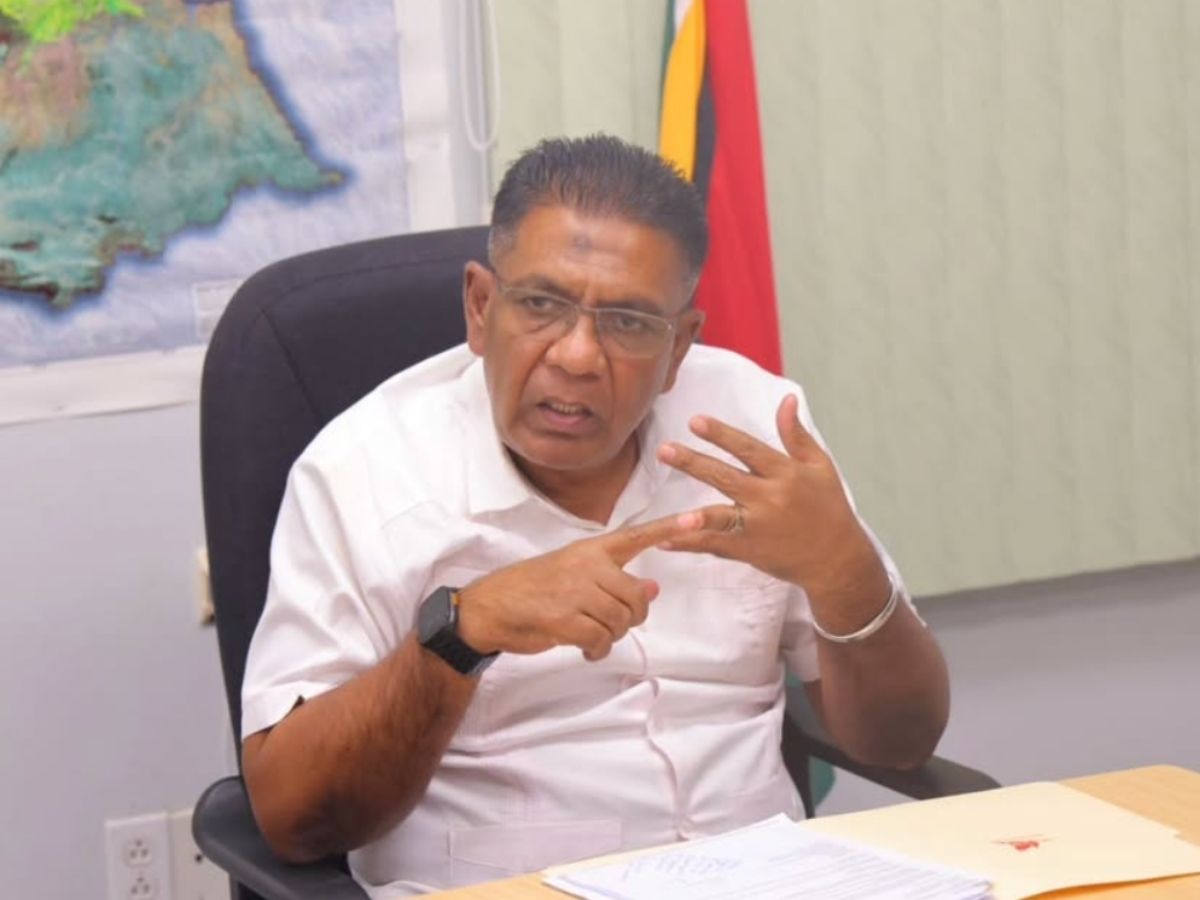
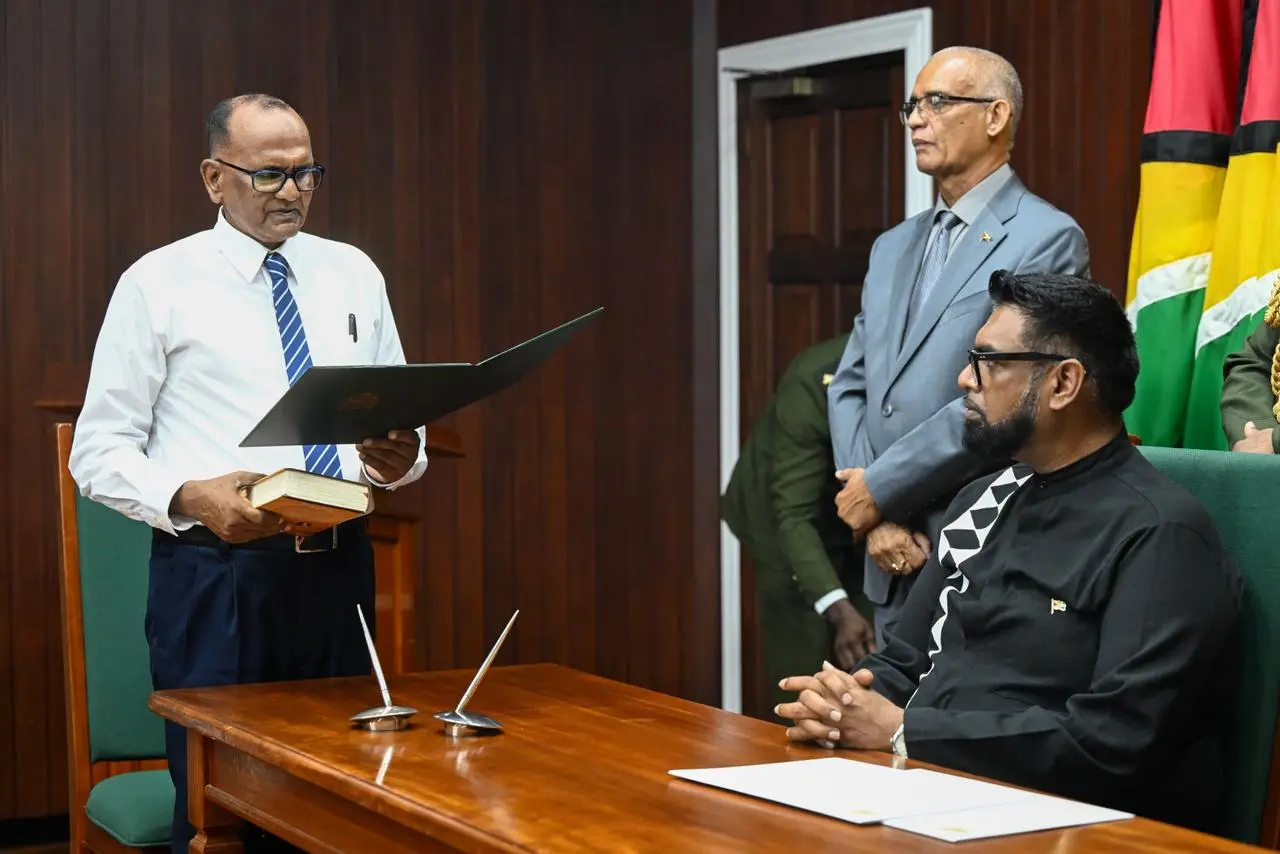
In a move that has stirred political controversy, President Dr Irfaan Ali swore in seven members of the Teaching Service Commission (TSC) on 31 December 2025 without consulting the Leader of the Opposition, which is a requirement enshrined in Guyana’s Constitution, drawing sharp criticism from opposition politicians and constitutional experts.
Constitutional Requirement and the President’s Action
Under Article 207 of the Constitution of Guyana, a portion of the membership of the Teaching Service Commission, crucial for overseeing the hiring, promotion and discipline of teachers across the country, must be appointed by the President after meaningful consultation with the Leader of the Opposition.
However, when President Ali administered the oath of office to the seven new commissioners at State House in Georgetown, no such consultation took place. Ali argued that the absence of an Opposition Leader, a vacancy that had persisted since the reopening of the 13th National Assembly following the 2025 general election meant the appointments could not be delayed, stressing that the work of the commission was urgently needed to support the education sector.
The newly sworn-in members included individuals expected to play key roles in filling longstanding gaps within the teaching profession and advancing educational governance, a sector seen as vital to Guyana’s broader development goals.
Opposition and Wider Political Response
The main opposition party, We Invest in Nationhood (WIN), whose leader Azruddin Mohamed was elected Leader of the Opposition in January 2026 has vehemently criticised the move, asserting that it undermines the constitutional framework and erodes democratic norms.
In a statement published shortly after the ceremony, WIN warned that bypassing the required consultation “constitutes a direct assault on parliamentary democracy”, arguing that the constitutional safeguard is designed to ensure balance and bipartisan legitimacy in important public commissions. The party also pointed to delays by the Speaker of the National Assembly, Manzoor Nadir, in convening a meeting of non-government members to formally elect Mohamed to the position, a procedural step that would have enabled proper consultation.
Terrence Campbell, an APNU parliamentarian, also took legal action, filing an application in the High Court seeking a judicial review of the TSC appointments on grounds that the proper constitutional process had not been followed.
Government Justification
President Ali and senior government ministers have defended their decision, asserting that the functioning of key public institutions must continue even amid political and parliamentary deadlock. Ali emphasised that the Teaching Service Commission is intended to operate independently of political control in its day-to-day duties and that its constitution was necessary to address delays and backlogs in teacher promotions and appointments.
The government’s argument is rooted in the practical need to ensure that the education system, which is a crucial component of Guyana’s development and workforce readiness, has a properly constituted body to oversee professional standards and career progression for teachers nationwide.
Political Context and Constitutional Debate
The controversy over the TSC appointments is situated within broader political tensions following the September 2025 general election, which saw shifting party dynamics and a new primary opposition grouping in the National Assembly. Irfaan Ali’s administration, led by the People’s Progressive Party/Civic (PPP/C), regained a parliamentary majority, while WIN emerged as a significant opposition force.
However, the procedural delay in electing a formal Leader of the Opposition for several months created an unusual constitutional dilemma. Opponents have accused the government and allied parliamentary officials of deliberately stalling the process to prevent the formal assumption of that role by Mohamed, who is also facing extradition proceedings in the United States, thereby forestalling any meaningful consultation on key institutional appointments.
Supporters of the government argue that the constitutional vacuum should not paralyse governance, particularly in areas as consequential as education. They contend that public service commissions cannot be left inoperative indefinitely, and that the executive’s duty to uphold the functioning of the state justifies interim action in the absence of an Opposition Leader.
Implications for Education and Governance
The Teaching Service Commission plays an influential role in shaping the future of Guyana’s education sector, from staffing decisions to disciplinary oversight. Critics of the president’s decision warn that appointing a commission without bipartisan consultation risks politicising what is supposed to be a neutral and merit-based institution.
Concerns have also been raised by stakeholders such as the Guyana Teachers’ Union, which has highlighted potential complications arising from delayed promotions and administrative bottlenecks in the sector, problems that the TSC is meant to address.
Legal scholars suggest that the dispute may test the strength of Guyana’s constitutional framework, particularly how gaps in political leadership should be managed without compromising the rule of law.
Looking Ahead
As the constitutional challenge progresses through the courts, observers predict that the case could have wider ramifications for how executive power and constitutional obligations are balanced in Guyana. The outcome may influence future interpretations of the Constitution’s provisions on power sharing and political accountability, and could shape the conduct of key appointments in other public institutions.
In the meantime, the government maintains that its focus remains on strengthening public services and ensuring continuity in governance, even as opposition parties and civil society continue to press for resolution of procedural and democratic concerns.

.jpg)