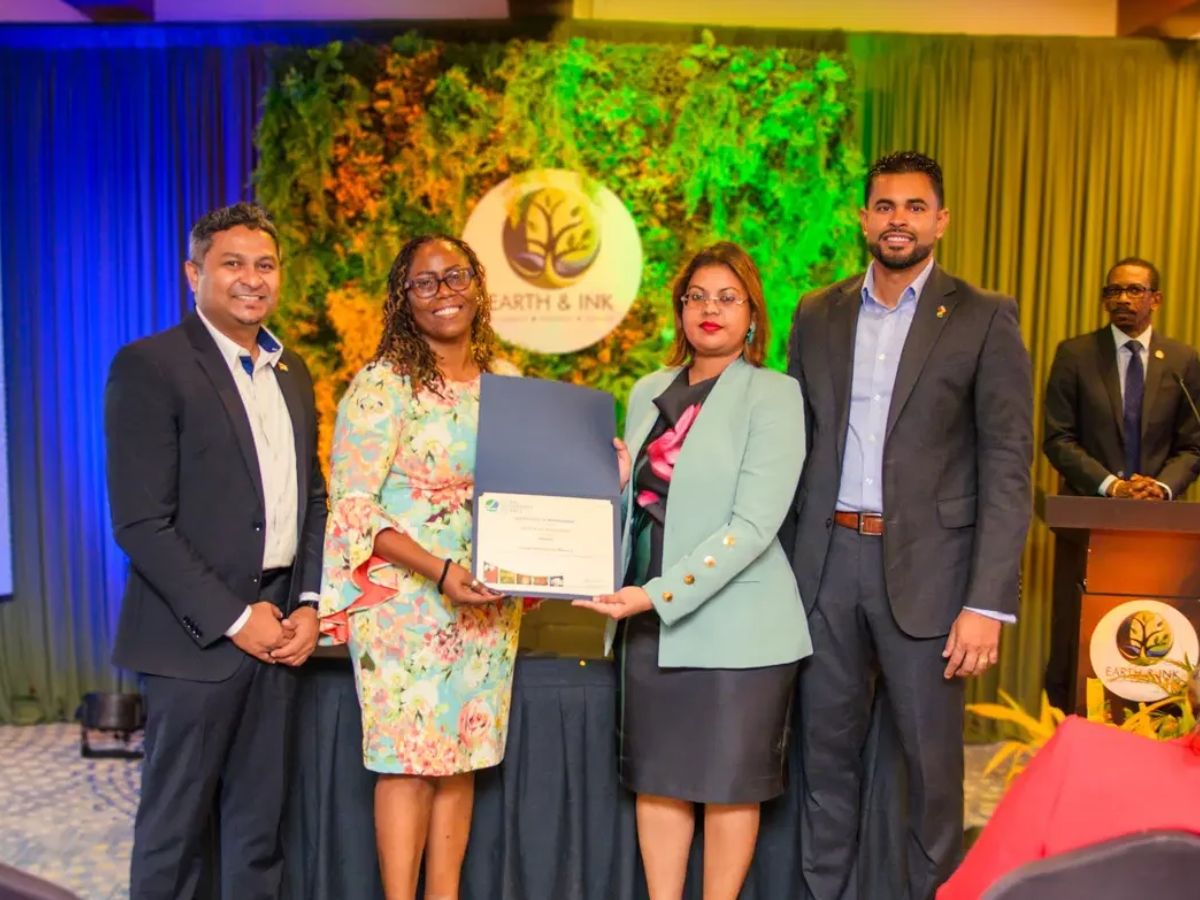
Earth & Ink, a new Guyanese digital platform covering biodiversity, the environment and sustainable development, has joined the Global Biodiversity Alliance (GBA), an initiative led by President Irfaan Ali. The announcement came from the platform itself, in a statement dated Georgetown on 30 September and published on 5 October.
The platform was officially launched on 30 September at Herdmanston Lodge in Georgetown. Its founders are Joanna Simmons and Haimwant Persaud. According to the statement, the guests included representatives of the Government, the private sector, academia and development organisations, along with members of Guyana's creative community. The statement did not say how many people attended.
Earth & Ink says it will provide news, analysis and public information on forests, biodiversity, climate resilience, land use, water systems and sustainable development. It describes its method as combining environmental data and expert analysis with storytelling, visualisation and accessible public information. The statement gave no details of how the outlet is funded, how many staff it employs or who will make editorial decisions.
Culture featured in the launch. Artwork was on display, and the statement said the event recognised that Guyana's forests, rivers, wildlife, landscapes and traditional knowledge form part of the country's cultural identity.
Charles Ramson Jr, the Minister of Culture, Youth and Sport, welcomed the platform's participation in the alliance. He said the environment is an essential part of national culture and identity, and that artists, creators, storytellers and young people have a role in helping Guyana and the world understand the value of its natural heritage.
Pradeepa Bholanath, the Senior Director of Climate Change, spoke about the government's record. She said Guyana has shown that protecting its natural heritage and pursuing development can happen together. As evidence she cited the Low Carbon Development Strategy 2030 (LCDS 2030), forest conservation efforts, carbon markets, community initiatives and the GBA itself. She also welcomed Earth & Ink's membership. In her view, credible information and effective storytelling are becoming more important as Guyana shares its experience with national, regional and international audiences.
The platform lists its core objectives as widening public access to environmental information and connecting community voices with international stakeholders. It also intends to highlight Guyana's role in the alliance. The statement said its membership adds a communications and creative dimension to the GBA, bringing environment, culture, science, storytelling and sustainable development into one group.
The statement did not explain what the GBA does, who its other members are or what joining involves in practice. It also did not say whether Earth & Ink applied to join or was invited. These points would help readers judge what the membership means.
Both officials quoted work for the government that leads the alliance. Their comments describe Guyana's policies favourably, and the statement carried no response from critics or from independent specialists. Guyana's forest and carbon market arrangements have been assessed by organisations outside government, and those evaluations offer a separate view of the claims made by Ms Bholanath.
A further question concerns editorial independence. A media platform that joins an alliance led by the head of state, and that opened with ministers in attendance, may be asked how it will report on government environmental policy when the evidence is less favourable. Earth & Ink has not yet addressed that point publicly. The platform says it will offer credible information, and its coverage once it begins publishing regularly will show how it handles the issue.