
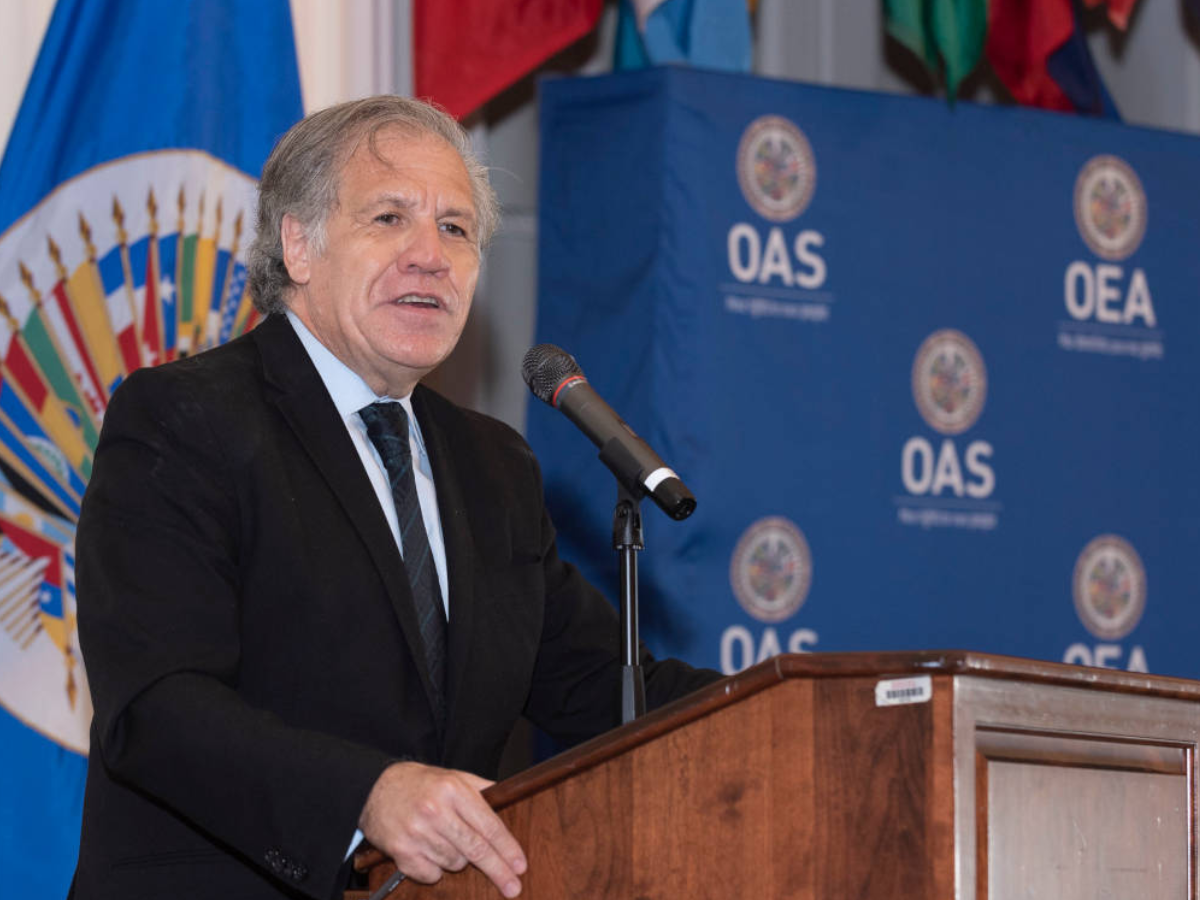
The 56th Regular General Assembly of the Organization of American States concluded in Panama City on Wednesday, bringing to a close four days of deliberation among foreign ministers and delegates from across the hemisphere. The closing session produced a set of resolutions that delegates described as a renewed commitment to multilateral cooperation, with member states agreeing that regional problems now demand regional solutions rather than fragmented national responses.
Two themes dominated the assembly's final declarations. The first centred on hemispheric security, particularly the growing reach of transnational organized crime. The second addressed the defence of democratic institutions, framed by several delegations as inseparable from the security question. Officials repeatedly noted that criminal networks operating across borders have begun to undermine the governance capacity of states, not merely their law enforcement agencies.
Delegates were direct in their assessment that organized crime can no longer be treated as a domestic policing matter. Several foreign ministers argued that criminal syndicates have grown sophisticated enough to exploit weak institutions, corrupt officials, and strained judicial systems, turning what was once a public safety concern into something closer to a governance crisis. This reframing shaped much of the assembly's final language, which urged member states to treat organized crime as a structural threat to democratic stability.
The scope of the problem discussed in Panama City was wide. Arms trafficking featured prominently, alongside human smuggling networks that move migrants through multiple countries before reaching their final destinations. The illicit drug trade remained a persistent concern, as did the trafficking of gold and other minerals through informal and often violent extraction networks. Delegates agreed that these activities share a common feature: they exploit the seams between national jurisdictions, and no single country can address them alone.
In response, the OAS resolutions called for expanded intelligence sharing between member states, joint security protocols for cross-border operations, and stronger diplomatic coordination when criminal activity spills across national lines. The emphasis throughout was on collective capability rather than isolated national strategies, which several delegates characterised as insufficient against networks that operate with little regard for borders.
For Guyana, the implications of these resolutions are immediate. The country's heavily forested and largely porous borders have made it a known transit point for human smuggling, as well as for illicit gold and mercury trafficking and narcotics movement. Venezuelan criminal groups, often referred to as sindicatos, have been documented operating near Guyanese territory, exploiting the same gaps in surveillance and enforcement that the OAS framework aims to close. A multilateral intelligence and operational support structure would give Guyanese authorities access to resources that exceed what domestic agencies can muster on their own.
Guyana's rapid economic expansion, driven largely by offshore oil production, adds a further layer of vulnerability. As capital flows into the country increase, so does its exposure to sophisticated financial crime, including money laundering schemes that seek to exploit underdeveloped regulatory oversight. The OAS's renewed focus on security cooperation extends to technical assistance for financial institutions, offering Guyana a route to strengthen its regulatory architecture before such risks become entrenched.
The assembly's language on defending democracy carried particular weight for Guyana given its ongoing territorial dispute with Venezuela over the Essequibo region. A hemispheric coalition publicly committed to territorial integrity and the rule of law functions as a diplomatic backstop for Guyana, reinforcing its position at a moment when regional tensions remain unresolved.
What happens next will depend on implementation. Member states are now expected to convert the assembly's declarations into domestic legislation, funding commitments, and cross-border task forces capable of operating beyond the rhetoric of the closing communique. Previous OAS assemblies have produced similarly ambitious language, only for follow-through to falter once delegations returned home.
The genuine test of the 56th Assembly will not be measured in Panama City but in the months that follow, as governments decide whether the political will exists to sustain a coordinated response against criminal enterprises that have had decades to entrench themselves.

.jpg)
.jpg)
.jpg)
.jpg)