The International Court of Justice has closed the written phase of one of the most consequential border disputes now before it. Seven years after Guyana first brought the matter to The Hague, judges are preparing to schedule final oral hearings, moving the case toward a ruling that will carry weight far beyond the two countries directly involved.
At the centre of the dispute lies Essequibo, a territory making up roughly two thirds of Guyana's landmass. Venezuela claims the region as its own. Guyana governs it. The Court's eventual judgment is expected to settle the question permanently, closing a dispute that has shadowed the two nations since the nineteenth century.
The stakes have shifted considerably since the case began. Guyana, a country of fewer than a million people, has become the fastest growing economy in the world, propelled almost entirely by offshore oil discoveries. The Stabroek Block, operated primarily by ExxonMobil alongside Hess and CNOOC, sits directly off the coast adjacent to the contested Essequibo region. Production there has turned Guyana from a modest agricultural economy into one of the most closely watched petroleum producers in the hemisphere.
The uncertainty has not been without cost. Several international firms have paused exploration in the western reaches of the Stabroek Block, wary of operating in waters Venezuela continues to dispute. That caution has placed a ceiling on what the block might eventually yield, leaving known reserves untapped while the legal question remains open.
Guyana's case rests on the 1899 Arbitral Award, a ruling issued in Paris that fixed the boundary between Venezuela and what was then British Guiana. For decades, both governments treated the matter as resolved. Maps reflected it. Diplomacy assumed it. Then, in 1962, Venezuela reversed course, declaring the award null and void and reviving a claim that had lain dormant for over sixty years. Caracas has argued ever since that the original arbitration process was flawed and that Venezuela was denied a fair hearing.
That reversal has produced decades of friction, but recent years have brought a sharper edge. In March 2025, Venezuelan coast guard vessels entered waters close to Guyanese offshore platforms, an incident Guyana's government characterised as a direct provocation tied to its oil operations. It was not an isolated gesture. Under Nicolás Maduro, Venezuela held a domestic referendum asking citizens to endorse sovereignty over Essequibo, and Caracas has pressed ahead with plans to organise elections covering the territory, despite controlling none of it. The moves have been read in Georgetown and elsewhere as an attempt to manufacture facts on the ground ahead of any ruling from The Hague.
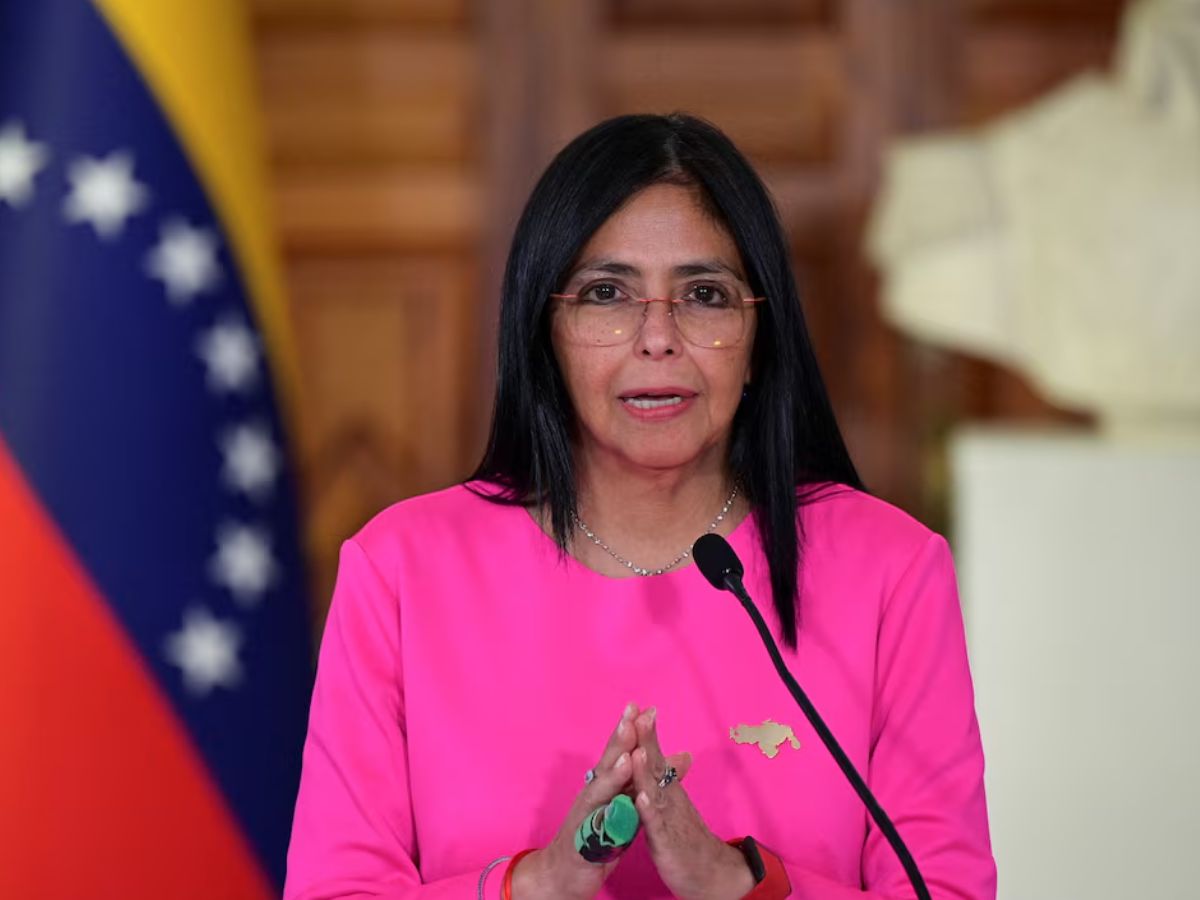
Venezuela's political leadership has shown no sign of easing this posture. Delcy Rodríguez, the country's vice president, has remained one of the most visible figures asserting Caracas's claim to the territory, reinforcing that the position is unlikely to soften regardless of who occupies which office in the months ahead.
The legal path that brought the case to this point began in 2018, when the United Nations Secretary General referred the dispute to the ICJ after years of bilateral talks produced no resolution. Venezuela initially refused to recognise the Court's authority to hear the case at all. That objection was dismissed in 2020, when the ICJ ruled it did have jurisdiction, a decision that allowed the substantive proceedings to move forward and ultimately led to the seven years of written submissions now concluded.
What the Court decides will reach well past the question of where a line sits on a map. A ruling in Guyana's favour would lock in its claim to the Stabroek Block's full extent and likely unfreeze the exploration that companies have shelved. A different outcome, or one that leaves room for further negotiation, could destabilise an energy relationship that has already reshaped Guyana's economy and drawn sustained interest from Washington and Beijing alike. Either way, the judgment will set the terms of sovereignty, security and resource access across this stretch of the Caribbean and South American coast for a long time to come.

.jpg)