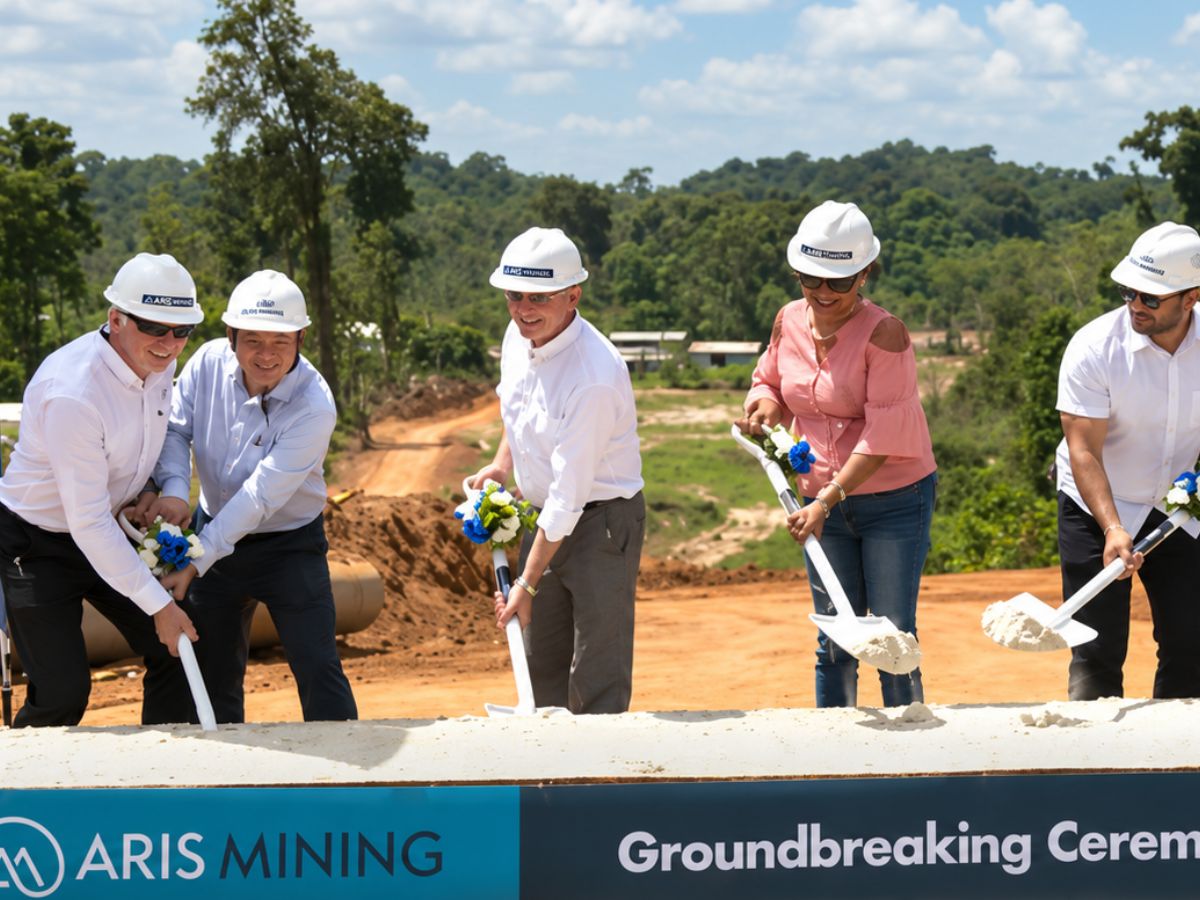
A groundbreaking ceremony has marked the start of construction on the Puruni River Crossing, a 360-foot bridge in Region Seven that is expected to reshape access to Guyana's mining and logging hinterland. Work on the structure is under way, with completion targeted for December 2026.
The bridge is intended to overhaul hinterland logistics, easing bottlenecks that have long affected heavy-duty vehicles serving mining and logging operations in the area. Officials involved in the project describe the current pontoon ferry system as no longer fit for purpose. Traffic volumes have risen steadily in recent years, and the pontoons carry weight restrictions that have forced operators to limit loads or make repeated crossings. Delays at the river have become a routine part of hinterland travel, adding cost and time to journeys that already stretch across difficult terrain. Operators working in the area have reported waits stretching into hours during periods of high demand, particularly when heavier equipment needs to be ferried across in stages to stay within pontoon limits.
The new structure has been engineered to address these constraints directly. It will carry a 100-tonne weight capacity, considerably higher than what the pontoon system could support, and its deck will sit above maximum flood levels. That elevation is designed to guarantee all-weather reliability, removing the seasonal disruption that has affected river crossings during periods of heavy rain.
The project carries a cost of more than 10 million US dollars and is being financed entirely by a private developer, as part of a wider 800 million US dollar gold mining venture in the region. Guyana's government has confirmed that the bridge will not draw on public funds. In keeping with national policy governing major river crossings, the bridge will operate on a toll-free basis once completed, meaning no charge will be levied on any user regardless of the scale of the mining venture underwriting its construction.
Weight enforcement will be handled through dual-direction weigh stations, jointly managed by state mining authorities and the project developer. These stations are meant to prevent overloading and protect the structural integrity of the bridge over its operational life, a concern given the scale of equipment expected to cross once mining activity in the area ramps up. Alongside the crossing itself, planners have set out a realignment of the surrounding road network. A dedicated heavy-vehicle access road will be built, while the existing commercial landing area will retain its traffic flow so that local businesses operating there are not displaced by the new arrangements. The intention, according to those familiar with the plans, is to separate industrial traffic from everyday commercial activity without forcing existing vendors and operators to relocate.
The employment implications of the project are substantial for a region where formal work opportunities can be scarce. Construction is projected to employ up to 1,500 workers at its peak. Once the bridge and associated mining operations move into their operational phase, that figure is expected to settle at between 400 and 500 permanent positions. State oversight has been put in place to ensure that local suppliers, businesses and labourers are given priority access to procurement contracts and jobs generated by the development, rather than seeing those opportunities go to outside firms.
For a region long defined by its geographic isolation, the bridge represents a tangible shift in how goods, workers and equipment will move through the hinterland. Miners and loggers who have absorbed the cost of delays and load restrictions for years now have a firm date to work towards. Whether the project delivers on its December 2026 timeline will depend on conditions that have slowed hinterland construction before, including remote logistics and the unpredictability of the wet season. For now, the ceremony marking the start of works stands as the clearest signal yet that the pontoon era on the Puruni River is coming to an end.