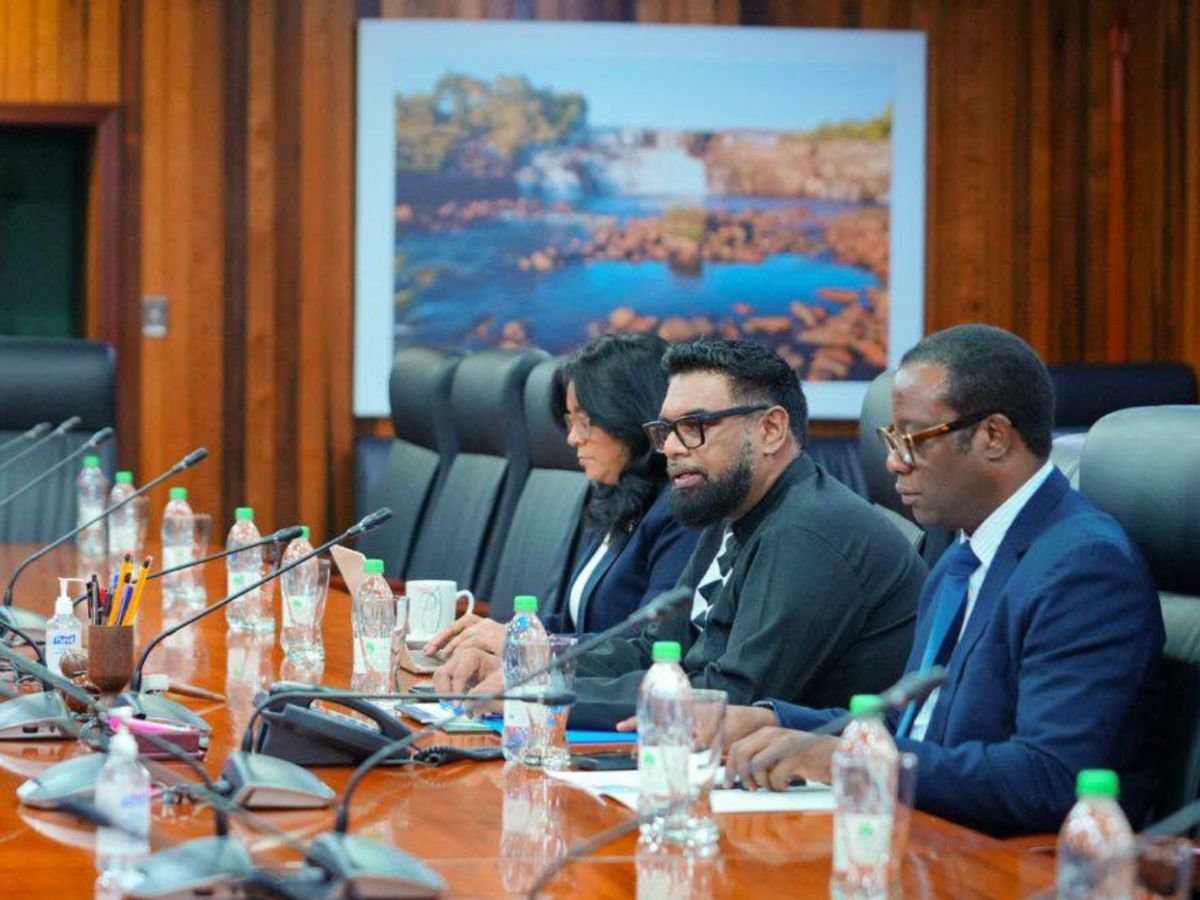
President Dr Irfaan Ali met with members of the Parliamentary Sub-Committee on Foreign Relations at the Office of the President on Tuesday, proceeding with a briefing on pressing international matters despite the complete absence of opposition lawmakers from the session.
The meeting formed part of efforts to further align the work of the government with the legislative arm. The president went ahead with the engagement using those committee members who did attend, addressing issues he considers central to the country's national interests.
During the meeting, the head of state updated representatives of the government side of the sub-committee on key foreign policy matters, including the ongoing proceedings before the International Court of Justice and the recently established Third Country National Agreement between Guyana and the United States. The ICJ case concerns the long-running border controversy with Venezuela, which has taken on renewed significance amid heightened rhetoric from Caracas in recent years. The agreement with Washington, meanwhile, covers arrangements for third-country nationals, a matter that has drawn separate scrutiny from opposition figures over its implications for deportees.
Neither item was new to the parliamentary record, but Tuesday's session marked an attempt by the executive to walk committee members through developments directly rather than through written correspondence or public statements alone.
The absence of opposition members was not a matter of oversight. All members of the committee had been invited through the Speaker of the National Assembly to meet with the president on matters of national importance. Up to the commencement of proceedings, representatives of We Invest in Nationhood and A Partnership for National Unity had neither formally accepted nor declined that invitation, leaving their intentions unclear until the meeting was already under way without them.
APNU's parliamentary leader, Terrence Campbell, later confirmed that his party would not attend, stating that in the absence of an agenda his members would stay away. Both opposition parties had issued separate statements in the preceding day rejecting the initiative, with the Office of the Leader of the Opposition accusing the president of bypassing the constitutional office of the Opposition Leader by engaging parliamentary committees directly rather than through established inter-branch protocol.
WIN went further, stating that the invitations had been dispatched without an agenda, discussion topics or preparatory briefing papers, and that its attempts to secure clarification from the Speaker had gone unanswered. The party also linked its refusal to separate grievances concerning the treatment of its members by state authorities, though those complaints sit outside the immediate subject matter of Tuesday's briefing.
Those committee members who did attend welcomed the engagement and expressed a desire for continued dialogue as the government's foreign policy agenda develops. President Ali described the opposition's absence as disappointing, using the word "puerile" to characterise the decision, though he indicated he would not allow the breakdown to halt further attempts at engagement. He is reported to have said he would continue reaching out even if he found himself meeting alone.
The president outlined his government's intention to strengthen its work with all parliamentary committees in a manner he described as open, transparent and accountable. He said he intends to keep inviting parliamentary committees to engage with him, expressing hope that the opposition will in time recognise the value of taking part.
Not every voice raising concerns sits within the two boycotting parties. Forward Guyana Movement leader Amanza Walton, who was not among those who stayed away, has argued separately that a briefing confined to government members cannot substitute for engagement involving the full parliamentary body, and has questioned whether an official record of Tuesday's discussion will be circulated to those who were absent.
Whether the sub-committee meets again before the opposition's position is resolved remains uncertain. For now, the government has signalled it intends to proceed with its briefing schedule regardless of attendance, leaving the question of how findings from such sessions reach the wider National Assembly unanswered.