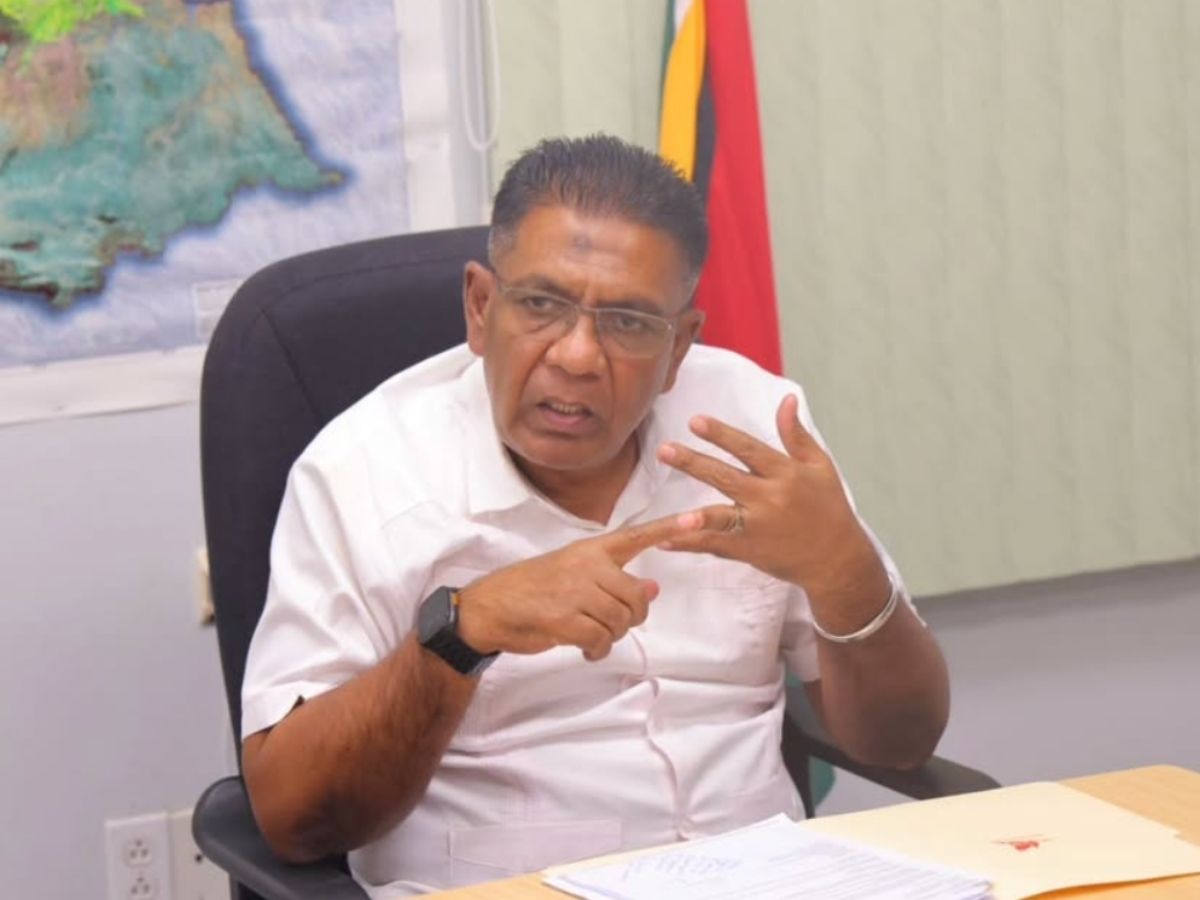

Guyana's Opposition Leader Azruddin Mohamed has said he will shortly write to two opposition party leaders requesting their nominees for seats on the Guyana Elections Commission, advancing a constitutionally required process that has stalled since last year's general elections. Three sitting commissioners aligned with the APNU bloc have refused to resign, a position backed by APNU leader Aubrey Norton, and Mohamed has acknowledged the matter is likely to end up before the courts.
Under Guyana's constitution, the President appoints three GECOM members on the advice of the Opposition Leader, following meaningful consultations with non-governmental parties represented in the National Assembly. Mohamed intends to write to Norton and Amanza Walton-Desir of the Forward Guyana Movement before submitting his nominees to GECOM chairwoman Claudette Singh, with copies to President Irfaan Ali. The three commissioners whose seats are in question, Vincent Alexander, Charles Corbin and Desmond Trotman, were appointed to reflect the previous parliamentary balance and have said they will not stand down without a court order or a constitutional amendment.
The significance of resolving this extends beyond procedure. The commission has not met for eight months, and the government appears to be preparing for local government elections later this year. A commission without agreed membership cannot function normally, and the current impasse directly affects the timeline for those elections.
The September 2025 general elections substantially changed the composition of the opposition. APNU, which previously held 31 seats, won only 12. Mohamed's WIN party took 16 seats, making it the largest opposition grouping, while the Forward Guyana Movement won one. That shift in parliamentary arithmetic is the direct reason the existing commissioner appointments are being challenged and why Mohamed now holds the role of Opposition Leader rather than Norton.
Mohamed said he would ensure all three opposition parties were represented among his nominees, though he declined to name them. His stated intention is to reflect the current make-up of the opposition rather than the one that existed before last year's vote.
The appointment process has been complicated by public attacks from Norton, who has claimed Mohamed entered politics to avoid extradition to the United States, where he faces charges of wire fraud, mail fraud and money laundering. Mohamed rejected the claim, saying his decision to stand for office followed years of encouragement from supporters dating back to 2021, and that any extradition request came after he was already a political figure. Both Mohamed and the government have stated that the Opposition Leader role carries no protection against extradition proceedings.
Mohamed also claimed that three senior government officials warned him that pressure would be applied against him and his businesses if he did not withdraw from political life. He did not name those officials, and the government has not publicly responded to the allegation.
He also pointed to what he described as contradictory signals from within APNU, noting that the organisation's parliamentary leader had called for opposition unity while Norton continued his public criticism. Mohamed suggested the calls for unity did not reflect where real authority within the party sits, and advised Norton to focus on why so many people had become disillusioned with the PNC rather than directing criticism at WIN.
Whether the courts will determine the composition of the commission before local government elections are called is now the central practical question. Until that is resolved, GECOM remains effectively paralysed, and the timeline for elections the government says it is preparing for remains uncertain.

.jpg)