.jpg)
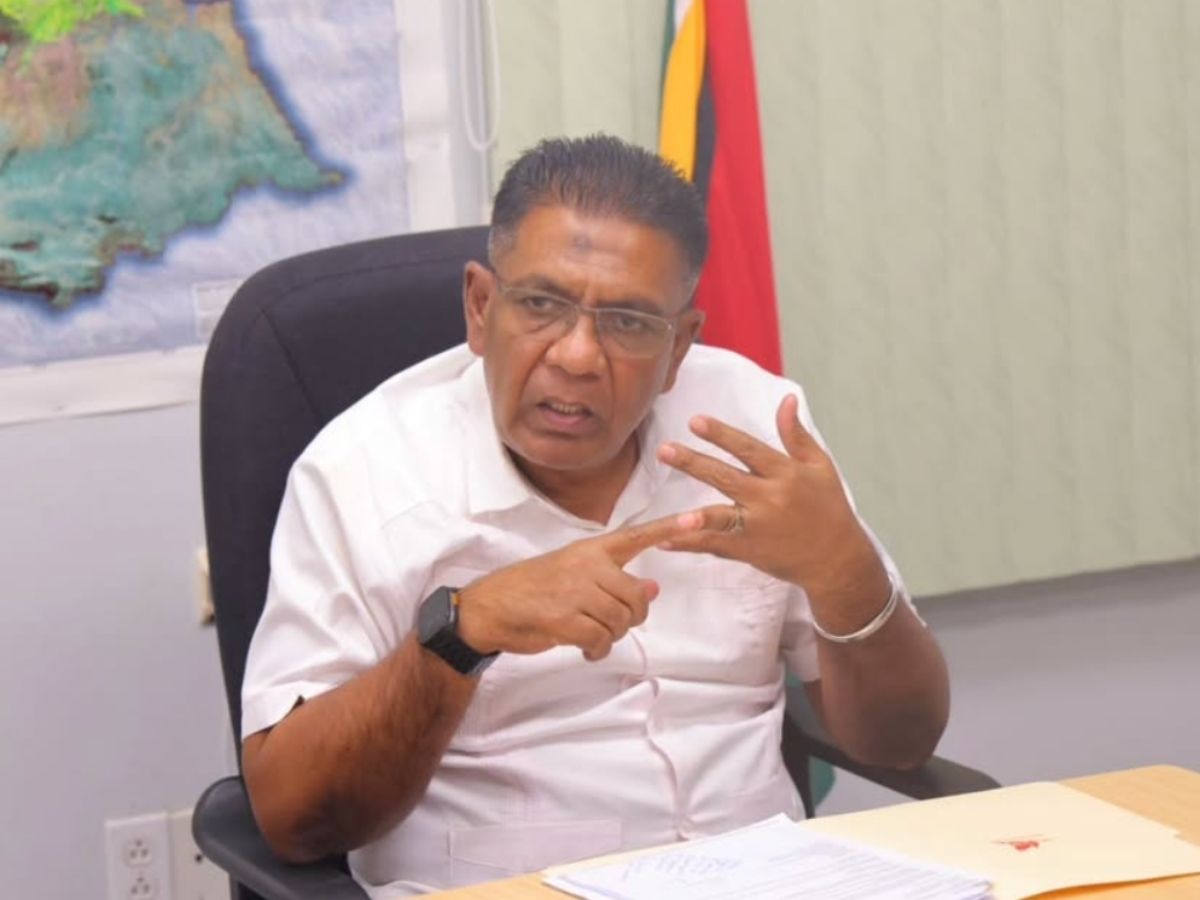
Guyana's ambassador to the United Nations, Carolyn Rodrigues-Birkett, set out her case to become the organisation's next Secretary-General this week, telling member states and civil society representatives that the institution remains essential to global stability but must operate with greater speed and flexibility if it is to stay relevant. Speaking at an interactive dialogue convened by the General Assembly, she argued that the changed nature of world affairs demands new instruments of leadership, and that the organisation's machinery has to keep pace with that shift.
The contest to succeed António Guterres has entered its most intensive phase. His term concludes at the end of December, and the selection process is now moving through a series of public dialogues before the matter passes to the Security Council for negotiation. Rodrigues-Birkett described her candidacy as grounded in pragmatism rather than grand promises, presenting herself as a figure who understands both the founding ideals of the organisation and the practical limits of what it can deliver.
Her pitch rests on a defence of the UN's record alongside an acknowledgement of its failings. She told the dialogue that the organisation remains without equal as a force for collective good, an institution no single state or alliance could replace. That defence came with a caveat. She accepted that the body faces mounting pressure from rising conflict, sluggish progress on development goals, and persistent financial strain, problems she said could not be waved away by appeals to past achievement alone.
The institutional strain she referenced is not new but has sharpened considerably under the UN80 initiative, a reform drive launched to mark the organisation's eightieth anniversary and now central to debate over its future shape. Critics within the diplomatic community have been blunter, warning that the body's work is often scattered across overlapping initiatives, competing reporting lines, and committees whose functions duplicate one another, leaving the organisation less effective than the sum of its parts. Rodrigues-Birkett's own assessment echoed this concern without adopting its sharper edge, framing the UN80 process as an opportunity to tighten how mandates are carried out and to bring greater coherence to the way the organisation structures its work. Speaking earlier in her campaign to the Forum of Small States in New York, she said her ambition was to help build an organisation capable of responding more effectively to a world that has grown more complicated since its founding.
Rodrigues-Birkett is not alone in seeking the role. Five other candidates have been formally nominated to succeed Guterres: Michelle Bachelet of Chile, María Fernanda Espinosa of Ecuador, Rafael Grossi of Argentina, Rebeca Grynspan of Costa Rica, and Macky Sall of Senegal. The contest carries particular historical weight, since no woman has ever held the post of Secretary-General in the organisation's history, a fact that has coloured much of the public debate surrounding the race. Bachelet's path has grown more complicated in recent months. Chile formally withdrew its nomination of her in March, though her bid continued with the backing of Brazil and Mexico, an arrangement that reflects how candidates in this contest can survive the loss of their original sponsor.
The rules governing the selection add a further layer of complexity to any candidate's chances. Contenders cannot come from any of the five permanent members of the Security Council, namely Britain, the United States, France, China and Russia. None of the current fields, Rodrigues-Birkett included, falls into that category. Yet those same five powers hold effective control over the outcome, since the Security Council must agree on a single recommendation before the matter goes to the General Assembly for confirmation. For a candidate from a small state such as Guyana, with a population of under a million people, this dynamic represents the principal hurdle. Winning the argument during weeks of public dialogue is one task. Securing the quiet consent of the great powers behind closed doors is another matter entirely, and one that has decided every Secretary-General selection since the organisation's founding.

.jpg)