
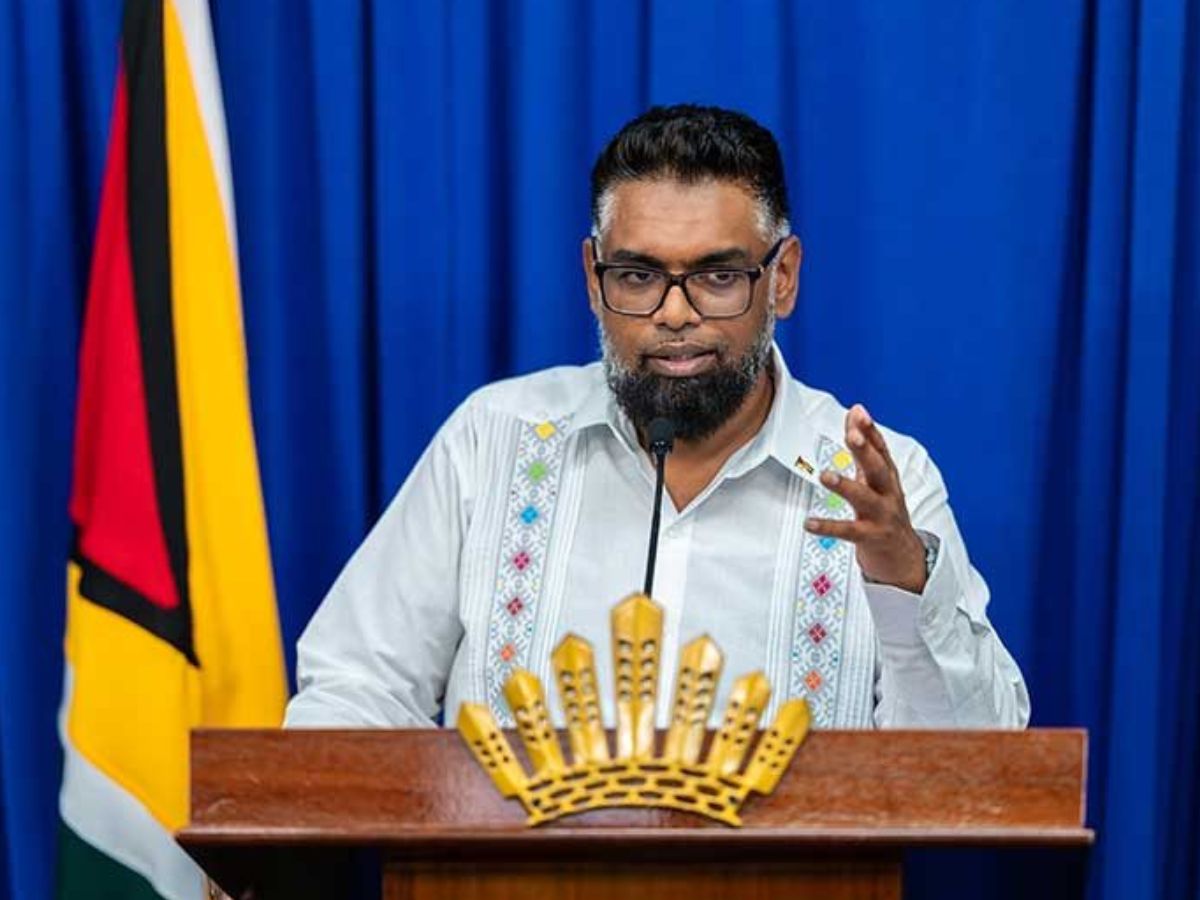
Guyana is on course to become one of the world's most significant new oil producers, with President Dr Irfaan Ali announcing this week that a fifth offshore production vessel will soon arrive in the country's waters, pushing daily crude output past one million barrels by the end of 2026. The announcement, made during a press conference covering both the country's energy sector and its administrative reforms, marks a further step in Guyana's rapid transformation since oil exports began five years ago. Alongside the production milestone, the President also set out plans to digitise the national public procurement system before the year is out, a move intended to improve transparency and open a larger share of government contracts to smaller businesses.
The new vessel, a floating production, storage and offloading unit built in Singapore at a cost of $12.7 billion, is expected to begin pumping oil in the final quarter of 2026. It will add roughly 250,000 barrels a day to the country's output. Guyana's four existing vessels currently produce between 900,000 and 920,000 barrels daily, so the addition would carry the total comfortably past the one-million-barrel threshold. Few countries have reached that level of production so quickly after their first oil discovery, and the pace of Guyana's build-out has drawn attention from oil executives and economists watching the Stabroek Block, the offshore area where the country's reserves are concentrated.
The financial terms governing that block have also shifted in Guyana's favour, though the underlying agreement has not changed. Under the 2016 production sharing contract, oil companies operating in the Stabroek Block were permitted to recover their capital costs before the government's share of profits increased substantially. That capital expenditure, an initial outlay of around $5 billion, has now been repaid faster than originally projected. As a result, the portion of oil revenue allocated to cost recovery has fallen from 75% to close to 20%, and Guyana's overall share of the oil produced has risen from 12.5% to nearly 40%. The change reflects the terms of the original contract working as designed, rather than any renegotiation, though it has significantly increased the funds available to the state earlier than had been expected.
That additional revenue appears to be shaping the second half of the government's announcement, which concerned how public money is spent rather than how it is earned. President Ali confirmed that Guyana intends to eliminate paper-based procurement processes by the end of 2026, replacing them with a fully electronic system. The new architecture will include a digital registry of bidders, an e-tender module covering the full lifecycle of a contract from advertisement to award, and a centralised portal through which government departments will manage purchasing. The system is being designed with automated compliance checks and anomaly detection built in, alongside real-time tracking of how public funds move through the procurement process, features intended to reduce the scope for irregularities as government spending grows alongside oil revenue.
A further element of the reform is aimed squarely at the domestic private sector. The government plans to establish a digital marketplace for routine state purchases, intended to simplify how ministries and agencies buy everyday goods and services. Officials are also examining a quota system that would reserve between 25% and 30% of government procurement contracts for small and medium-sized enterprises, a measure designed to ensure that Guyanese businesses see a direct benefit from the country's expanding public budget rather than that benefit flowing mainly to larger, often foreign, contractors.
Taken together, the announcements outline a state attempting to manage two parallel processes at once: extracting and monetising a resource whose scale still exceeds the size of Guyana's existing economy, while building the administrative infrastructure to spend the resulting revenue with greater oversight. Whether the procurement reforms achieve their stated aims of transparency and local participation will depend on implementation, an area officials have not yet detailed in full. For now, the government has set out its targets for late 2026 and left the specifics of enforcement for a later date.

.jpg)
.jpg)
.jpg)
.jpg)