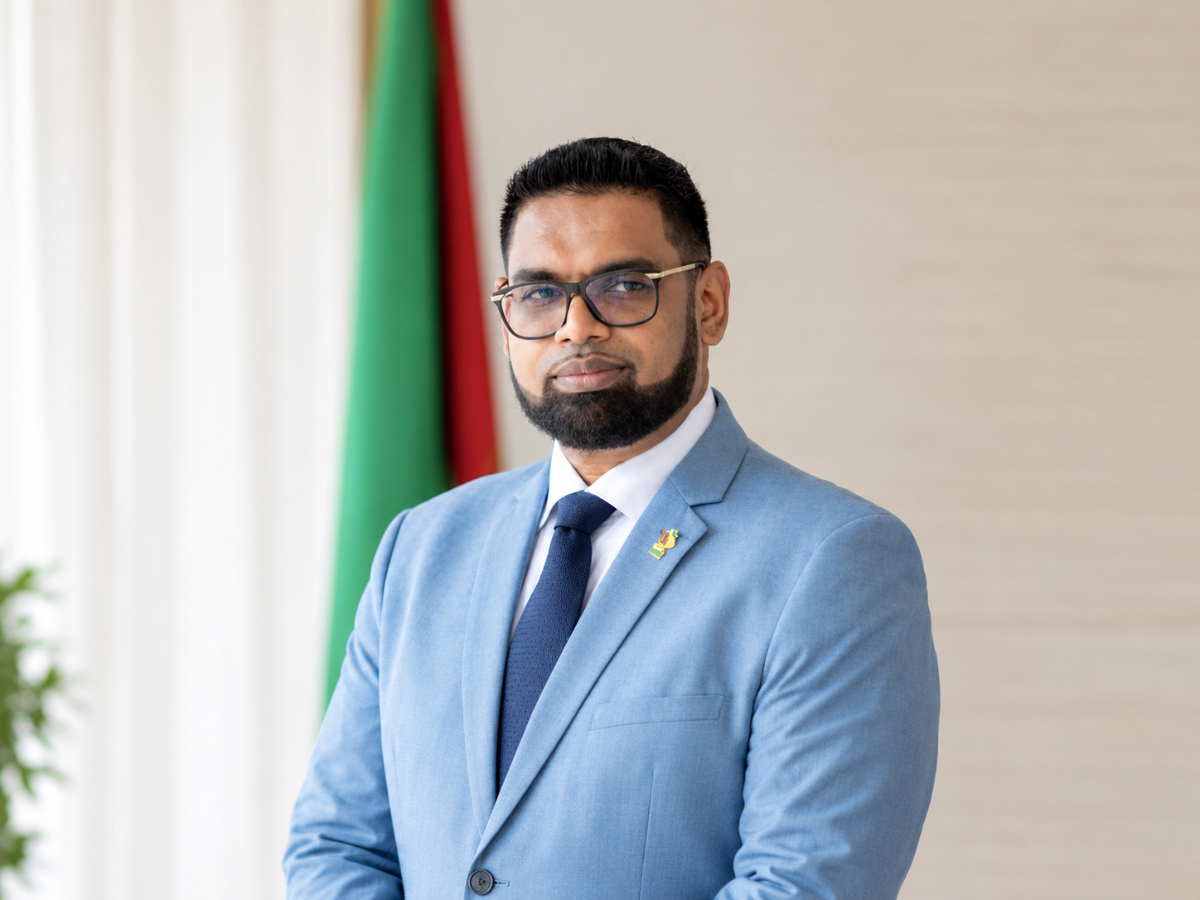
President Irfaan Ali told the Farmers' Conference on Monday that a private poultry company is about to begin operating a new processing plant in Guyana that will triple its processing capacity. The company was not named, and the claim rests on the President's address alone.
Dr Ali said the plant was due to start operations soon. He presented it as evidence of growing confidence in the agricultural sector and said private investment was following government policy and public spending on infrastructure. These are his characterisations. No company figures were provided to support them.
He also set out targets for hatching eggs. Guyana aims to produce half of the hatching eggs it currently imports by the end of 2027, with output moving closer to full domestic supply by the end of 2028. Dr Ali cautioned that some imports would still be needed to keep the sector resilient and protect food security. He did not say how many hatching eggs the country now imports, so the scale of the target cannot be judged from his remarks.
On the wider approach to production, the President said the government plans to work with farmers along new farm-to-market roads and drainage canals to draw up production plans. It will also invest in agro-processing and storage. The stated aim is to raise output, improve productivity and link farmers more closely to markets.
Dr Ali spoke about the Guyana School of Agriculture, where he said the government is investing so that agriculture can be taught and demonstrated with modern technology. Students passing through the school, he said, should be exposed to the scientific developments the sector now requires, and not only to traditional methods of teaching.
The President named other areas of spending beyond poultry. These included drainage and irrigation, farm-to-market roads, agro-processing and agricultural technology. He also pointed to plans for a regional food hub and expanded storage for rice, honey and poultry. Farmers would continue to receive seed and fertiliser subsidies, and agricultural inputs would remain exempt from VAT. He said the measures were meant to raise productivity, connect farmers with markets and strengthen food security. No costs or timelines were given for any of them, so this report presents them as his account of government policy.