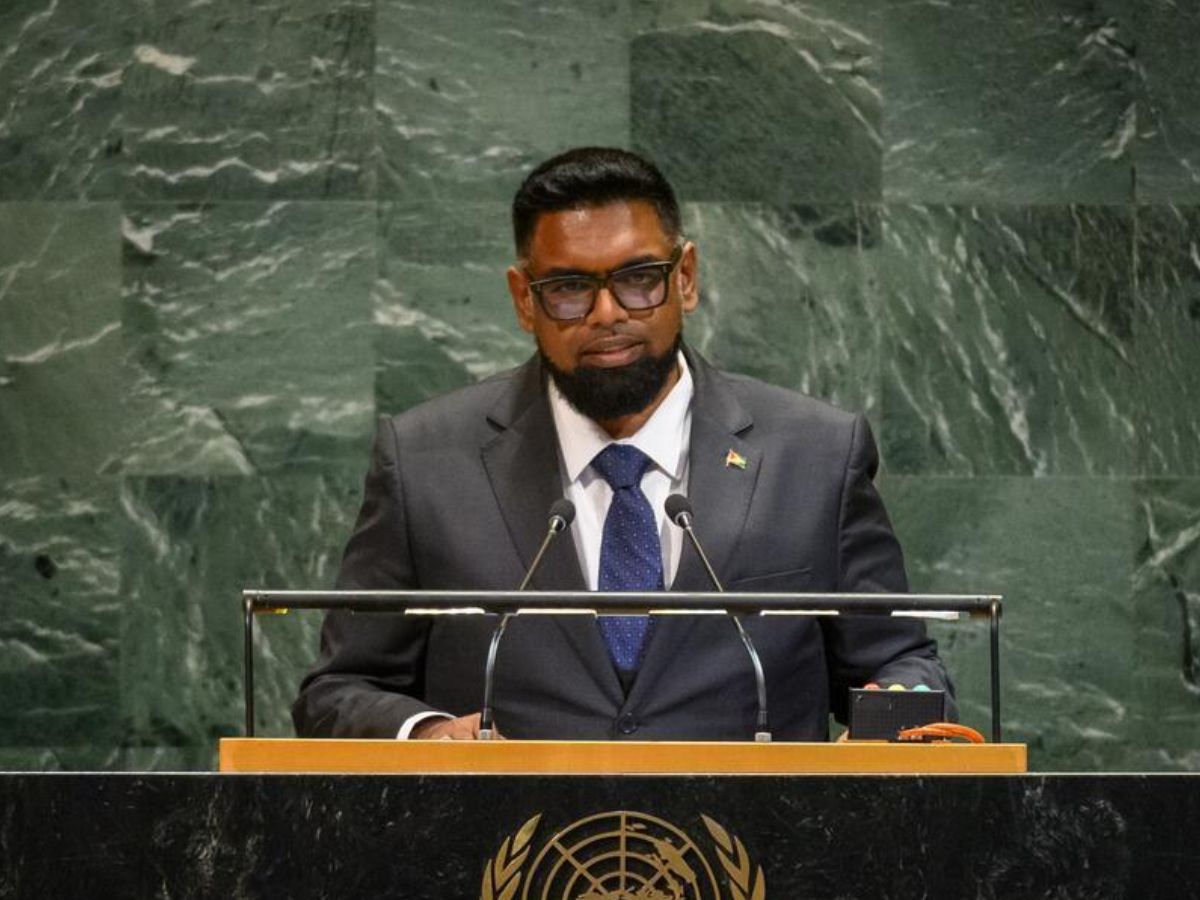
President Mohamed Irfaan Ali set out Guyana's foreign investment priorities at a private-sector forum held alongside the United Nations General Assembly in New York this week. Speaking to an audience convened by the Americas Society/Council of the Americas, the president presented economic performance data intended to show that investment opportunities in the country now extend well beyond its oil sector.
The administration is directing capital and seeking foreign direct investment across five sectors it considers central to reducing reliance on hydrocarbon revenue. In agriculture, the government points to regional food security demand as justification for expanded cultivation, livestock development and forestry management, though it acknowledges that recent weather conditions have constrained output. Infrastructure and construction remain a priority, with public investment supporting real estate development, logistics networks and housing programmes. Mining and quarrying outside the oil sector continue to expand, alongside efforts to grow financial services, including credit access and banking capacity for private enterprise. The government also identified eco-tourism and hospitality as a target area, built around the country's forests and other natural assets.
To support the pitch, officials cited a set of mid-year economic figures. Real GDP growth reached 33.3 per cent in the first half of the year, a figure driven substantially by oil production. Non-oil GDP growth was recorded at 10.1 per cent over the same period, with the government forecasting 10.2 per cent for the full year. Mining and quarrying activity outside oil grew by 40.7 per cent, while construction expanded by 24.7 per cent. Public capital expenditure reached approximately 250 billion Guyanese dollars in the first half of the year.
Labour market data presented alongside these figures traces changes since early 2020. The total employed population now stands at 421,334, a net increase of 156,472 positions over that period. Unemployment fell from 12.8 per cent to 6.2 per cent, and labour force participation rose from 50.4 per cent to 59.2 per cent. These shifts, officials argued, point to structural change in the domestic economy rather than growth confined to the oil sector alone.
Banking indicators were also presented as evidence of expanding economic activity. Net domestic credit stood at 1.286 billion Guyanese dollars at mid-year, up 15.5 per cent from the position at the end of last year. Private sector credit grew by 11.5 per cent year on year, and mortgage borrowing rose by 21.2 per cent, a trend the government links to increased residential construction and property investment.
Underpinning the pitch is a development model that channels oil revenue into public spending on transport infrastructure, health services, education facilities and utility upgrades. The government has framed this approach as consistent with recommendations from multilateral institutions, which have emphasised the importance of converting resource revenue into durable human and physical capital rather than short-term consumption.
Guyana's economy has been transformed since commercial oil production began in 2019, and growth rates driven by the energy sector have made it one of the fastest-expanding economies in the world in percentage terms. That scale of expansion has also drawn scrutiny from economists who caution that non-oil growth, while positive, remains modest by comparison and that diversification efforts are still at an early stage relative to the size of oil revenues flowing into the state.
The New York event forms part of a broader effort by the Guyanese government to position the country to investors ahead of further oil output expansion expected over the coming years. Officials did not specify new investment commitments arising from the forum, and the presentation appeared intended primarily to establish a baseline of economic data for potential investors evaluating opportunities outside the oil and gas sector.