
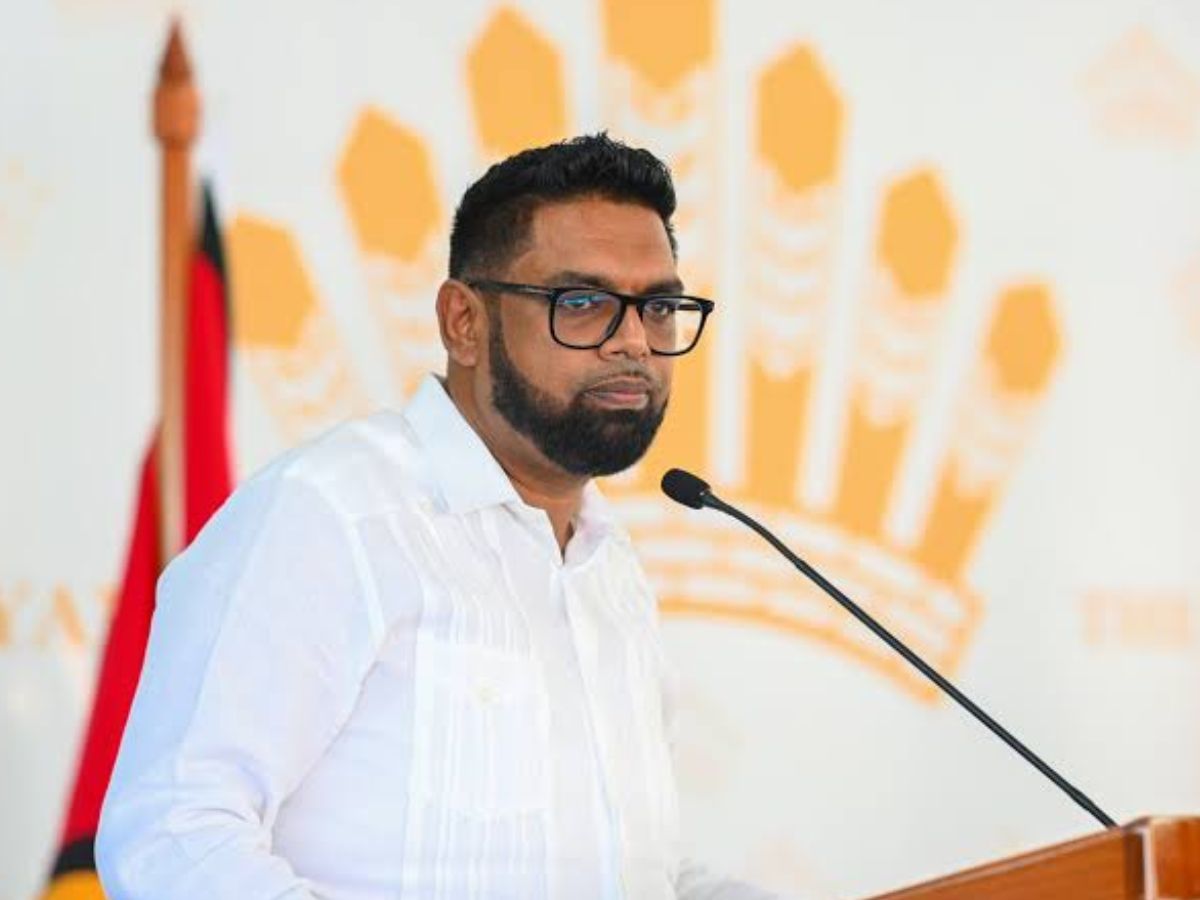
Guyana has entered a one-year migration arrangement with the United States under which the country will temporarily host foreign nationals deported from American soil. The scheme, confirmed by the government of President Irfaan Ali, involves the voluntary relocation of vetted individuals and gives Georgetown the final say over who is permitted to enter the country.
The first cohort arrived on 4 September, comprising four Cuban nationals and two Afghan nationals. Officials say each was cleared through checks conducted by Guyanese authorities before their transfer was approved.
Ali mounted a robust defence of the arrangement in an interview with Al Jazeera, rejecting claims from human rights groups that Guyana is compromising its standing or absorbing migration problems that Washington no longer wishes to manage. He said Guyanese officials receive the names of proposed returnees in advance and carry out independent background checks before agreeing to any transfer. "This is not a situation where the U.S. turns up with a plane and just throw people off on your shores," Ali said. He added that Guyana can decline any name put forward. "We can reject. We can say that we are not accepting this. That has not been taken away. The agreement is one in which Guyana has full control over what we accept."
Foreign Secretary Robert Persaud, who has led much of the technical negotiation with Washington since talks began in January, confirmed that all six individuals in the initial group were found to have no criminal records. He also linked Guyana's willingness to accept skilled migrants to the country's rapid oil-driven economic expansion, which he said has produced a labour shortage of between 70,000 and 80,000 workers.
The agreement runs for one year and does not amount to permanent resettlement. Those relocated to Guyana are described as awaiting a final determination of their immigration status in the United States, rather than being settled in the country on a lasting basis. The Guyanese government has stated that it will bear no financial cost under the programme. The International Organization for Migration is involved in processing arrivals through its Assisted Voluntary Return mechanism, though the IOM has said it will not take on any of the government's own responsibilities for admission, legal stay, protection or removal.
Criticism of the scheme has come chiefly from human rights organisations concerned about third-country deportation arrangements more broadly, including cases elsewhere in which people have reportedly been removed to countries with which they have no prior connection and held in detention. Guyana is one of a growing number of nations, including Belize, St Lucia and St Kitts, that have agreed to receive deportees from the United States under similar third-country arrangements this year. Some smaller states, among them Antigua, have resisted US pressure to take larger numbers, citing insufficient guarantees over housing, medical care and other costs.
In response to the criticism, Ali pointed to Guyana's existing record on migration and human rights. He cited land-titling programmes and budgetary support for Indigenous communities, and noted that the country already hosts migrants from Venezuela, Cuba and elsewhere who are granted access to social services without exception, he said. The government has framed its participation in the US programme as consistent with this broader posture rather than a departure from it.
Persaud said Washington has made no further requests for additional transfers beyond the initial group, though officials in Georgetown expect further arrivals over the coming months as the United States continues to expand its use of third-country deportation. The first six deportees are now in the country, marking the practical start of an agreement that took shape over months of bilateral discussion between Georgetown and Washington.

.jpg)
.jpg)
.jpg)