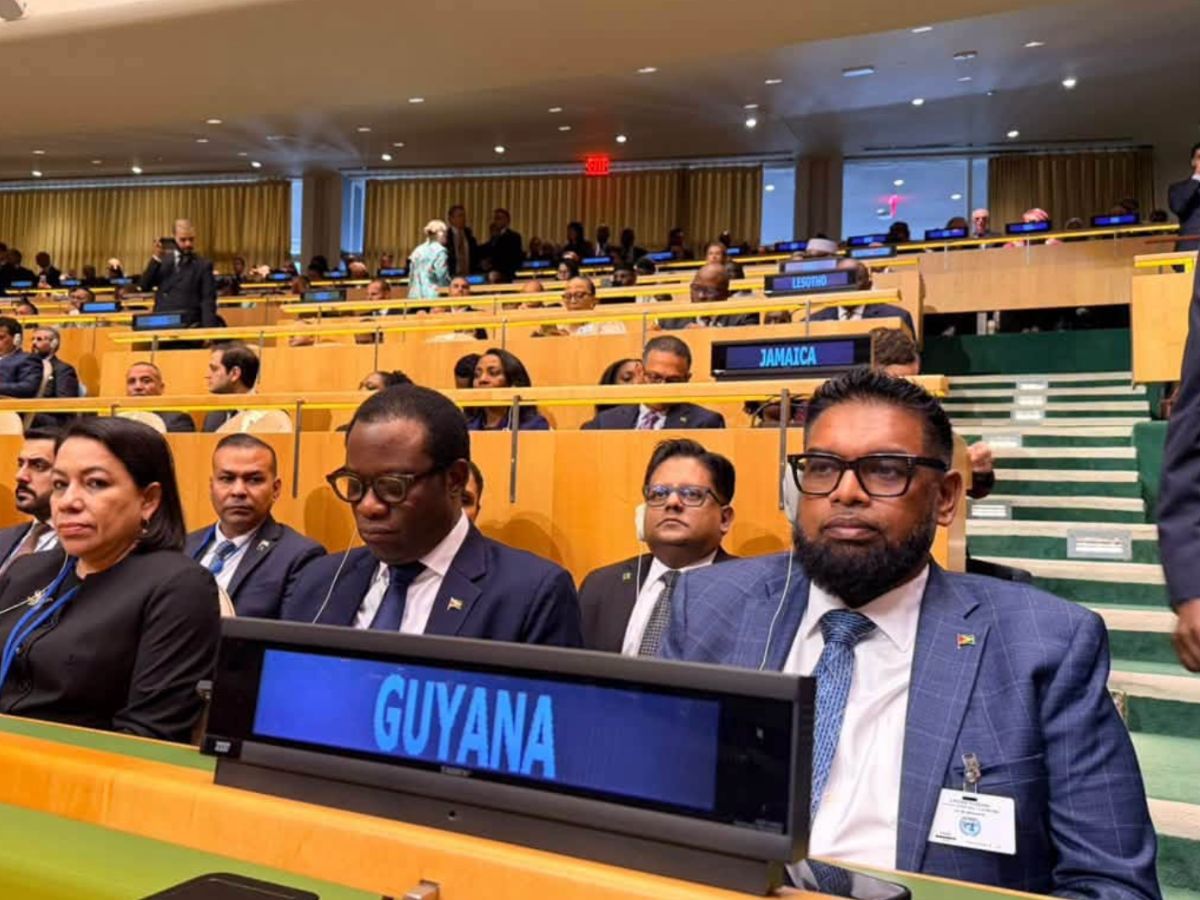
President Dr Irfaan Ali addressed the 81st Session of the United Nations General Assembly in New York on Wednesday, calling for diplomatic resolution to the conflicts in the Middle East, Ukraine and Sudan. His address centred on a broader argument that the instruments of war should give way to a renewed capacity for peace, delivered against the theme of this year's assembly, "Restoring Trust, Managing Transformation: A United Nations That Delivers for All."
Ali told delegates that the world does not need more sophisticated instruments of destruction. It needs a more sophisticated capacity for peace. He reiterated Guyana's call for a just and lasting solution to the Middle East crisis, one that ends the suffering of civilians and recognises the Palestinian people's right to self-determination and a secure homeland. Guyana's support for a two-state solution, he said, remains unchanged.
The president extended his appeal for negotiated settlement to two other conflicts. He called for an end to the Russia-Ukraine war and the war in Sudan, and for the peaceful resolution of conflicts that continue to uproot families and extinguish hope across the world. He did not single out either war for additional comment, framing both within a wider concern about the erosion of multilateral cooperation.
Ali also addressed the situation in Cuba, repeating Guyana's call for what he termed a viable solution, one that is peaceful, people centred and development-focused. He said Guyana was reiterating CARICOM's offer to play a meaningful role in achieving that objective, without providing further detail on what such involvement might entail.
On Haiti, the president said resolving the country's multidimensional challenges remains central to achieving democracy, stability and prosperity for its people. He appealed for sustained international support through financial and material resources, while stressing that the future of Haiti must ultimately be Haitian-led and Haitian-owned.
A substantial portion of the address was devoted to institutional reform. Ali argued that the Security Council reflects the power structures of 1945 rather than the geopolitical realities of the twenty-first century, and called for a Council that embraces emerging multipolarity, including permanent representation for Africa and for Latin America and the Caribbean. He said the United Nations must become more transparent, accountable and responsive, and that the General Assembly should be given greater weight in its deliberative and representative role.
The Guyanese leader linked reform to the question of leadership, telling the assembly that institutions do not reform themselves and require leadership capable of imagining the institution the future demands. He used this argument to introduce Guyana's nomination of Carolyn Rodrigues Birkett, a former Guyanese foreign minister, for the post of Secretary-General. Ali described her record within the multilateral system and said her candidacy carried particular significance given the pressures facing the international order.
Beyond questions of conflict and governance, Ali touched on Guyana's own regional position, noting the country's continued pursuit of a peaceful settlement to its border controversy with Venezuela following hearings at the International Court of Justice completed in May. He urged Venezuela to abide by the forthcoming ruling in line with its obligations under the UN Charter, adding that Guyana would do the same.
He also referred to Guyana's role as a founding member of the Shield of the Americas, an initiative launched in March, describing it as part of a wider regional effort against transnational crime. Ali further raised the potential of artificial intelligence and biotechnology to transform health, education and public services, arguing that technological progress should be measured by how much it empowers people rather than by the power of the machines themselves.
The address forms part of the general debate at UN headquarters, which continues through 26 September and features contributions from a wide range of heads of state and government on issues ranging from active conflicts to the selection of the organisation's next Secretary-General.