
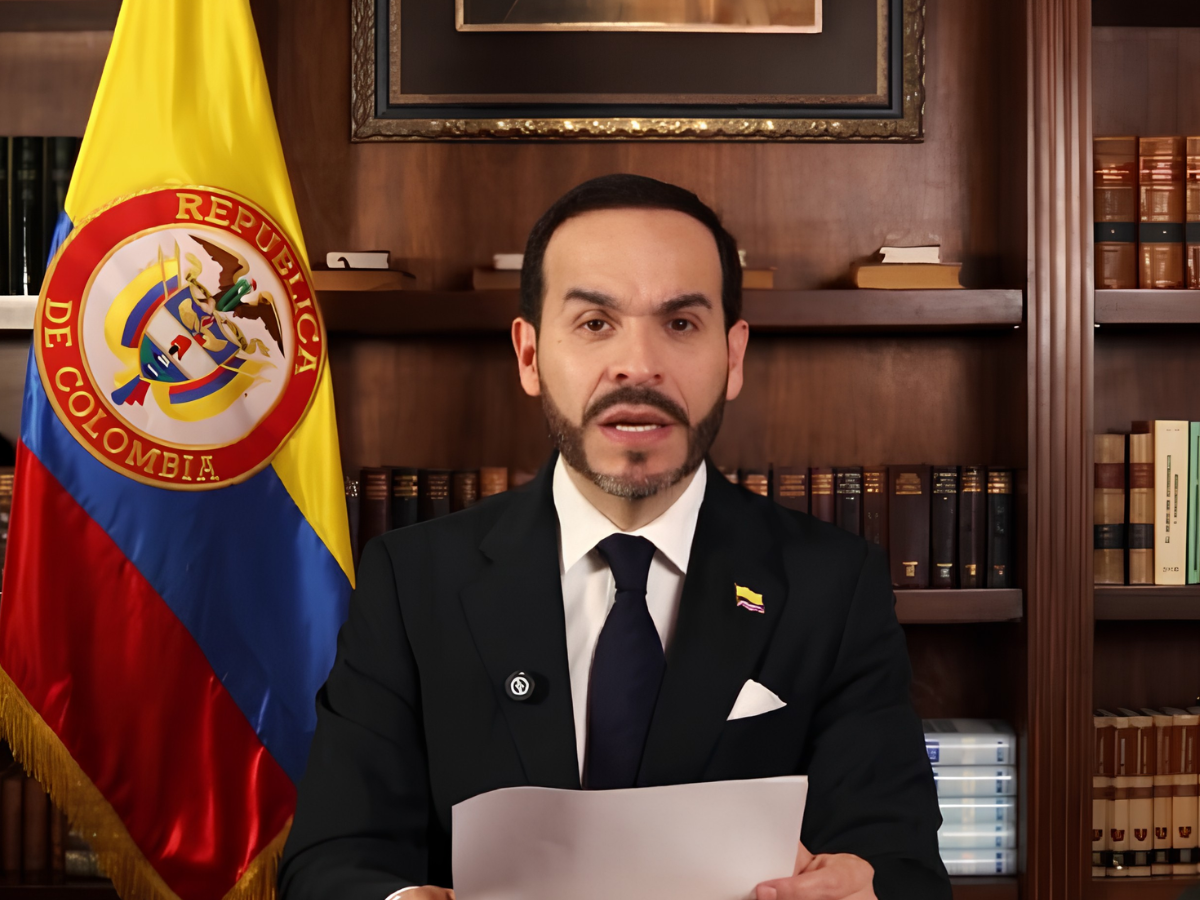
Abelardo de la Espriella's victory in Colombia's presidential run-off has become the newest marker of a rightward shift moving through Latin American politics, one that borrows heavily from the populist style associated with Donald Trump and similar figures elsewhere in the hemisphere.
The right-wing lawyer and businessman won 49.66 per cent of the vote in the 21 June run-off, against 48.7 per cent for left-wing senator Iván Cepeda, a margin of roughly 250,000 votes out of nearly 26 million cast. The result ended four years of government under Gustavo Petro, Colombia's first left-wing president, whose preferred successor Cepeda had pledged to continue his social welfare schemes, labour reforms and peace negotiations with armed groups.
Trump claimed credit for the outcome almost immediately, posting on Truth Social to congratulate "El Tigre" and promise a closer relationship between Washington and Bogotá. Secretary of State Marco Rubio offered his own congratulations soon after. The episode fits a pattern visible across the region, in which endorsement from the Trump administration has become a recurring feature of campaigns run by outsider candidates challenging incumbent left-wing governments.
The drivers behind these results are not purely imported. Rising extortion and drug trafficking, weak growth and frustration with sitting administrations have given conservative challengers genuine material to work with. Annette Idler of Oxford's Blavatnik School of Government has described de la Espriella's win as part of a wave of outsider, strongman politics that also takes in Argentina's Javier Milei and El Salvador's Nayib Bukele. What sets the current cycle apart from earlier populist movements in the region is the extent to which campaign machinery built around digital strategists and combative media operations now mirrors approaches first refined in North American politics.
De la Espriella, a 47-year-old criminal defence lawyer who made his name representing controversial clients, built his campaign around the Tigre persona and a hard line on security. He pledged a tougher posture toward armed groups, including a 90-day campaign of US-backed air strikes against dissidents, and proposed reversing Petro's moratorium on new oil and mining contracts. He has said he would nonetheless preserve some of Petro's social measures, including a minimum wage increase, despite a wider promise to shrink the state.
Cepeda initially contested the preliminary count, and Petro alleged fraud without producing evidence. A recount confirmed de la Espriella's victory on 25 June, and Cepeda conceded the following day. De la Espriella takes office on 7 August.
The result belongs to a broader pattern often described as the retreat of the so-called pink tide, the wave of left-wing governments that took power across South America in the 2000s and 2010s. Whether this produces anything as coherent as a unified conservative bloc aligned with Washington is harder to say, since several of these governments pair pro-business rhetoric with protectionist instincts on agriculture and domestic industry.
For Guyana, the implications are practical rather than ideological. The country's economy now rests heavily on offshore oil revenue, and a regional climate more favourable to extraction and foreign investment could ease some of the political risk multinational energy firms weigh when committing capital. A bloc of conservative, US-aligned governments in the region, particularly in neighbouring Colombia, is also likely to take a firmer line against Venezuela's government over its claims to the Essequibo region, offering Guyana a measure of diplomatic cover it has lacked in recent years.
Even so, the same populist governments that favour energy investment often resist multilateral trade frameworks in favour of bilateral deals struck on their own terms. Guyana's government will likely need to negotiate directly with Washington and with newly conservative neighbours, rather than counting on regional blocs that may prove less durable than they currently appear.



.jpg)